Marble Standing Ganesha Murti
Abhanga Ganapati — The Poised & Grounded Divine FormStanding Ganesha, known in Sanskrit as Abhanga Ganapati, depicts Lord Ganesha in a poised, upright standing posture with balanced weight on both feet — a stance that radiates steadiness, composure, and grounded divine strength. The Sanskrit term A-bhanga literally means 'absence of severe bend', describing this elegant upright form that combines stillness with quiet fluidity.
Shilakrut's marble Standing Ganesha collection portrays this composed form across diverse iconographic interpretations — from pure white minimalist pieces to royal painted variants, multi-armed warrior expressions, and three-faced cosmic forms. Hand-sculpted in premium Makrana marble by master artisans with 50+ years of legacy, each Standing Ganesha murti is ideal for entrances, formal devotional spaces, and homes seeking calm protective presence.
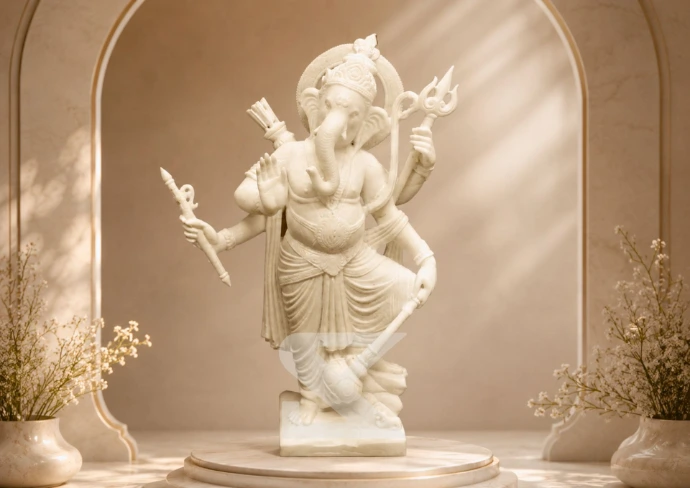
Explore 10 unique Standing Ganesha designs — from pure white minimalist forms to royal painted variants, multi-armed warrior expressions, and three-faced cosmic forms. Each hand-sculpted in premium Makrana marble. Tap any icon below to enquire about sizes, pricing, and customisation.
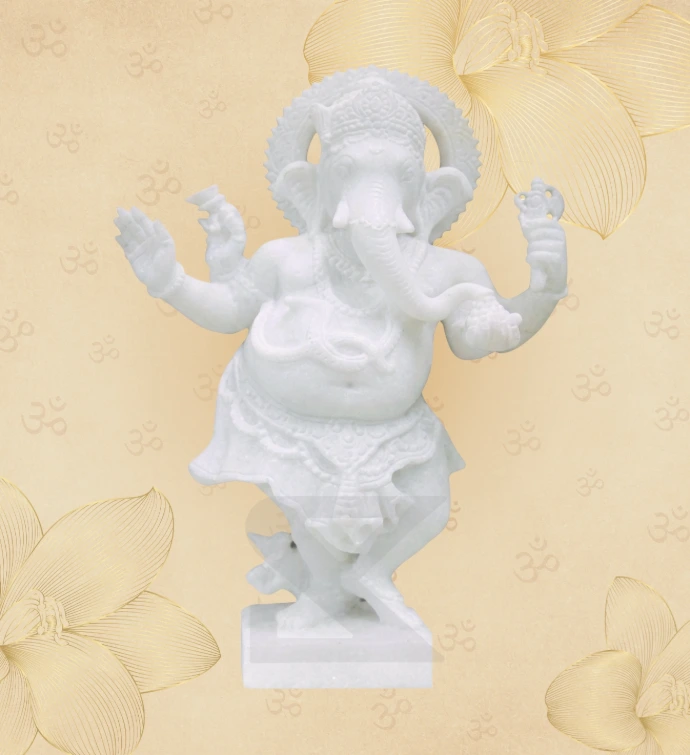
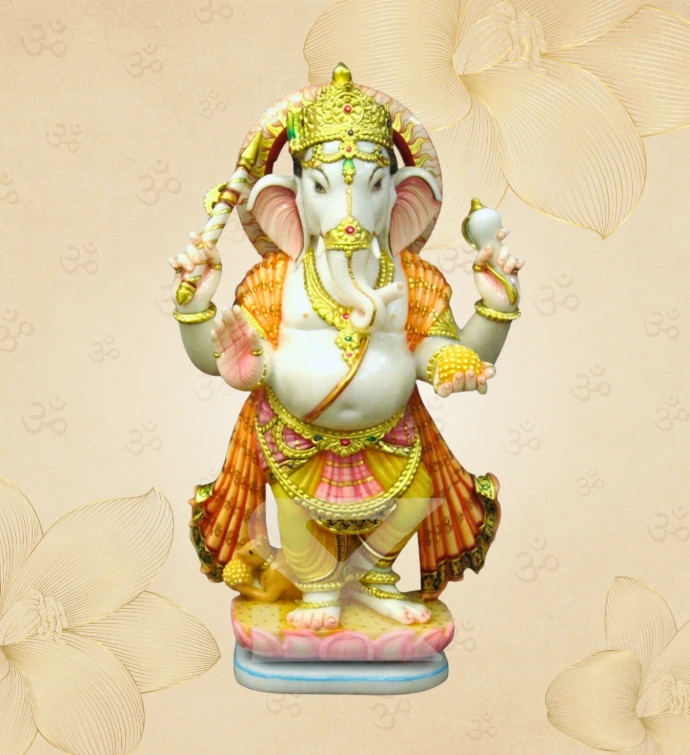
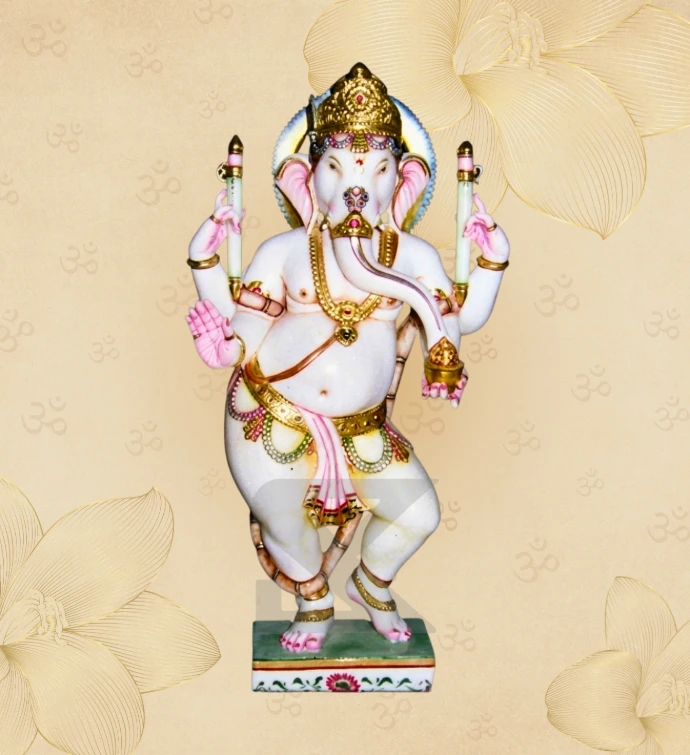
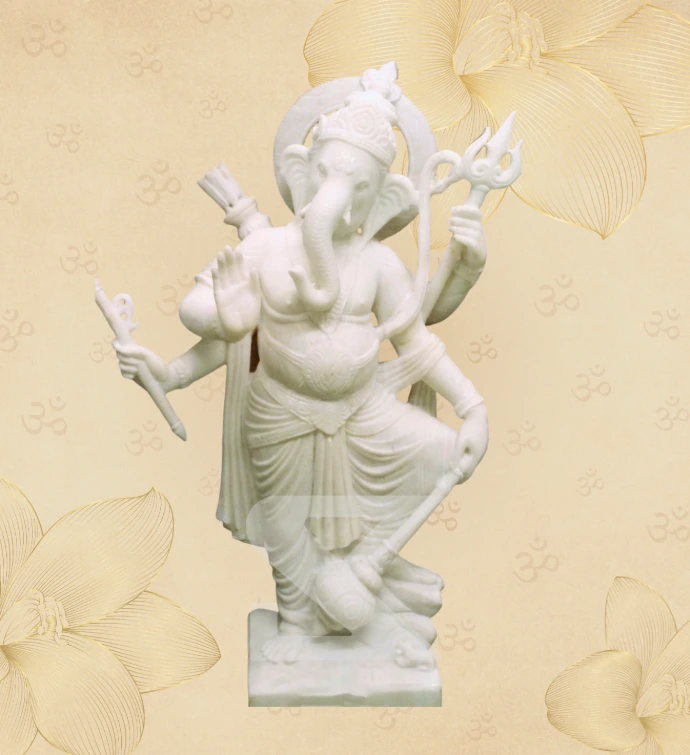
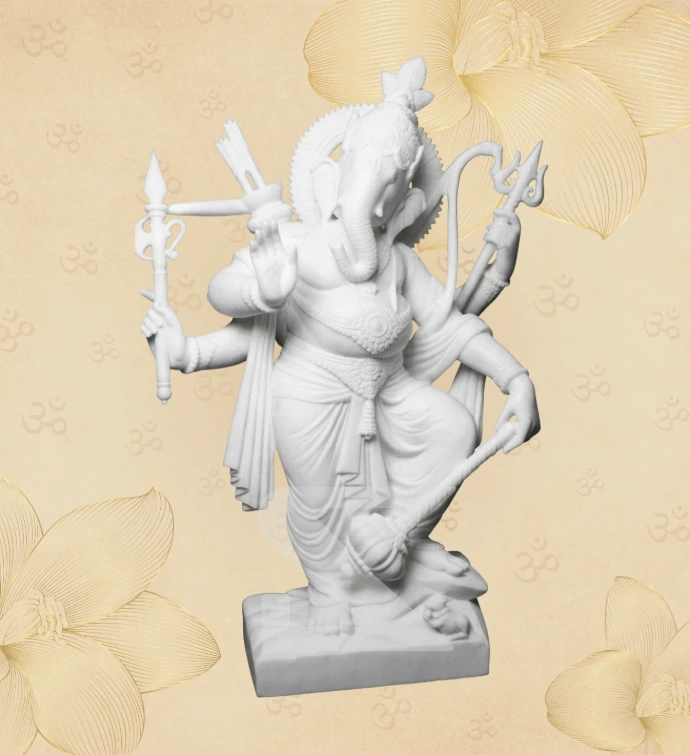
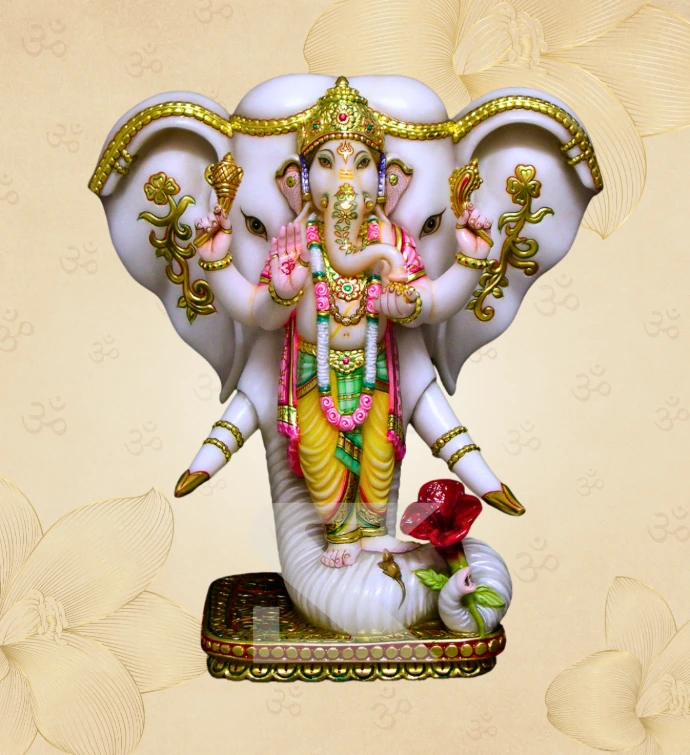
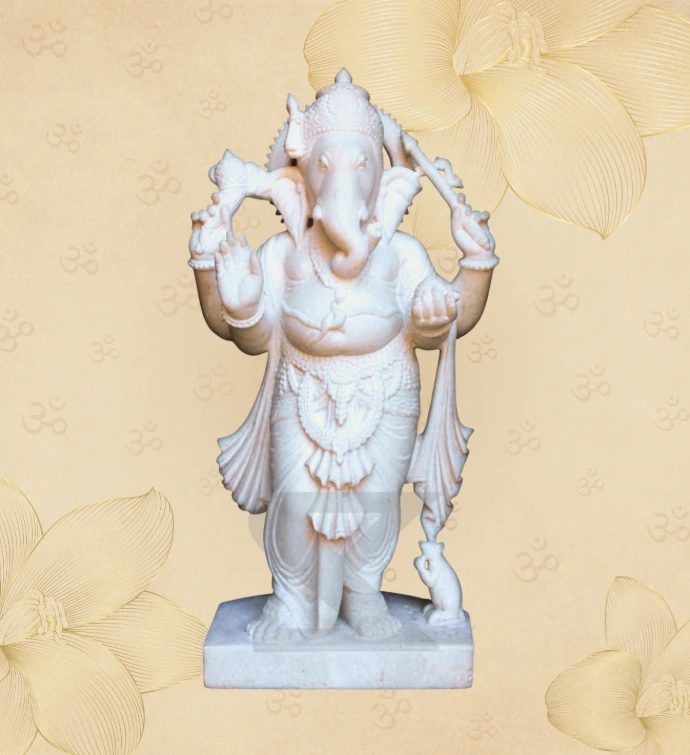
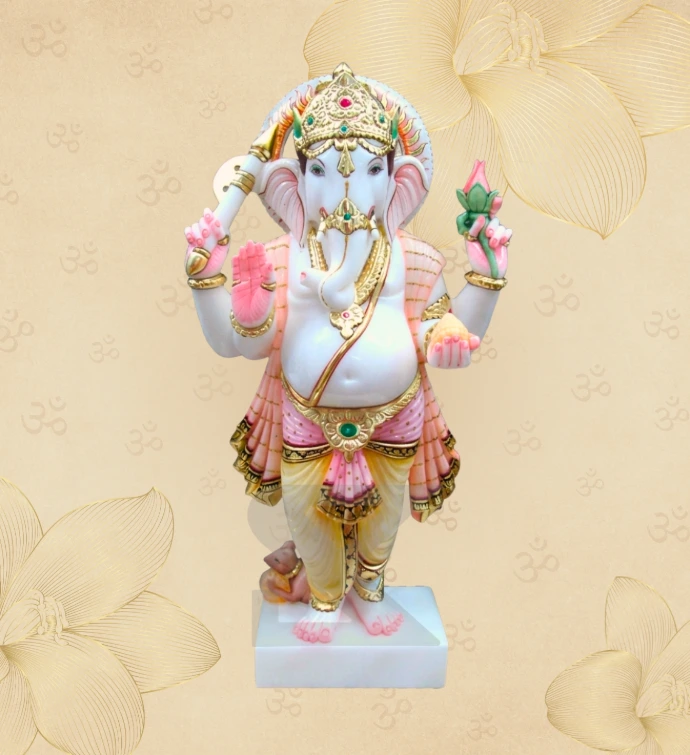
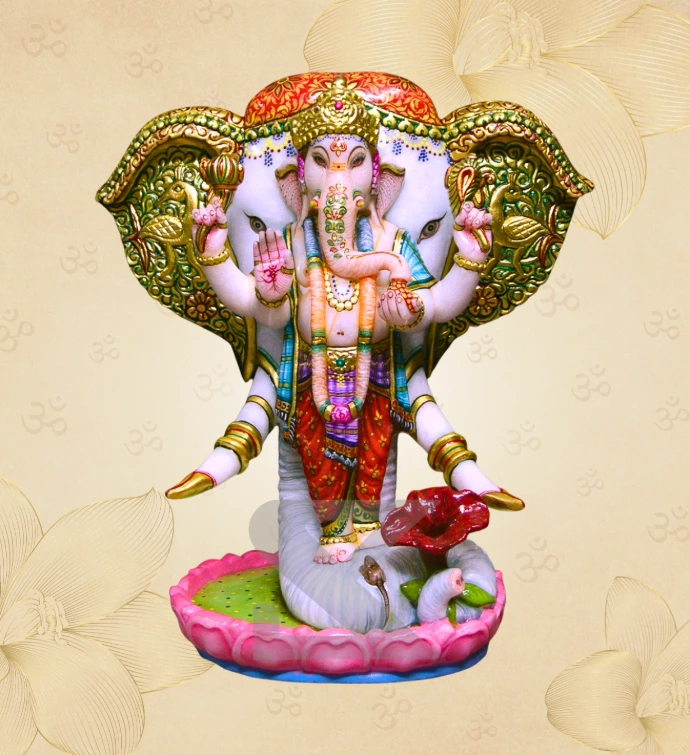
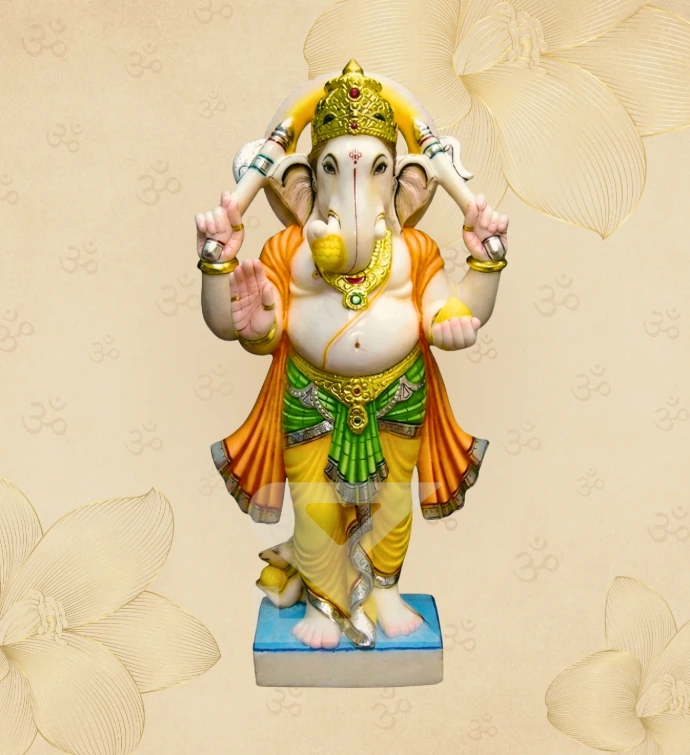
The standing posture of Abhanga Ganapati symbolises steadiness, readiness, and grounded strength. Unlike the dynamic Dancing Ganesha or the deeply curved Atibhanga form, the upright stance represents Lord Ganesha as ever-ready to bless, protect, and guide — standing firm against obstacles and offering composed presence to devotees. The pose is favoured in classical Indian iconography for its dignified, approachable grandeur.
Standing Ganesha is traditionally placed at entrances of homes, temples, and businesses as a protective sentinel — the upright posture itself representing watchful divinity. The form is believed to bestow blessings of stability in life, calm authority in leadership, harmony in family, and protection from negative influences entering one's space. It is one of the most universally loved Ganesha forms across regional traditions in India.
Standing Ganesha is one of the most versatile and beloved forms — perfect for entrances, temple gateways, formal devotional spaces, and homes seeking a composed protective divine presence. Its upright stance makes it equally suited to traditional temples and contemporary devotional interiors.
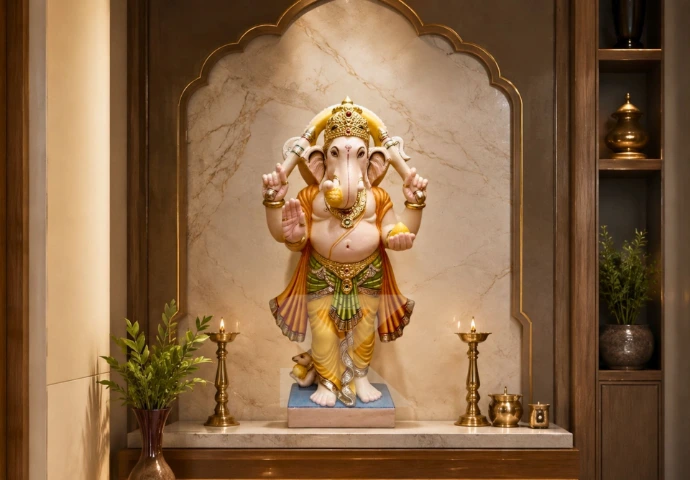
Place Standing Ganesha facing North, East, or Northeast — the most auspicious directions for inviting positive energy. The upright posture is uniquely suited to entrances, where the murti can be positioned facing inward, welcoming family members and guests with divine blessings while warding off negativity at the threshold. Pillared placements and gateway nooks are particularly traditional for this form.
A marble pedestal, decorated chowki, or formal temple platform allows the standing form to be appreciated in its full upright grandeur. The murti should be placed at eye level or slightly above so the standing stance is visually balanced. Ensure adequate space in front of the murti for offerings, diyas, and daily aarti. Avoid bedrooms, dining areas, and spaces near restrooms.
Common questions about Standing Ganesha — meaning, iconography, placement, and ordering.
Standing Ganesha, known in Sanskrit as Abhanga Ganapati, depicts Lord Ganesha in a poised upright posture with weight balanced on both feet. The term A-bhanga means 'absence of severe bend' — distinguishing this form from Tribhanga (three bends) or Atibhanga (extreme bend). This classical iconographic posture symbolises steadiness, composure, grounded strength, and watchful protection. It is one of the most beloved Ganesha forms in Indian temple and home worship traditions.
Indian iconography classifies sculptural postures by their bends: Samabhanga (perfectly symmetric and upright), Abhanga (poised upright with subtle weight balance), Tribhanga (three gentle bends), and Atibhanga (dramatic extreme bends). Standing Ganesha (Abhanga) sits between perfect symmetry and gentle movement — dignified, approachable, and visually balanced. It differs from Sitting Ganesha forms (like Lalitasan, Padmasan) which are seated, and Dancing forms (Nritya, Tribhanga) which show dynamic movement.
Standing Ganesha is traditionally placed at entrances, gateway nooks, or near the main door facing inward — the upright stance suits this protective sentinel role beautifully. It is also placed in main home mandirs, temple installations, office receptions, and business entrances. Position the murti in the North, East, or Northeast direction at eye level or slightly above. Avoid bedrooms, dining areas, and spaces near restrooms.
Yes — Standing Ganesha is fully suitable for home worship and is one of the most universally beloved forms. It works beautifully in home mandirs, living rooms, entrance halls, and devotional corners. The upright posture brings composed, dignified divine presence to the home without being overwhelming. Daily aarti, offerings, and simple devotion are all welcomed by this form.
For home mandirs and living rooms, 1.5–2.5 ft is ideal — large enough to appreciate the standing posture and ornamental detailing. For entrances and gateway placements, 2–3 ft creates a striking protective presence. Temple installations and formal halls benefit from sizes of 3–5 ft and above. The vertical proportions of Standing Ganesha translate especially well at larger scales.
Each Standing Ganesha is hand-sculpted in premium Makrana marble by Shilakrut's master artisans with 50+ years of legacy. The upright posture demands precise balance, proportional accuracy, and refined ornamentation — every dhoti fold, crown detail, and trunk curve carved with care. Customisation in size, posture interpretation, multiple-arm variants, painting style, and pedestal design is available — share the SKU code via WhatsApp or email for tailored options.
Discover the complete range of marble Ganesha designs at Shilakrut.
Share any SKU code from this collection and our team will reach out with complete details — sizes, pricing, customisation, and delivery timelines. Welcome calm protective divine presence into your home or temple.
Marble Standing Ganesha Murti
Abhanga Ganapati — The Poised & Grounded Divine FormStanding Ganesha, known in Sanskrit as Abhanga Ganapati, depicts Lord Ganesha in a poised, upright standing posture with balanced weight on both feet — a stance that radiates steadiness, composure, and grounded divine strength. The Sanskrit term A-bhanga literally means 'absence of severe bend', describing this elegant upright form that combines stillness with quiet fluidity.
Shilakrut's marble Standing Ganesha collection portrays this composed form across diverse iconographic interpretations — from pure white minimalist pieces to royal painted variants, multi-armed warrior expressions, and three-faced cosmic forms. Hand-sculpted in premium Makrana marble by master artisans with 50+ years of legacy, each Standing Ganesha murti is ideal for entrances, formal devotional spaces, and homes seeking calm protective presence.
Explore 10 unique Standing Ganesha designs — from pure white minimalist forms to royal painted variants, multi-armed warrior expressions, and three-faced cosmic forms. Each hand-sculpted in premium Makrana marble. Tap any icon below to enquire about sizes, pricing, and customisation.
The standing posture of Abhanga Ganapati symbolises steadiness, readiness, and grounded strength. Unlike the dynamic Dancing Ganesha or the deeply curved Atibhanga form, the upright stance represents Lord Ganesha as ever-ready to bless, protect, and guide — standing firm against obstacles and offering composed presence to devotees. The pose is favoured in classical Indian iconography for its dignified, approachable grandeur.
Standing Ganesha is traditionally placed at entrances of homes, temples, and businesses as a protective sentinel — the upright posture itself representing watchful divinity. The form is believed to bestow blessings of stability in life, calm authority in leadership, harmony in family, and protection from negative influences entering one's space. It is one of the most universally loved Ganesha forms across regional traditions in India.
Standing Ganesha is one of the most versatile and beloved forms — perfect for entrances, temple gateways, formal devotional spaces, and homes seeking a composed protective divine presence. Its upright stance makes it equally suited to traditional temples and contemporary devotional interiors.
Place Standing Ganesha facing North, East, or Northeast — the most auspicious directions for inviting positive energy. The upright posture is uniquely suited to entrances, where the murti can be positioned facing inward, welcoming family members and guests with divine blessings while warding off negativity at the threshold. Pillared placements and gateway nooks are particularly traditional for this form.
A marble pedestal, decorated chowki, or formal temple platform allows the standing form to be appreciated in its full upright grandeur. The murti should be placed at eye level or slightly above so the standing stance is visually balanced. Ensure adequate space in front of the murti for offerings, diyas, and daily aarti. Avoid bedrooms, dining areas, and spaces near restrooms.
Common questions about Standing Ganesha — meaning, iconography, placement, and ordering.
Standing Ganesha, known in Sanskrit as Abhanga Ganapati, depicts Lord Ganesha in a poised upright posture with weight balanced on both feet. The term A-bhanga means 'absence of severe bend' — distinguishing this form from Tribhanga (three bends) or Atibhanga (extreme bend). This classical iconographic posture symbolises steadiness, composure, grounded strength, and watchful protection. It is one of the most beloved Ganesha forms in Indian temple and home worship traditions.
Indian iconography classifies sculptural postures by their bends: Samabhanga (perfectly symmetric and upright), Abhanga (poised upright with subtle weight balance), Tribhanga (three gentle bends), and Atibhanga (dramatic extreme bends). Standing Ganesha (Abhanga) sits between perfect symmetry and gentle movement — dignified, approachable, and visually balanced. It differs from Sitting Ganesha forms (like Lalitasan, Padmasan) which are seated, and Dancing forms (Nritya, Tribhanga) which show dynamic movement.
Standing Ganesha is traditionally placed at entrances, gateway nooks, or near the main door facing inward — the upright stance suits this protective sentinel role beautifully. It is also placed in main home mandirs, temple installations, office receptions, and business entrances. Position the murti in the North, East, or Northeast direction at eye level or slightly above. Avoid bedrooms, dining areas, and spaces near restrooms.
Yes — Standing Ganesha is fully suitable for home worship and is one of the most universally beloved forms. It works beautifully in home mandirs, living rooms, entrance halls, and devotional corners. The upright posture brings composed, dignified divine presence to the home without being overwhelming. Daily aarti, offerings, and simple devotion are all welcomed by this form.
For home mandirs and living rooms, 1.5–2.5 ft is ideal — large enough to appreciate the standing posture and ornamental detailing. For entrances and gateway placements, 2–3 ft creates a striking protective presence. Temple installations and formal halls benefit from sizes of 3–5 ft and above. The vertical proportions of Standing Ganesha translate especially well at larger scales.
Each Standing Ganesha is hand-sculpted in premium Makrana marble by Shilakrut's master artisans with 50+ years of legacy. The upright posture demands precise balance, proportional accuracy, and refined ornamentation — every dhoti fold, crown detail, and trunk curve carved with care. Customisation in size, posture interpretation, multiple-arm variants, painting style, and pedestal design is available — share the SKU code via WhatsApp or email for tailored options.
Discover the complete range of marble Ganesha designs at Shilakrut.
Share any SKU code from this collection and our team will reach out with complete details — sizes, pricing, customisation, and delivery timelines. Welcome calm protective divine presence into your home or temple.