Marble Sitting Ganesha on Lotus Murti
Kamalasan Ganapati — The Lotus-Throne Seated Divine FormSitting Ganesha on Lotus, known in Sanskrit as Kamalasan Ganapati or Padma-pitha Ganapati, depicts Lord Ganesha seated gracefully upon a fully bloomed lotus throne. The Sanskrit term Kamala means 'lotus' and Asana means 'seat' — representing the deity's divine elevation above worldly attachments while remaining accessible to devotees. The lotus throne (Padma-pitha) is one of the most sacred iconographic compositions in Hindu temple art.
Shilakrut's curated collection of 33 unique Sitting Ganesha on Lotus designs celebrates this beloved devotional form across diverse iconographic interpretations — from pure white minimalist forms to ornate gemmed thrones, peacock-themed halos, multi-armed cosmic variants, and rare regional styles. Hand-sculpted in premium Makrana marble by master artisans with 50+ years of legacy, each murti brings the auspicious lotus-throne seated form into homes, family altars, temples, and meditative devotional spaces.
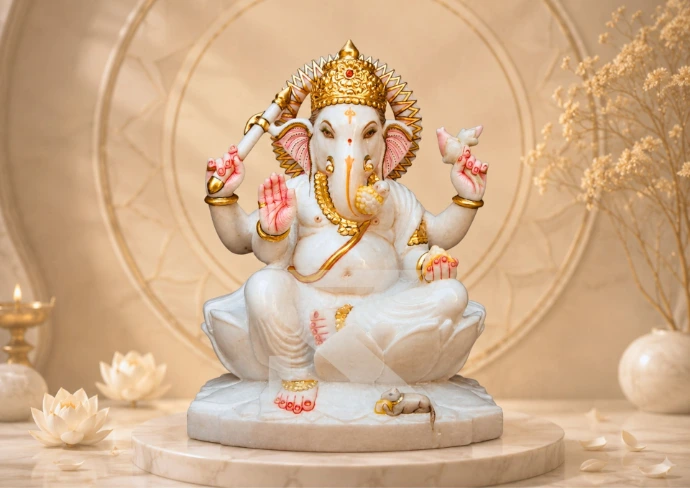
Explore 33 unique Sitting Ganesha on Lotus designs — each hand-sculpted in premium Makrana marble. From pure white minimalist forms to opulent gemmed thrones, peacock-themed halos, multi-armed cosmic variants, and rare regional styles. Tap any icon below to enquire about sizes, pricing, and customisation.
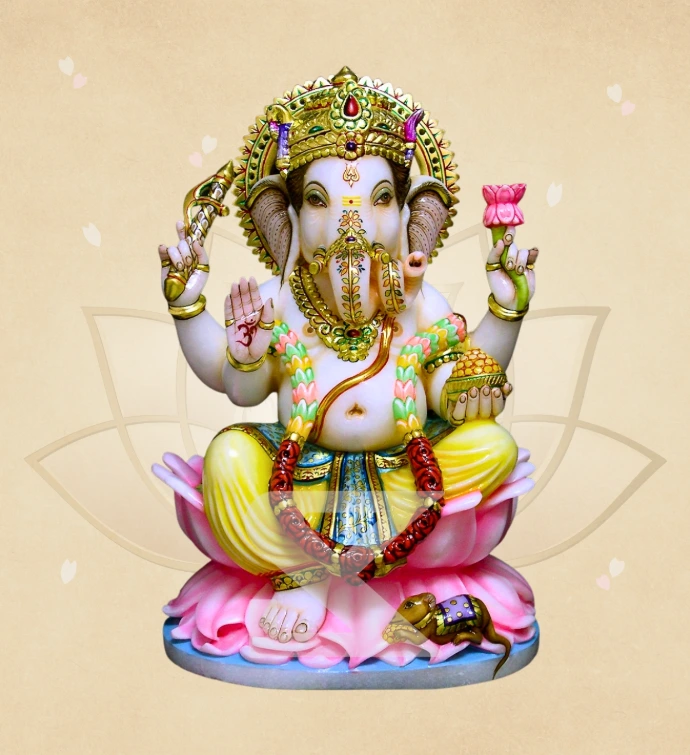
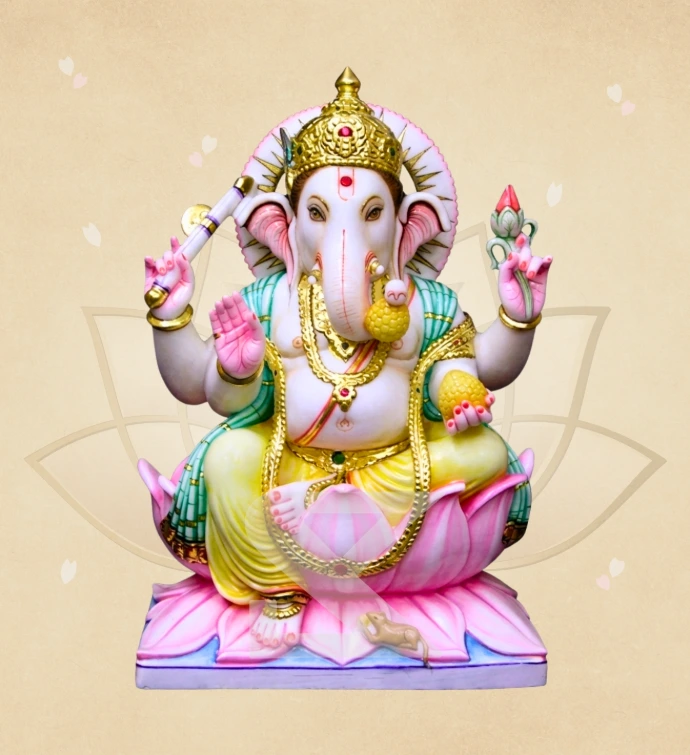
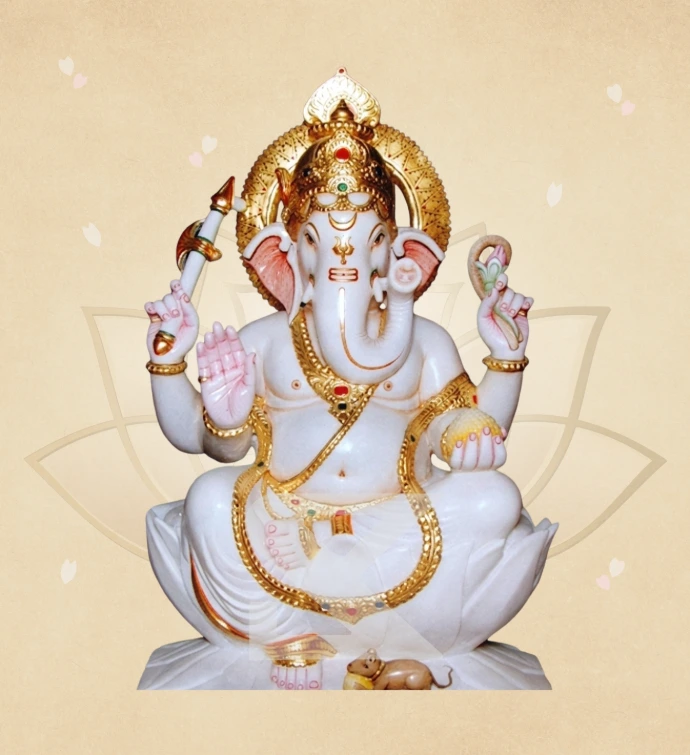
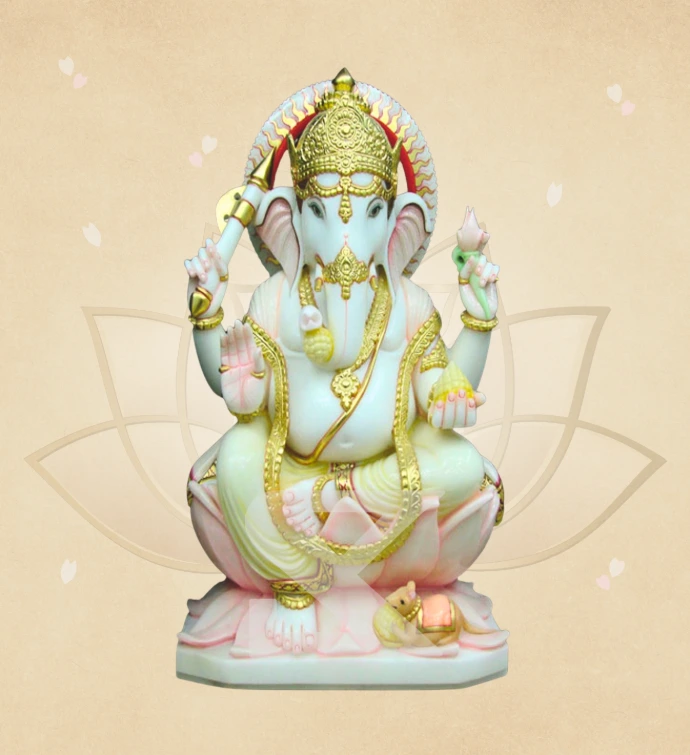
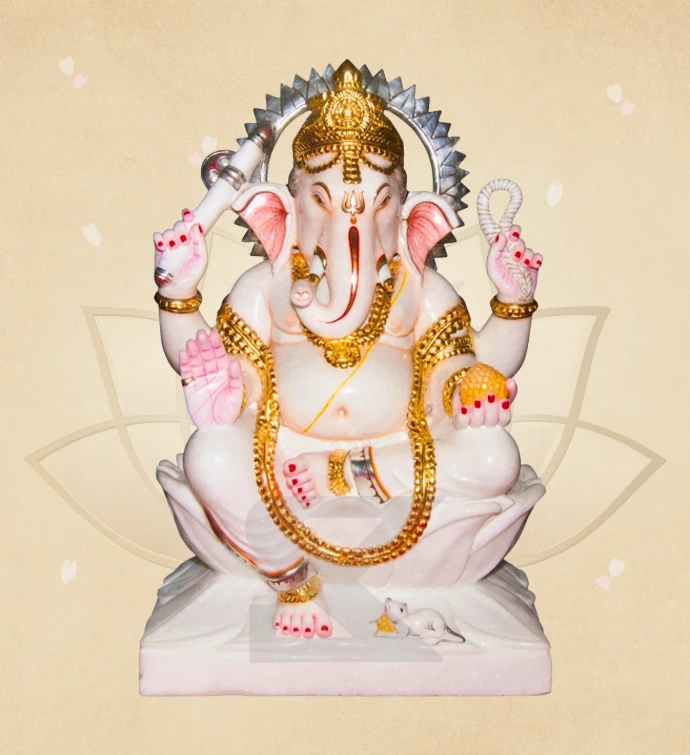
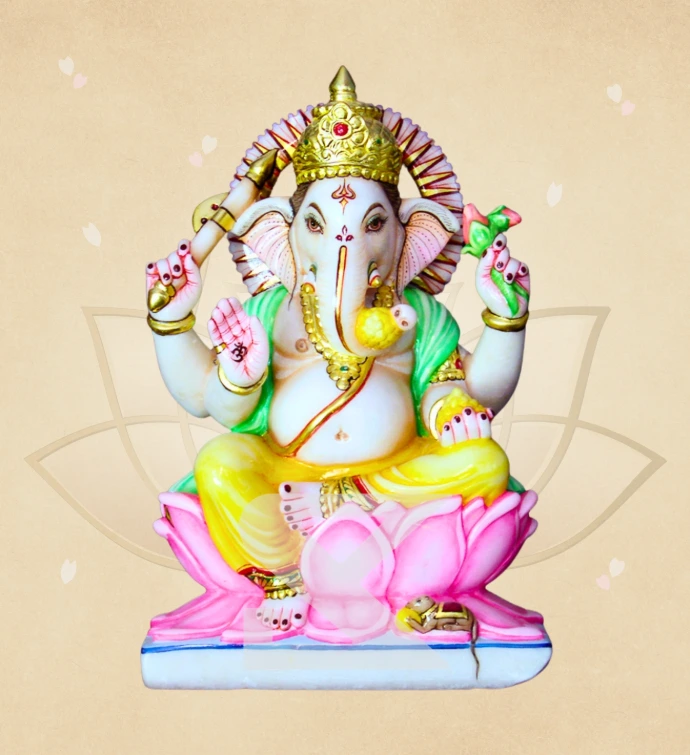
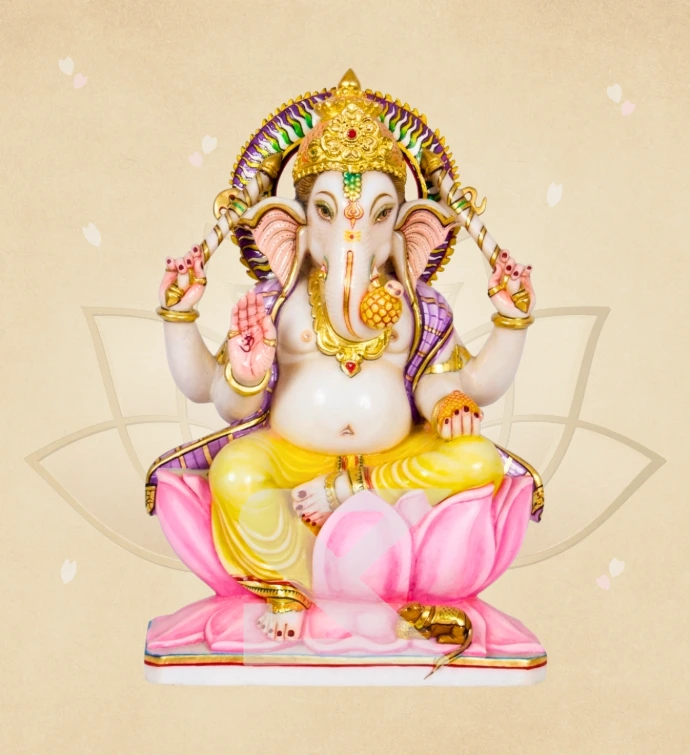
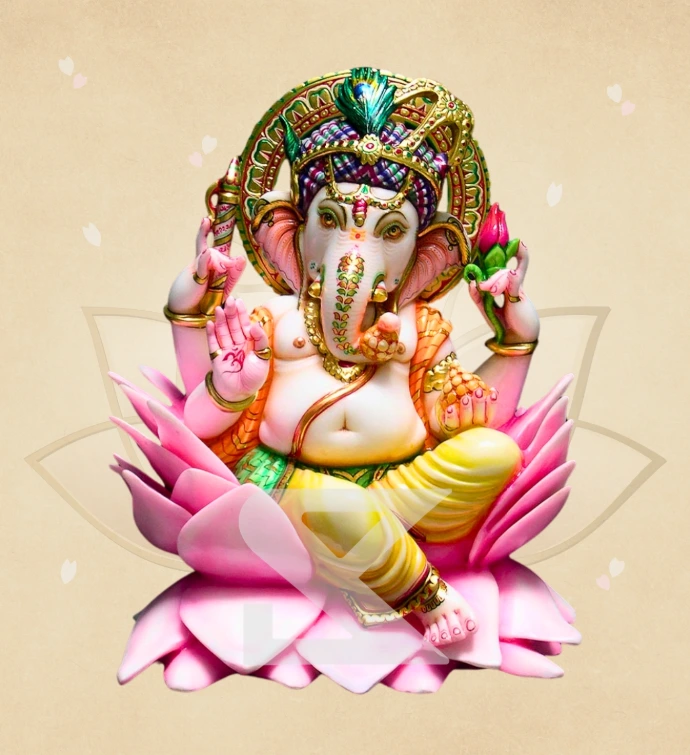
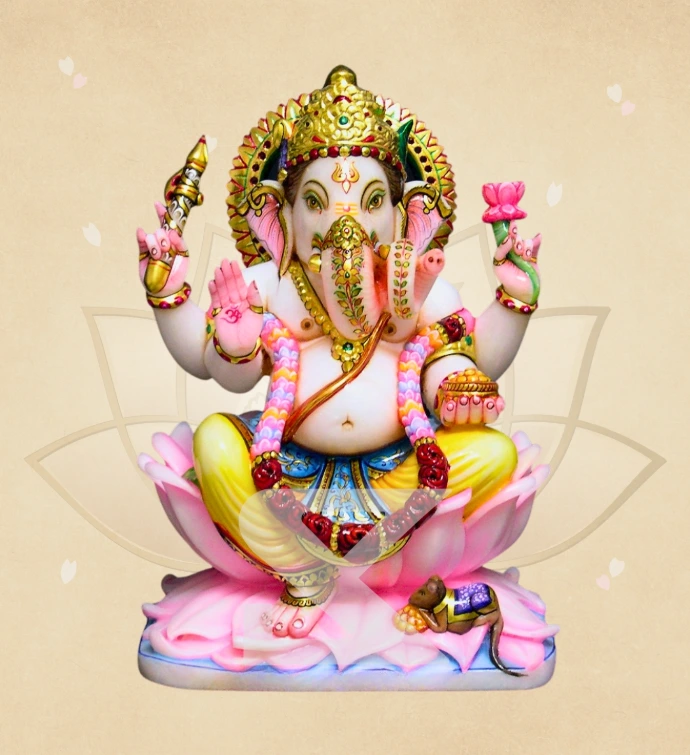
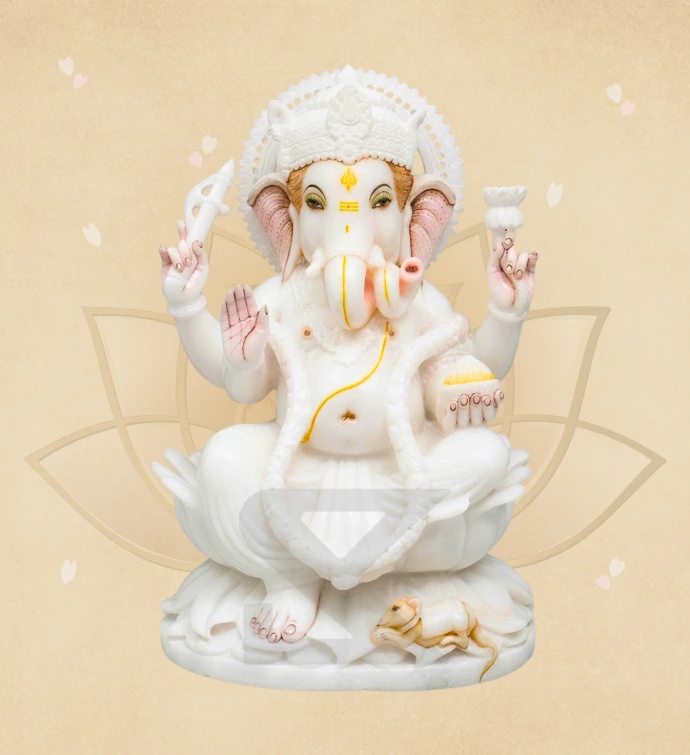
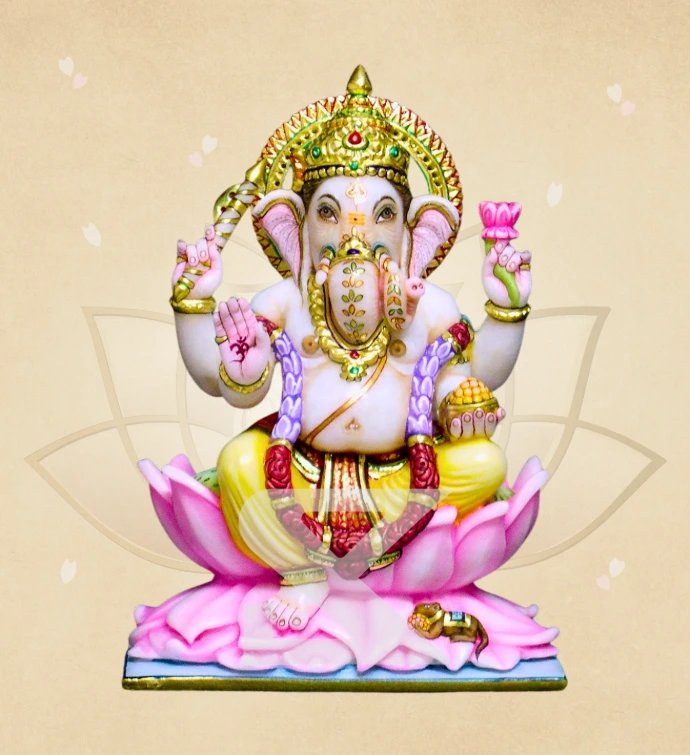
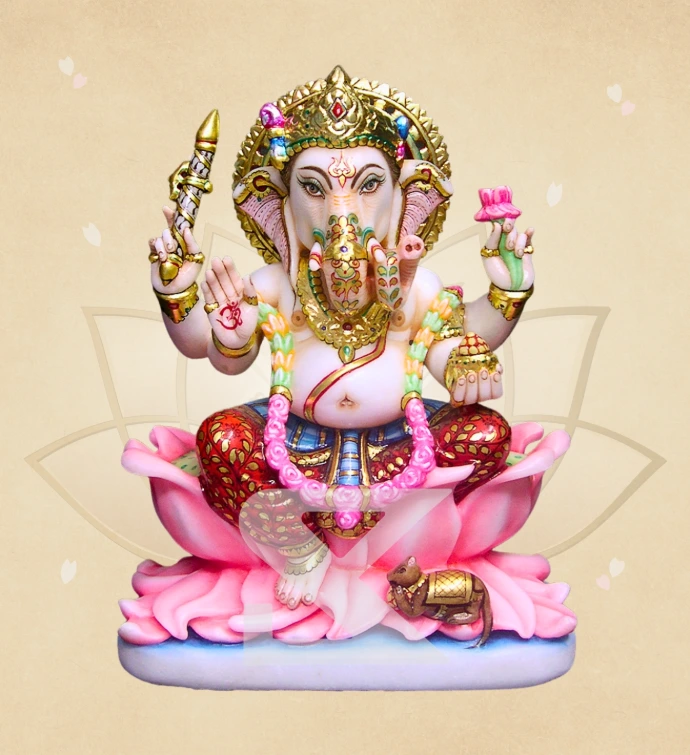
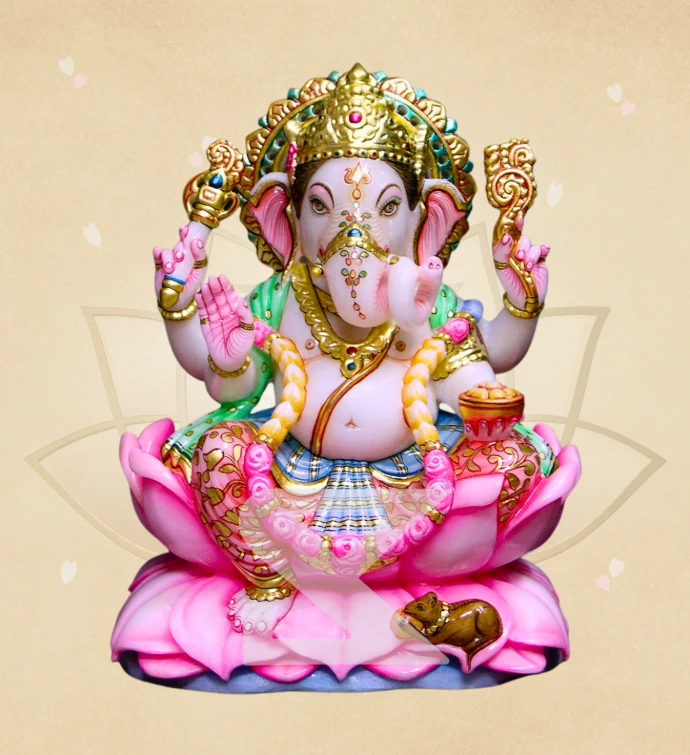
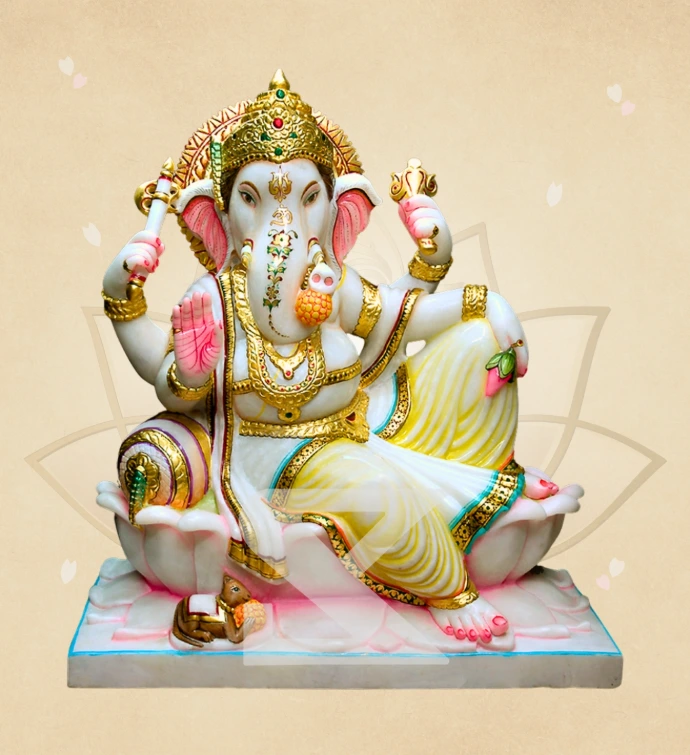
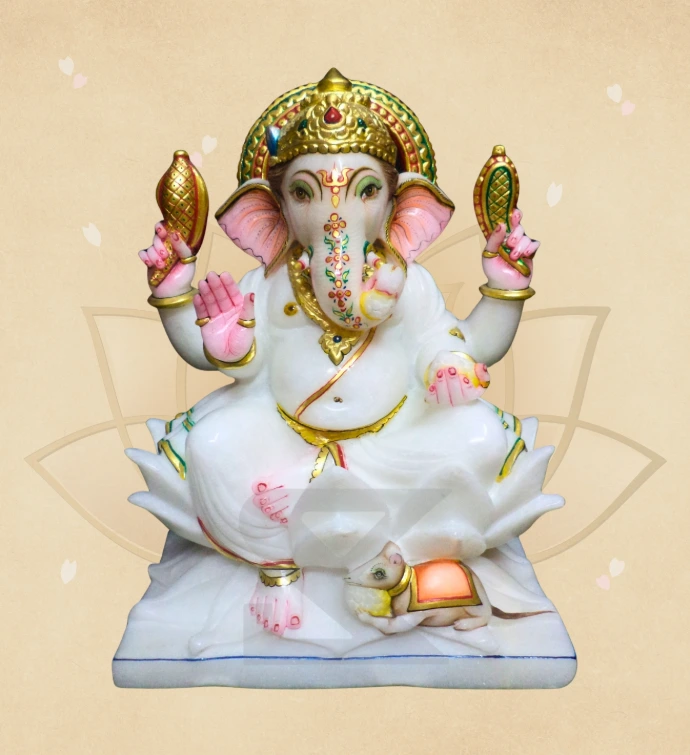
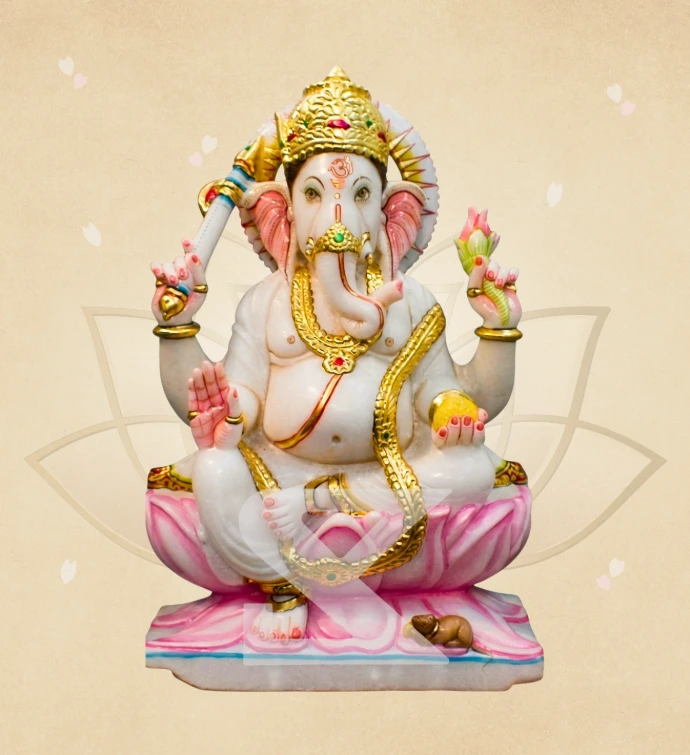
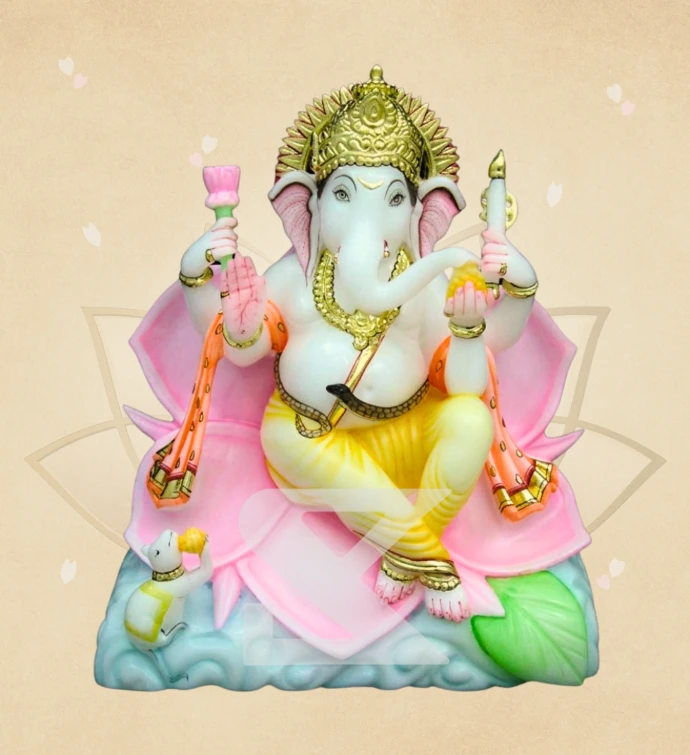
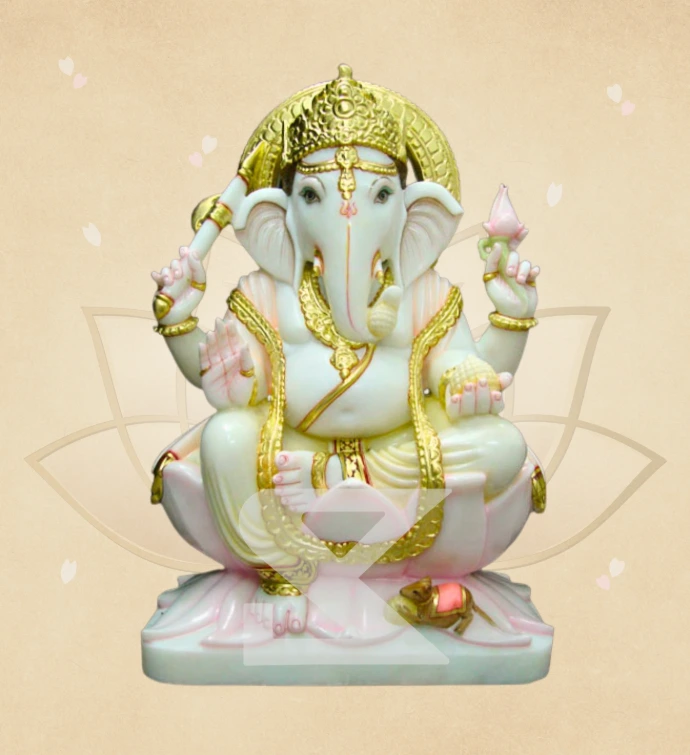
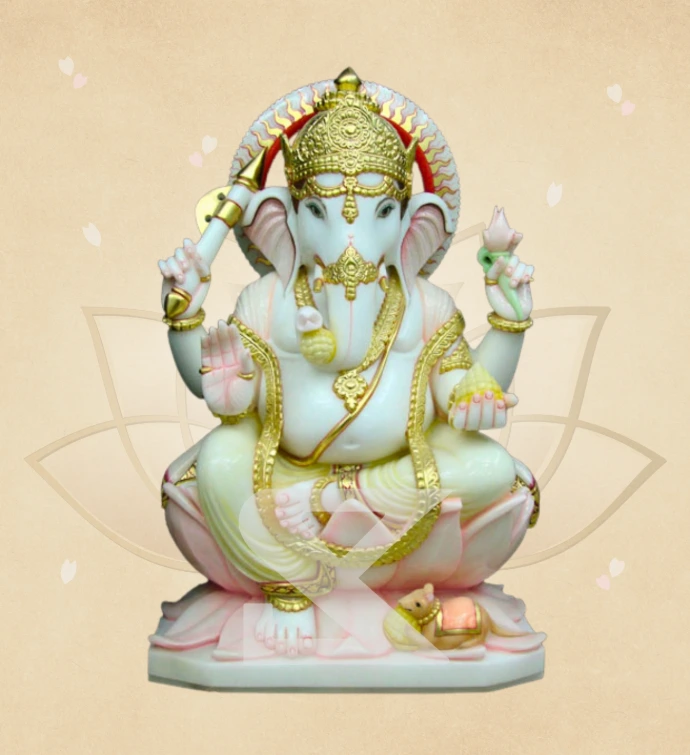
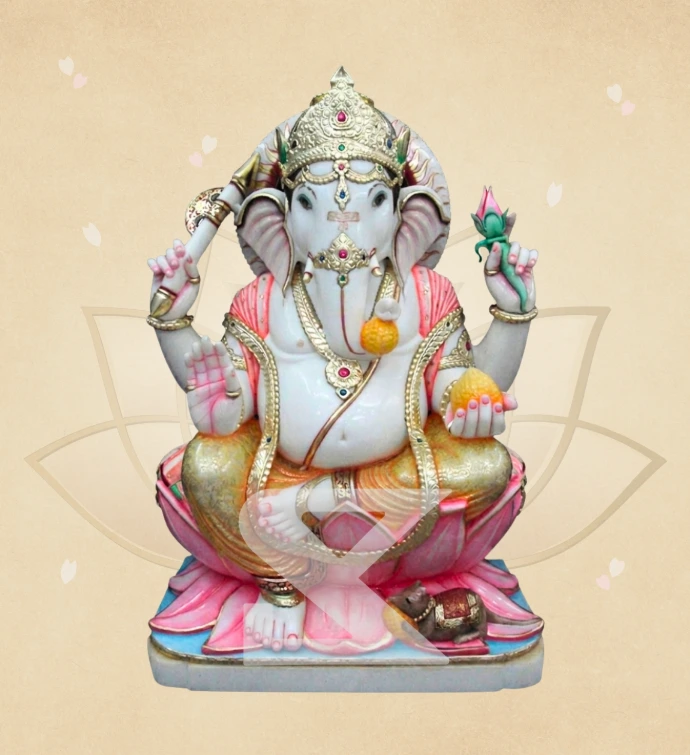
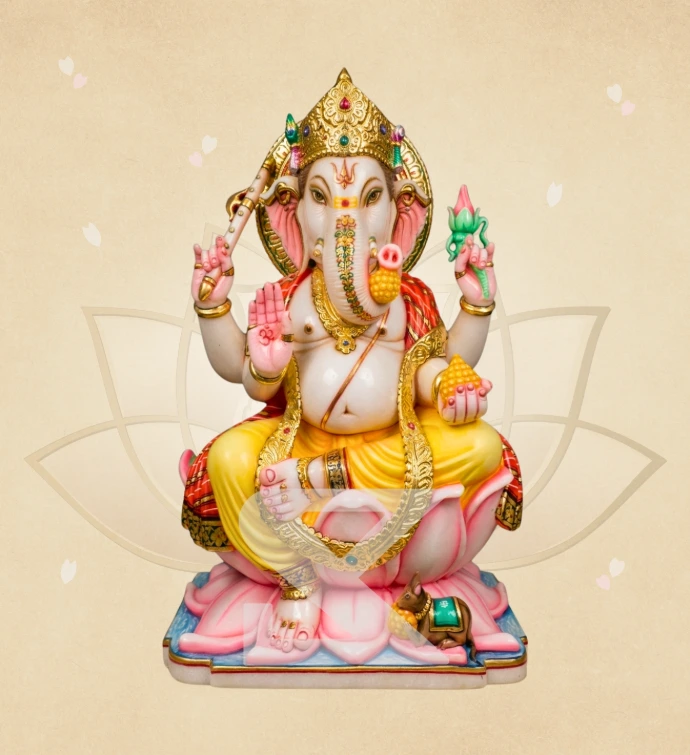
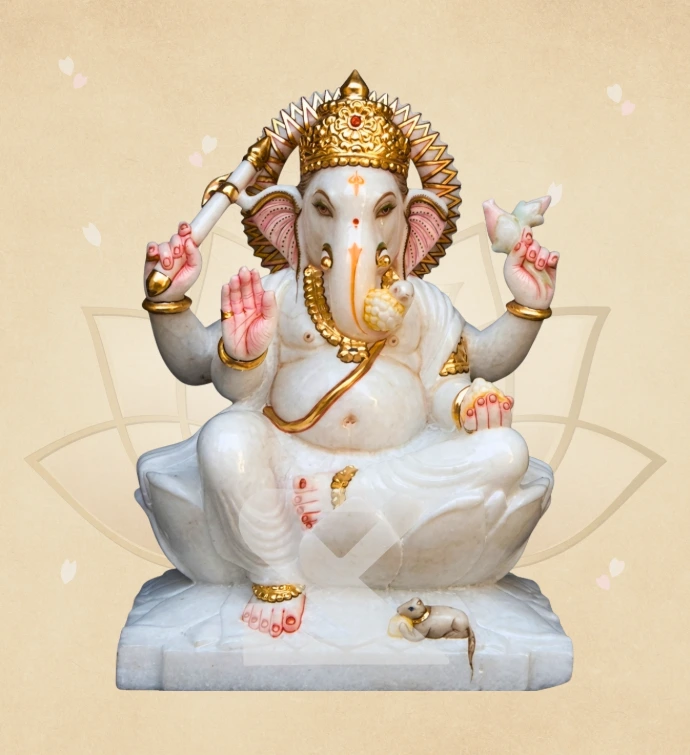
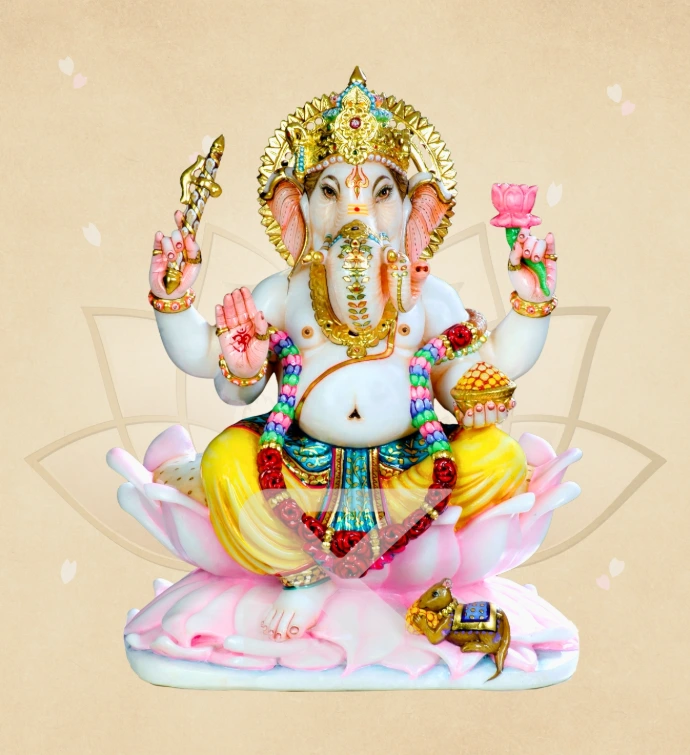
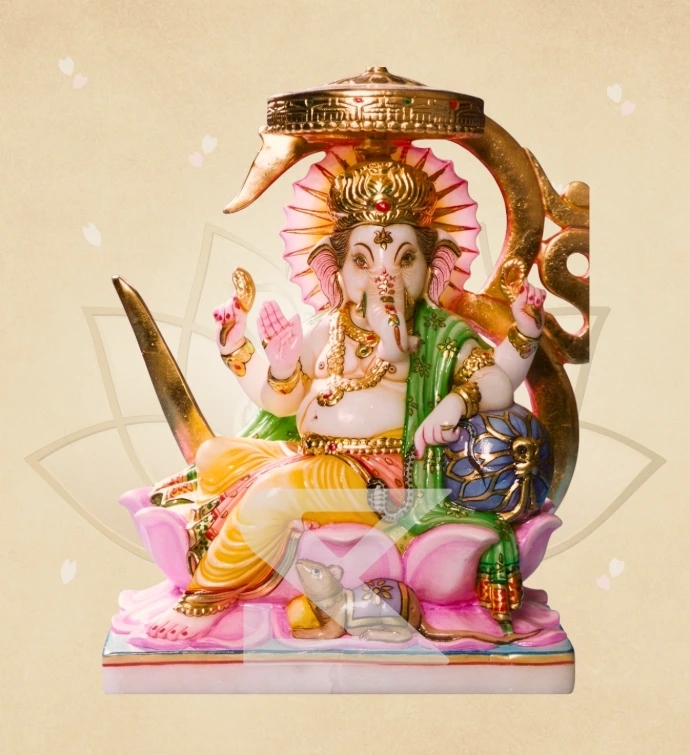
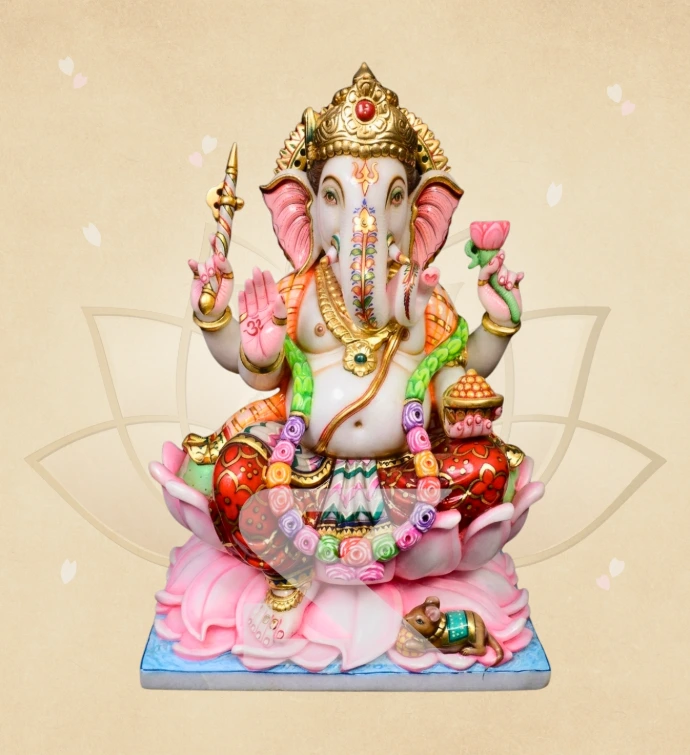
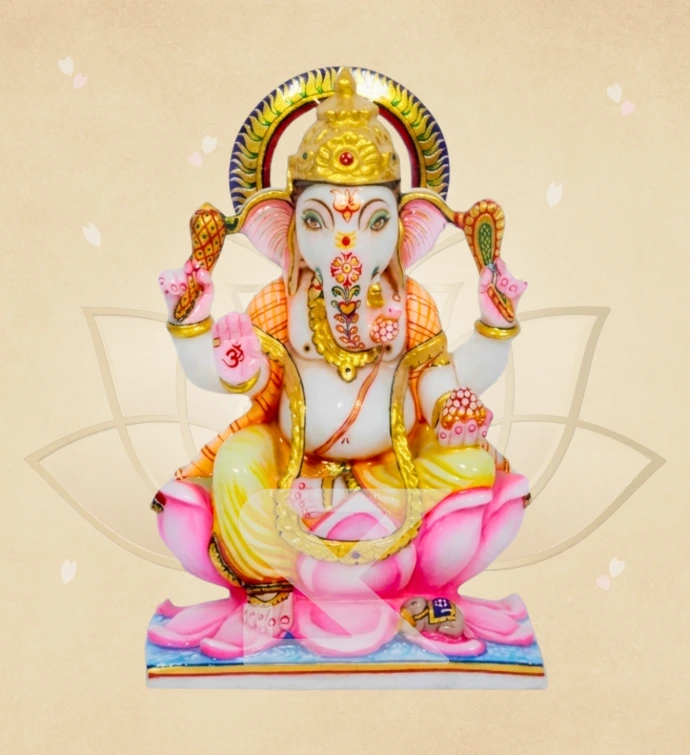
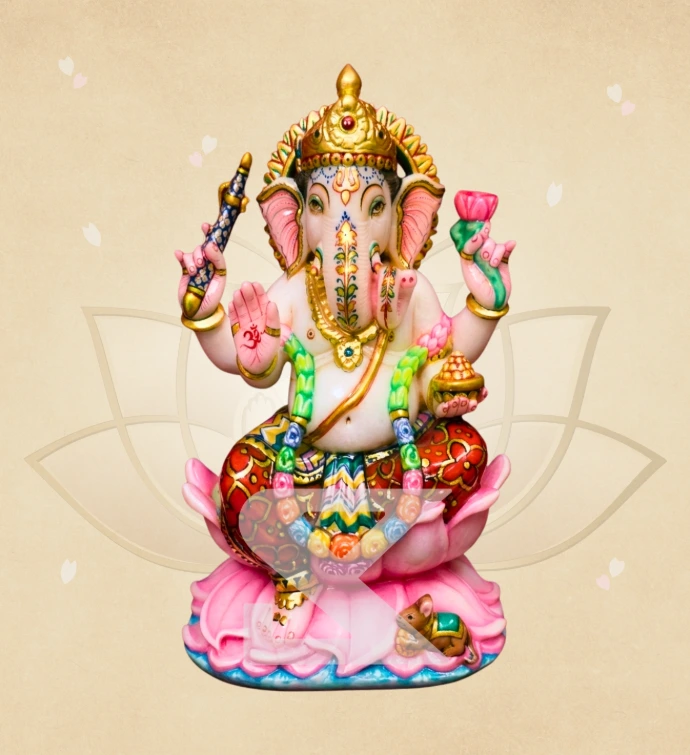
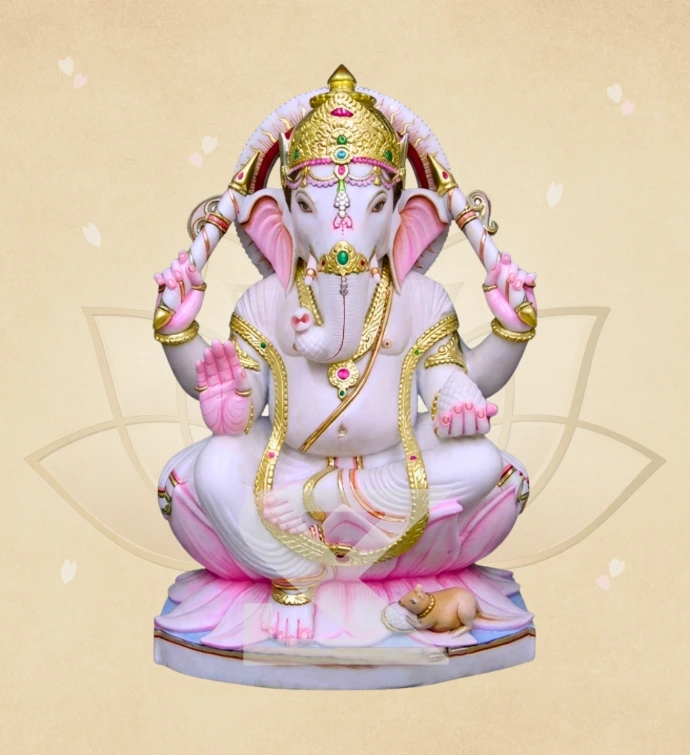
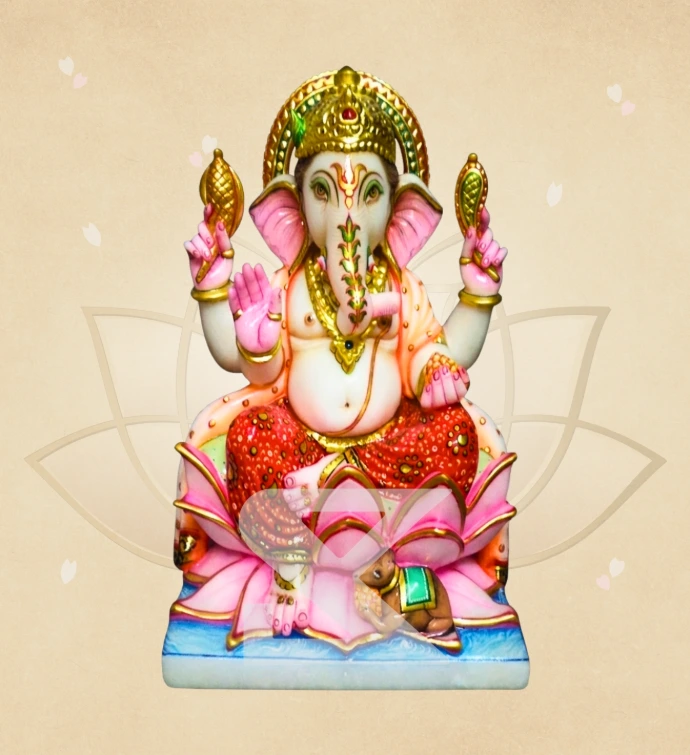
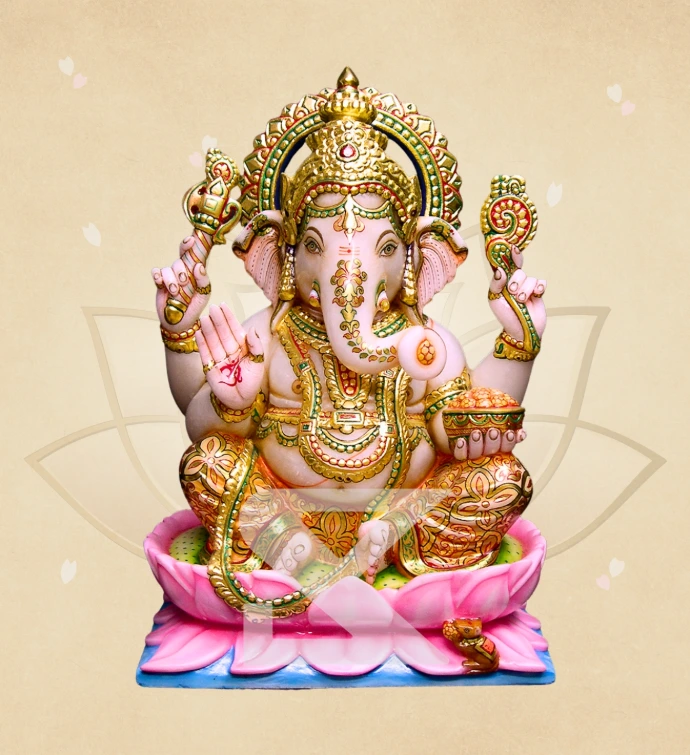
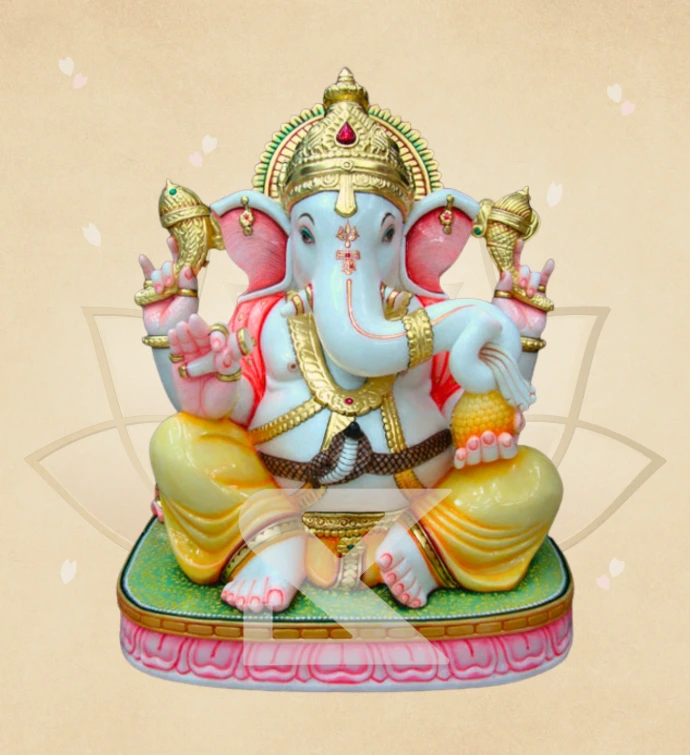
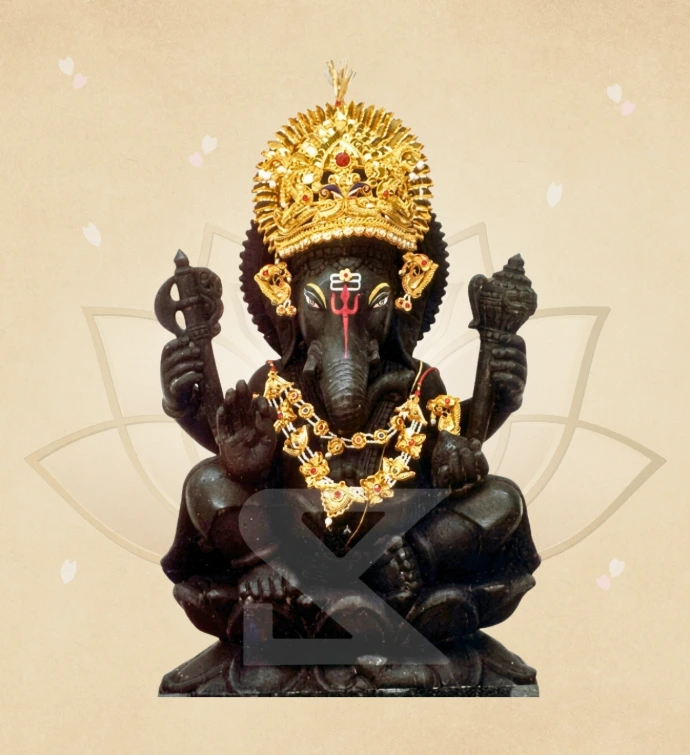
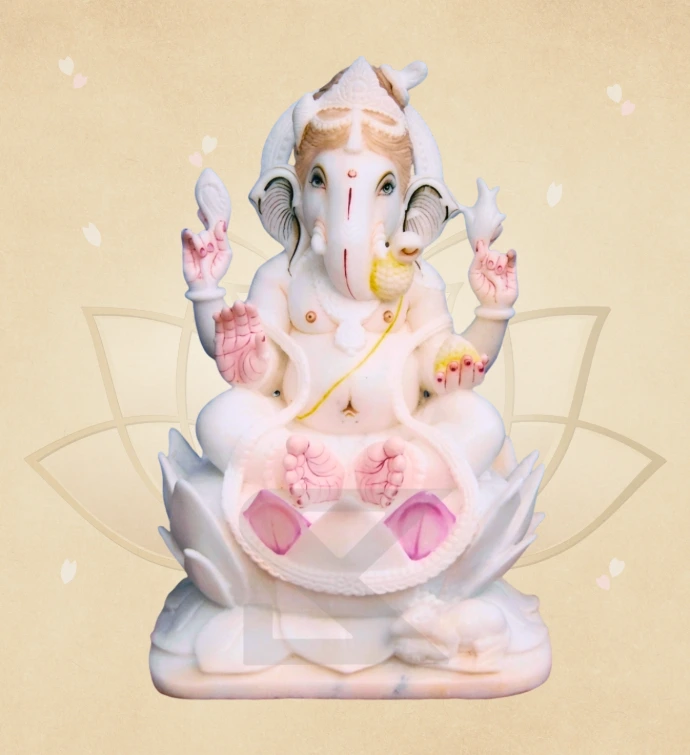
The lotus throne (Padma-pitha) is one of the most profound symbols in Hindu iconography. The lotus rises from muddy waters yet blooms pristine and beautiful — a metaphor for the divine soul that transcends worldly attachment while remaining engaged in the world. When Lord Ganesha is depicted seated upon this lotus, it conveys his role as the deity who blesses devotees with both material success and spiritual purity, anchoring grace within everyday life.
Worshipping Sitting Ganesha on Lotus is believed to bring purity of intention, clarity of thought, and harmonious flow in family life and business endeavours. The form is universally cherished across regional Hindu traditions — from Maharashtrian and Rajasthani temple iconography to South Indian classical compositions — and is considered especially auspicious for family mandirs, marriage rituals, griha pravesh ceremonies, and daily devotional practice.
Sitting Ganesha on Lotus is one of the most universally beloved Ganesha forms — perfectly suited to homes, family altars, temples, business establishments, and meditative spaces. The lotus throne imagery brings both visual elegance and deep devotional symbolism to any setting.
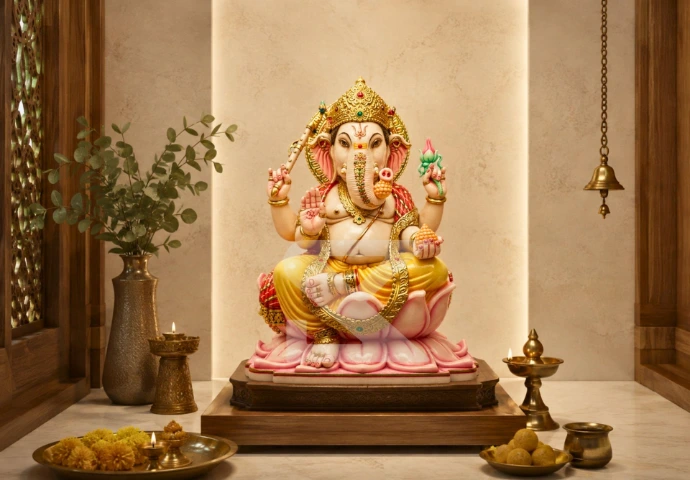
Place Sitting Ganesha on Lotus facing North, East, or Northeast — the most auspicious directions for inviting divine grace and positive energy. The lotus-seated form is exceptionally adaptable across spaces: it works beautifully in compact home mandirs, family living rooms, formal temple altars, and business reception areas. The seated lotus composition naturally becomes the visual focal point of any devotional setting.
A clean marble pedestal, decorated chowki, or temple altar at eye level or slightly above is ideal so the lotus throne and seated form can be viewed comfortably during darshan. Ensure adequate space in front for offerings, lit diyas, and floral decorations. For larger ornate variants with elaborate prabhavali, allow visual breathing room so the lotus base and iconographic detail can be fully appreciated. Avoid bedrooms, dining areas, and spaces near restrooms.
Common questions about Sitting Ganesha on Lotus — meaning, iconography, placement, and ordering.
Sitting Ganesha on Lotus, known in Sanskrit as Kamalasan Ganapati or Padma-pitha Ganapati, depicts Lord Ganesha seated upon a fully bloomed lotus throne. The Sanskrit Kamala means lotus and Asana means seat. The lotus throne (Padma-pitha) is one of the most sacred iconographic compositions in Hindu temple art, symbolising divine elevation, purity, and grace blooming above worldly attachment.
The lotus is the most revered flower in Hindu iconography. It grows from muddy waters yet emerges pristine and beautiful — a powerful metaphor for the divine soul that transcends worldly entanglement. When deities are depicted seated upon a lotus throne (Padma-pitha), it represents their role as bridges between the divine and material realms — elevated above attachment yet present to bless devotees. The lotus is associated with Lakshmi, Saraswati, Brahma, and especially with Ganesha as the bestower of pure beginnings.
Place Sitting Ganesha on Lotus in the North, East, or Northeast direction. It is ideally suited to home mandirs, family living rooms, formal temple altars, and business reception areas. Position the murti at eye level or slightly above on a clean chowki or pedestal. The lotus base is best appreciated when there is some space around the murti for floral offerings and diyas. Avoid bedrooms (apart from intentional gift contexts), dining areas, and spaces near restrooms.
The lotus-seated form is one of the most visually and iconographically varied Ganesha compositions in classical Hindu temple art. Our 33-design collection celebrates this richness — covering distinct halo styles (sunburst, flame, pearl, peacock), crown variations, regional aesthetic traditions, multi-armed cosmic forms, held attributes (lotus, modak, parashu, serpent), and material expressions (pure white marble, black stone, painted festival-grade). This depth allows devotees to find a piece that perfectly resonates with their devotional preference and space.
For home mandirs and family altars, 1–2 ft is the most popular size — substantial enough to be the devotional centrepiece while compact enough for living rooms and personal worship spaces. For larger living rooms or formal halls, 2–3.5 ft creates a striking devotional presence. Temple installations and business reception areas benefit from sizes of 3–5 ft and above. Smaller sizes (below 1 ft) work well for personal study desks, travel altars, or thoughtful gifting.
Each Sitting Ganesha on Lotus is hand-sculpted in premium Makrana marble by Shilakrut's master artisans with 50+ years of legacy. The lotus base demands special sculptural skill — each petal carved with delicate curvature, the throne forming a natural visual anchor below the seated deity. Every piece undergoes meticulous multi-stage finishing and quality checks. Customisation in size, lotus petal style, painting and ornamentation level, prabhavali design, and finish is available across all 33 designs — share the SKU code via WhatsApp or email for tailored options.
Discover the complete range of marble Ganesha designs at Shilakrut.
Share any SKU code from this collection of 33 designs and our team will reach out with complete details — sizes, pricing, customisation, and delivery timelines. Welcome the auspicious lotus-throne seated form into your home, temple, or family altar.
Marble Sitting Ganesha on Lotus Murti
Kamalasan Ganapati — The Lotus-Throne Seated Divine FormSitting Ganesha on Lotus, known in Sanskrit as Kamalasan Ganapati or Padma-pitha Ganapati, depicts Lord Ganesha seated gracefully upon a fully bloomed lotus throne. The Sanskrit term Kamala means 'lotus' and Asana means 'seat' — representing the deity's divine elevation above worldly attachments while remaining accessible to devotees. The lotus throne (Padma-pitha) is one of the most sacred iconographic compositions in Hindu temple art.
Shilakrut's curated collection of 33 unique Sitting Ganesha on Lotus designs celebrates this beloved devotional form across diverse iconographic interpretations — from pure white minimalist forms to ornate gemmed thrones, peacock-themed halos, multi-armed cosmic variants, and rare regional styles. Hand-sculpted in premium Makrana marble by master artisans with 50+ years of legacy, each murti brings the auspicious lotus-throne seated form into homes, family altars, temples, and meditative devotional spaces.
Explore 33 unique Sitting Ganesha on Lotus designs — each hand-sculpted in premium Makrana marble. From pure white minimalist forms to opulent gemmed thrones, peacock-themed halos, multi-armed cosmic variants, and rare regional styles. Tap any icon below to enquire about sizes, pricing, and customisation.
The lotus throne (Padma-pitha) is one of the most profound symbols in Hindu iconography. The lotus rises from muddy waters yet blooms pristine and beautiful — a metaphor for the divine soul that transcends worldly attachment while remaining engaged in the world. When Lord Ganesha is depicted seated upon this lotus, it conveys his role as the deity who blesses devotees with both material success and spiritual purity, anchoring grace within everyday life.
Worshipping Sitting Ganesha on Lotus is believed to bring purity of intention, clarity of thought, and harmonious flow in family life and business endeavours. The form is universally cherished across regional Hindu traditions — from Maharashtrian and Rajasthani temple iconography to South Indian classical compositions — and is considered especially auspicious for family mandirs, marriage rituals, griha pravesh ceremonies, and daily devotional practice.
Sitting Ganesha on Lotus is one of the most universally beloved Ganesha forms — perfectly suited to homes, family altars, temples, business establishments, and meditative spaces. The lotus throne imagery brings both visual elegance and deep devotional symbolism to any setting.
Place Sitting Ganesha on Lotus facing North, East, or Northeast — the most auspicious directions for inviting divine grace and positive energy. The lotus-seated form is exceptionally adaptable across spaces: it works beautifully in compact home mandirs, family living rooms, formal temple altars, and business reception areas. The seated lotus composition naturally becomes the visual focal point of any devotional setting.
A clean marble pedestal, decorated chowki, or temple altar at eye level or slightly above is ideal so the lotus throne and seated form can be viewed comfortably during darshan. Ensure adequate space in front for offerings, lit diyas, and floral decorations. For larger ornate variants with elaborate prabhavali, allow visual breathing room so the lotus base and iconographic detail can be fully appreciated. Avoid bedrooms, dining areas, and spaces near restrooms.
Common questions about Sitting Ganesha on Lotus — meaning, iconography, placement, and ordering.
Sitting Ganesha on Lotus, known in Sanskrit as Kamalasan Ganapati or Padma-pitha Ganapati, depicts Lord Ganesha seated upon a fully bloomed lotus throne. The Sanskrit Kamala means lotus and Asana means seat. The lotus throne (Padma-pitha) is one of the most sacred iconographic compositions in Hindu temple art, symbolising divine elevation, purity, and grace blooming above worldly attachment.
The lotus is the most revered flower in Hindu iconography. It grows from muddy waters yet emerges pristine and beautiful — a powerful metaphor for the divine soul that transcends worldly entanglement. When deities are depicted seated upon a lotus throne (Padma-pitha), it represents their role as bridges between the divine and material realms — elevated above attachment yet present to bless devotees. The lotus is associated with Lakshmi, Saraswati, Brahma, and especially with Ganesha as the bestower of pure beginnings.
Place Sitting Ganesha on Lotus in the North, East, or Northeast direction. It is ideally suited to home mandirs, family living rooms, formal temple altars, and business reception areas. Position the murti at eye level or slightly above on a clean chowki or pedestal. The lotus base is best appreciated when there is some space around the murti for floral offerings and diyas. Avoid bedrooms (apart from intentional gift contexts), dining areas, and spaces near restrooms.
The lotus-seated form is one of the most visually and iconographically varied Ganesha compositions in classical Hindu temple art. Our 33-design collection celebrates this richness — covering distinct halo styles (sunburst, flame, pearl, peacock), crown variations, regional aesthetic traditions, multi-armed cosmic forms, held attributes (lotus, modak, parashu, serpent), and material expressions (pure white marble, black stone, painted festival-grade). This depth allows devotees to find a piece that perfectly resonates with their devotional preference and space.
For home mandirs and family altars, 1–2 ft is the most popular size — substantial enough to be the devotional centrepiece while compact enough for living rooms and personal worship spaces. For larger living rooms or formal halls, 2–3.5 ft creates a striking devotional presence. Temple installations and business reception areas benefit from sizes of 3–5 ft and above. Smaller sizes (below 1 ft) work well for personal study desks, travel altars, or thoughtful gifting.
Each Sitting Ganesha on Lotus is hand-sculpted in premium Makrana marble by Shilakrut's master artisans with 50+ years of legacy. The lotus base demands special sculptural skill — each petal carved with delicate curvature, the throne forming a natural visual anchor below the seated deity. Every piece undergoes meticulous multi-stage finishing and quality checks. Customisation in size, lotus petal style, painting and ornamentation level, prabhavali design, and finish is available across all 33 designs — share the SKU code via WhatsApp or email for tailored options.
Discover the complete range of marble Ganesha designs at Shilakrut.
Share any SKU code from this collection of 33 designs and our team will reach out with complete details — sizes, pricing, customisation, and delivery timelines. Welcome the auspicious lotus-throne seated form into your home, temple, or family altar.