Marble Parshvanath Statue, Murti & Idol — Premium Handcrafted in India
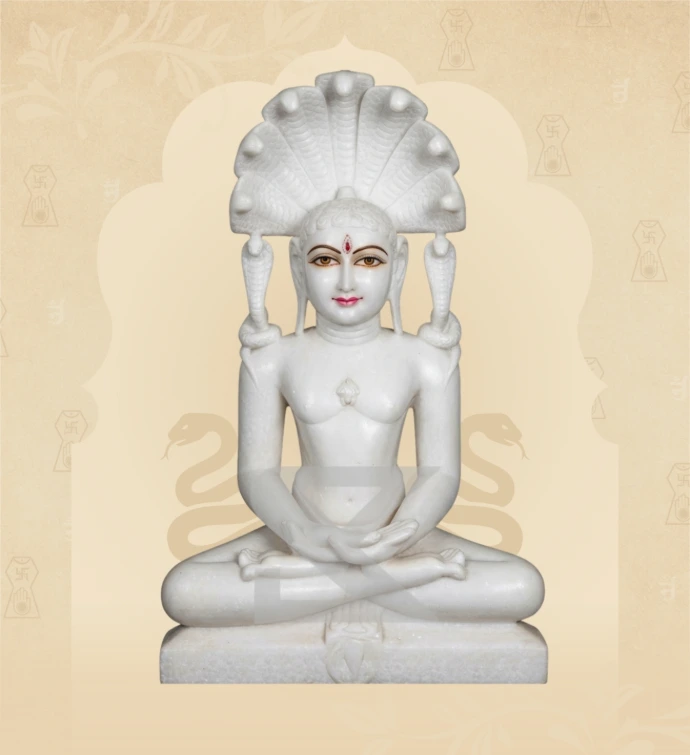
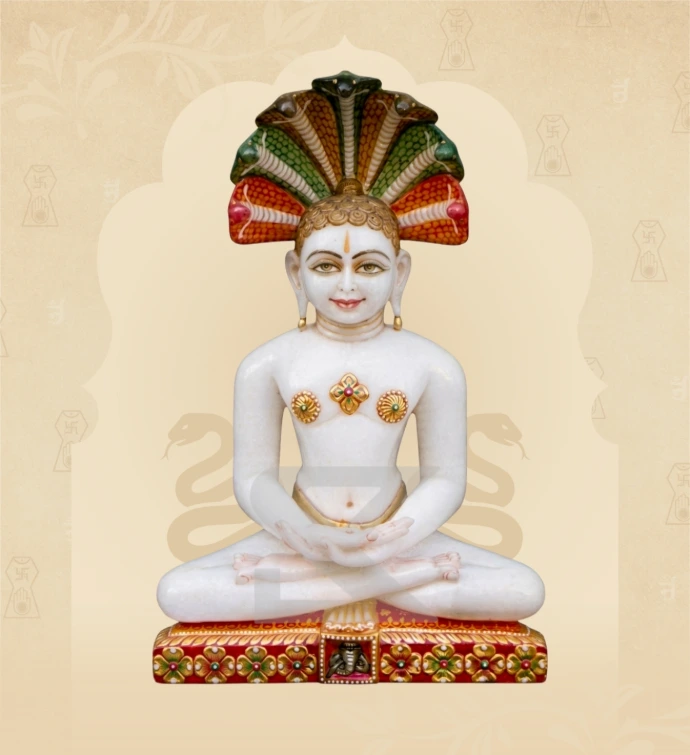
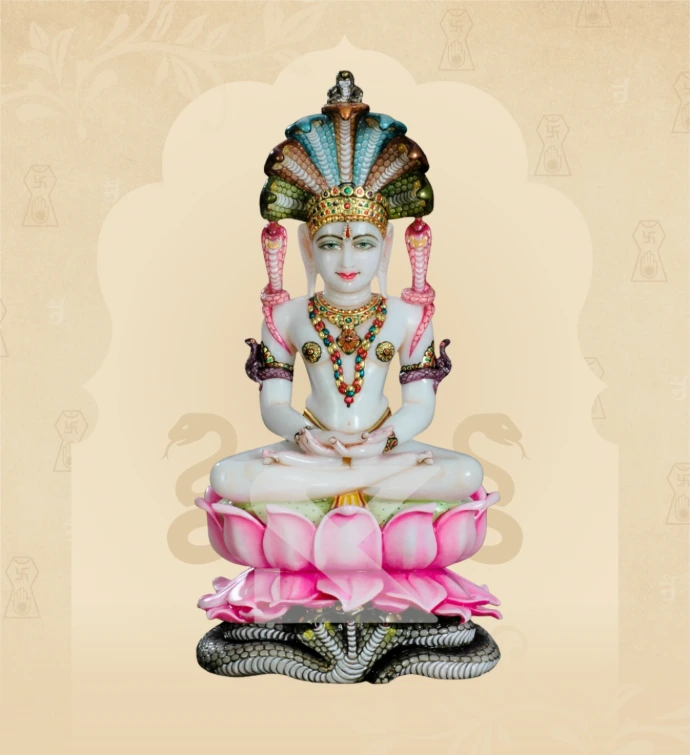
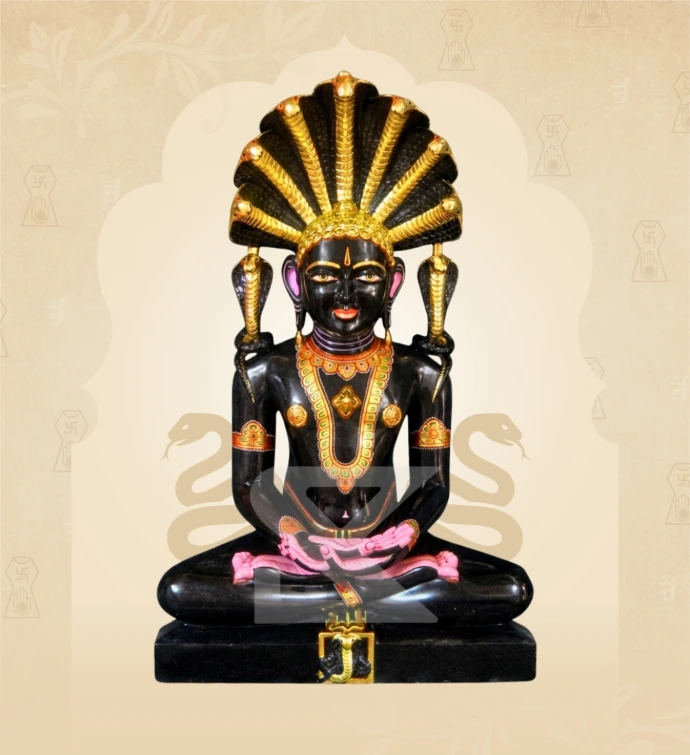
Handcrafted in premium Makrana marble by master artisans with 50+ years of legacy. Explore seated and standing Marble Parshvanath Statue designs, hand-carved with intricate detailing — sacred serpent hoods and traditional Jain iconography. Custom sizes available.
Bhagwan Parshvanath is revered as the 23rd Tirthankara of Jainism, preceding Bhagwan Mahavira. According to Jain tradition, he was born in Varanasi to King Ashwasena and Queen Vamadevi of the Ikshvaku dynasty, and is regarded by historians as among the earliest Tirthankaras for whom independent historical evidence exists.
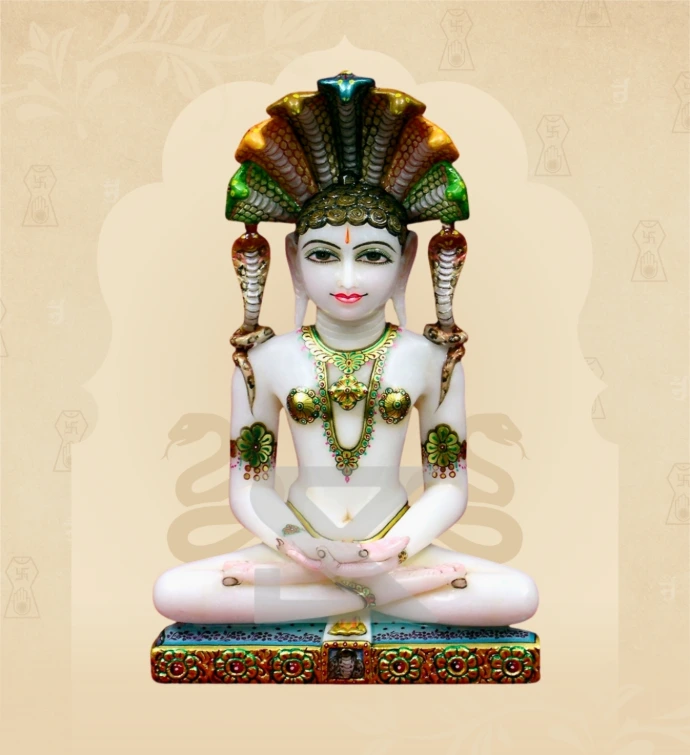
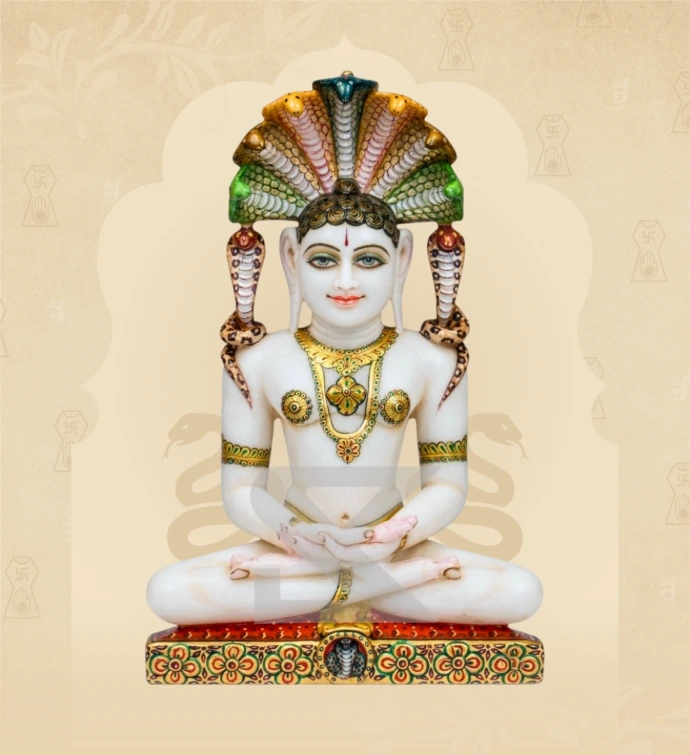
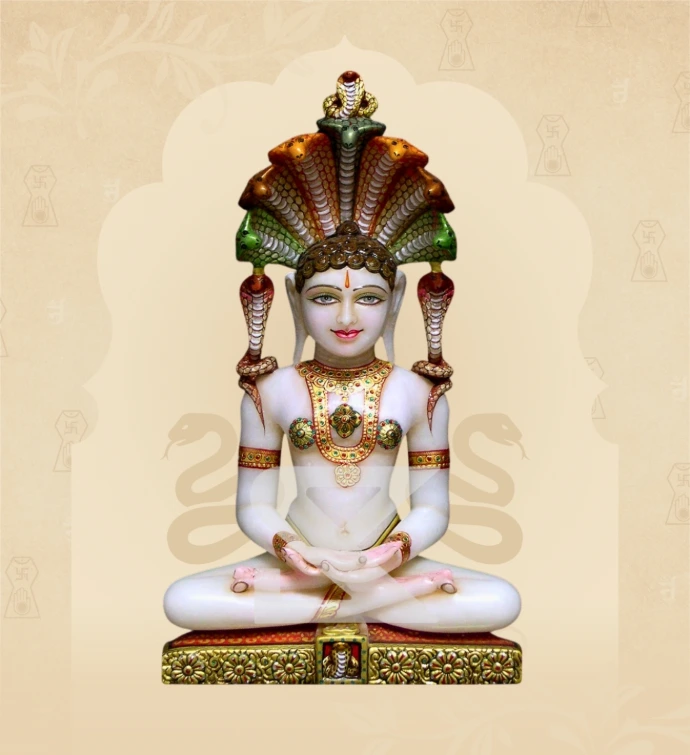
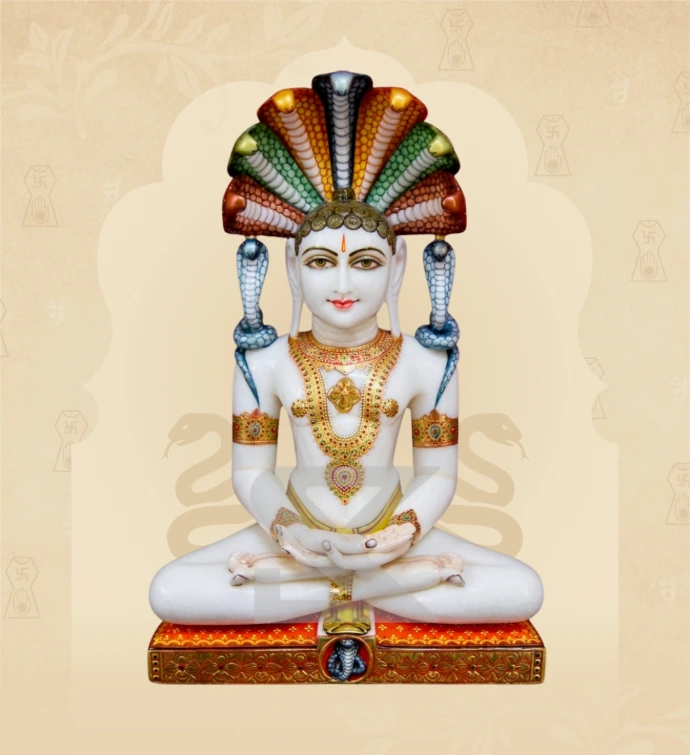
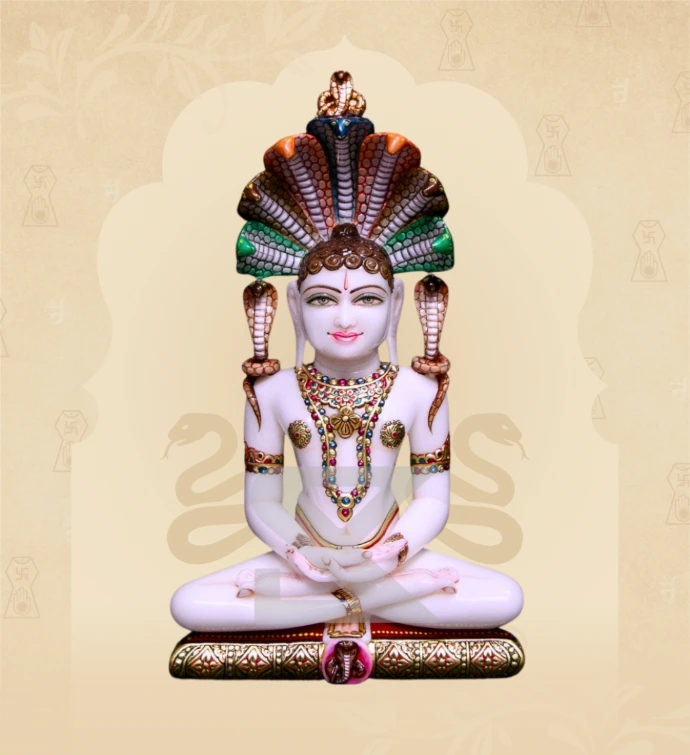
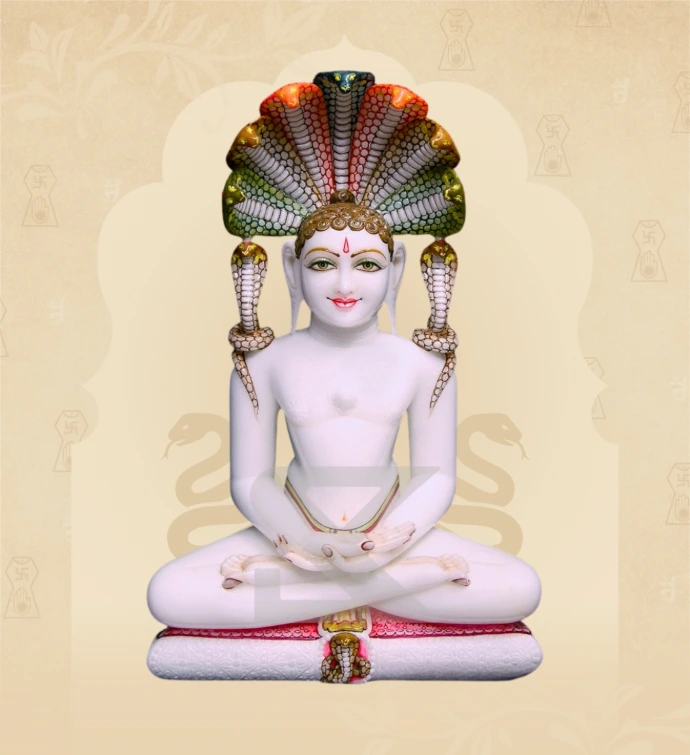
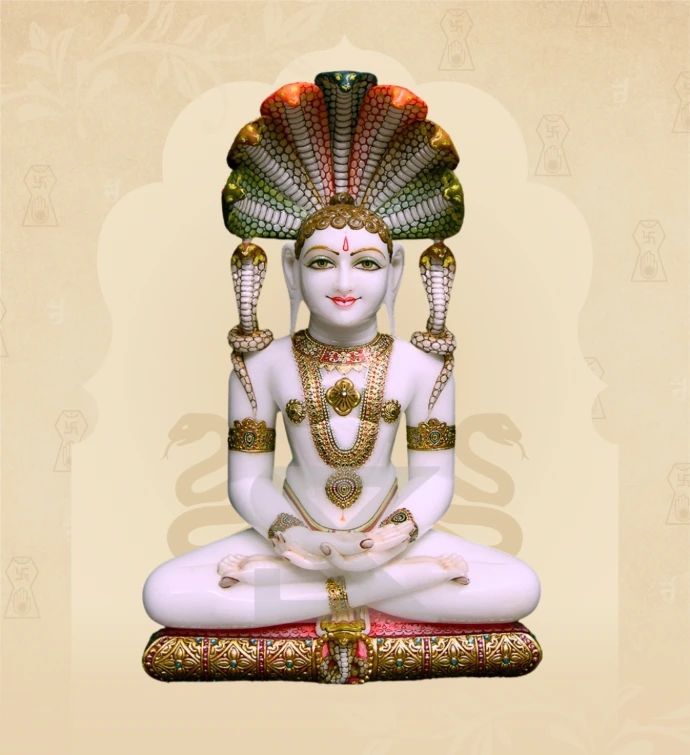
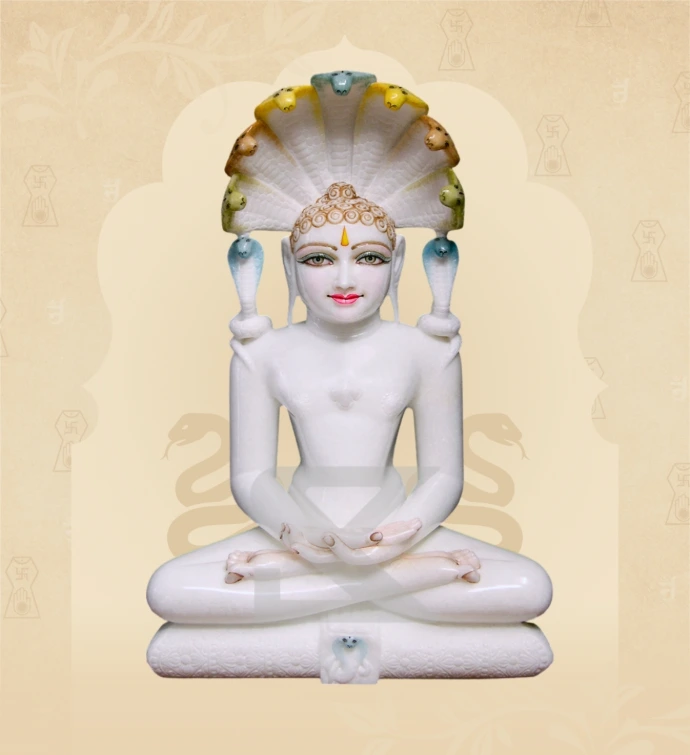
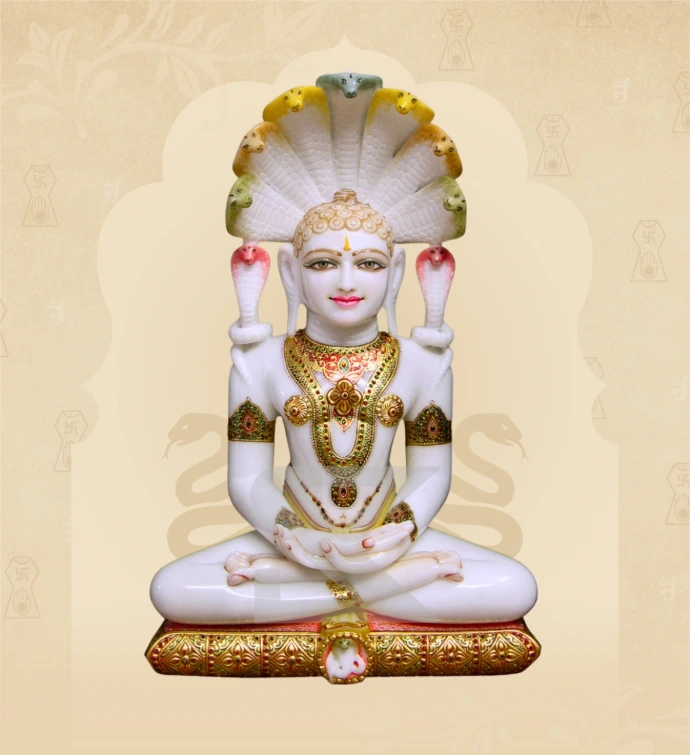
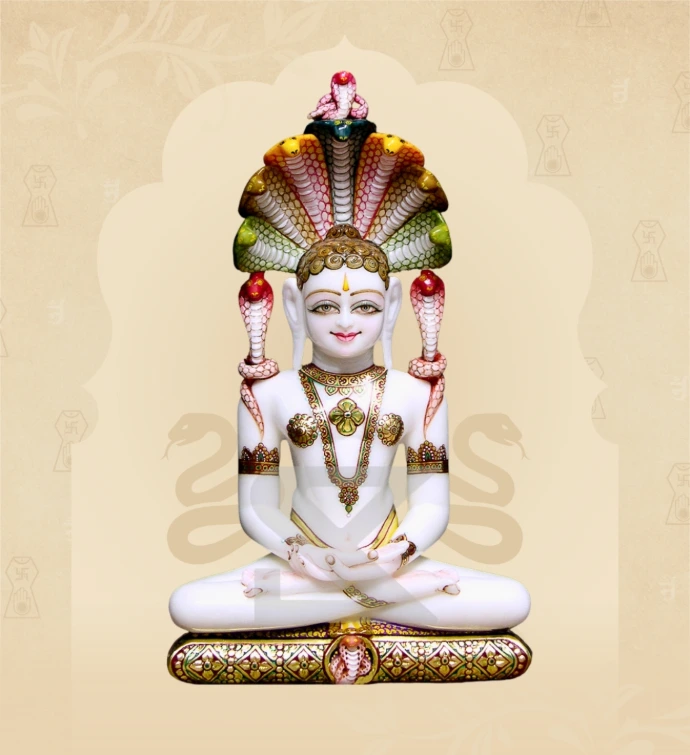
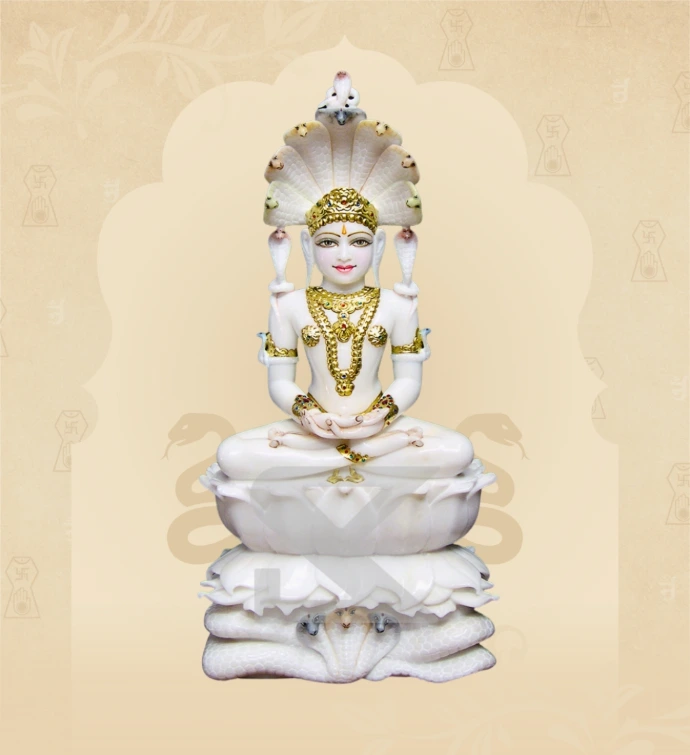
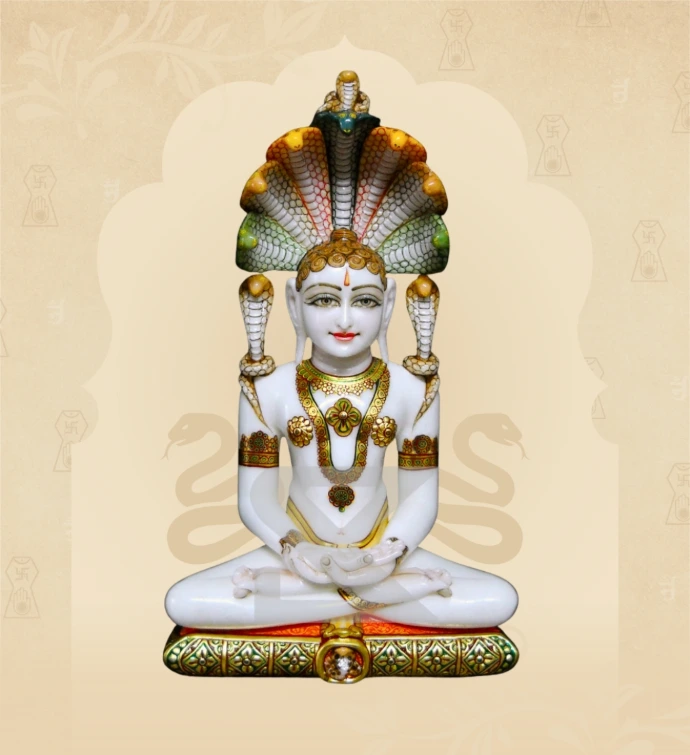
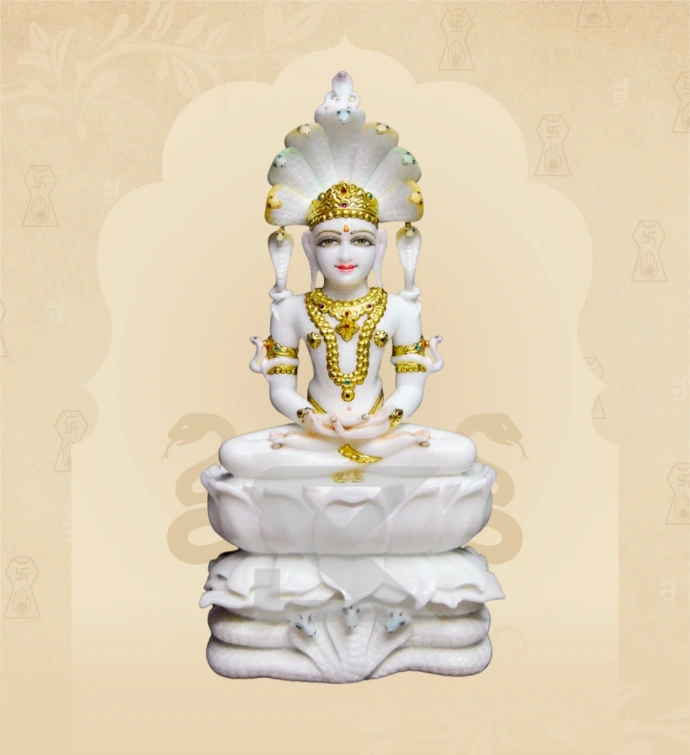
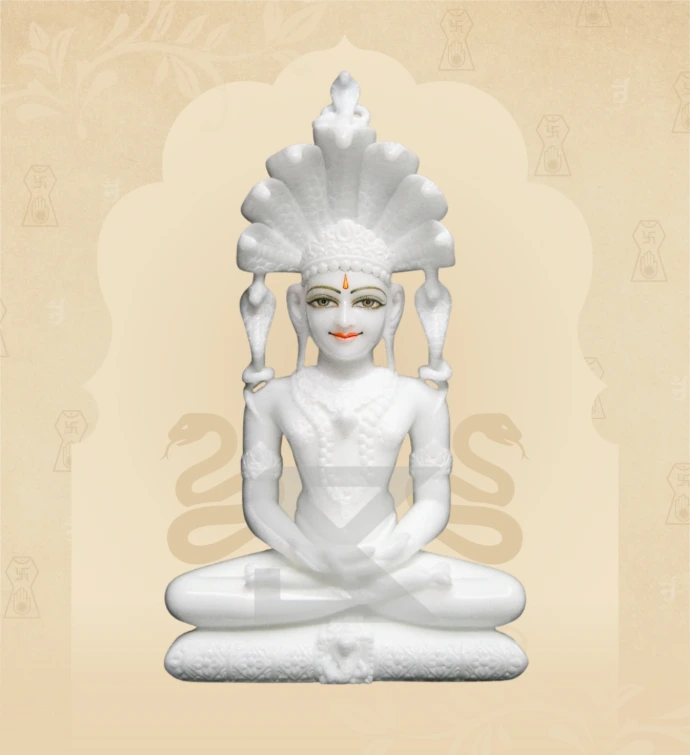
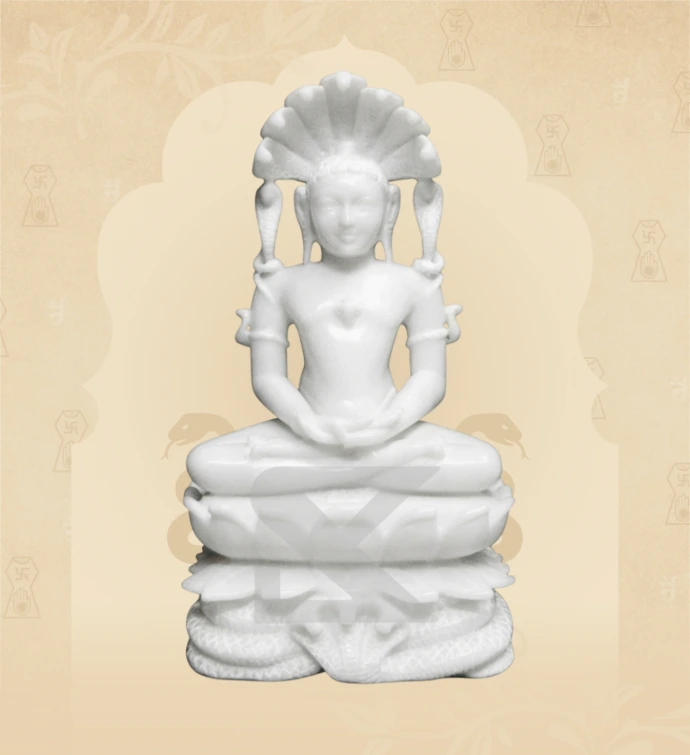
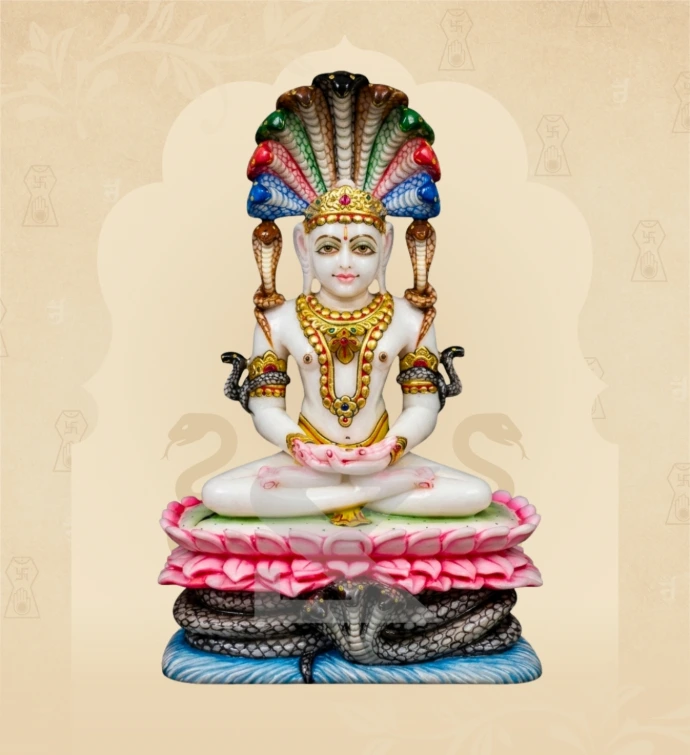
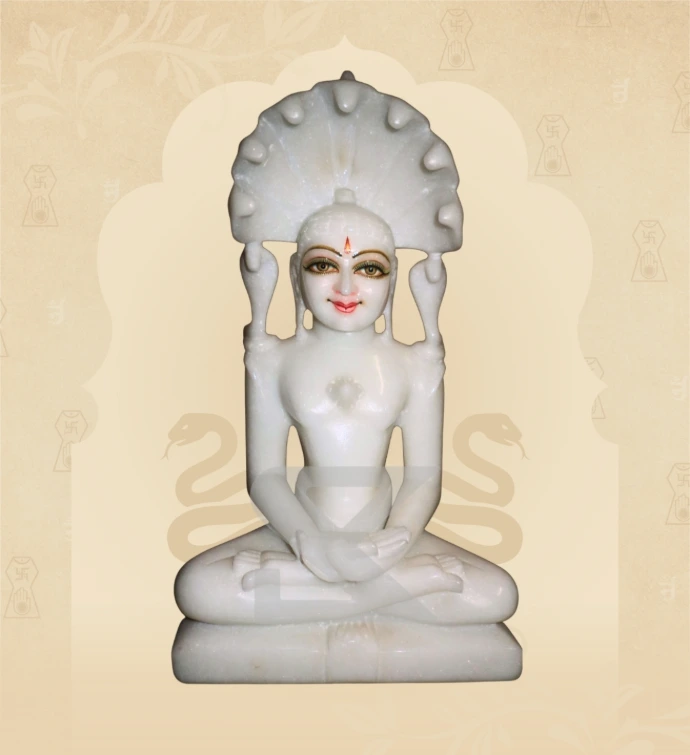
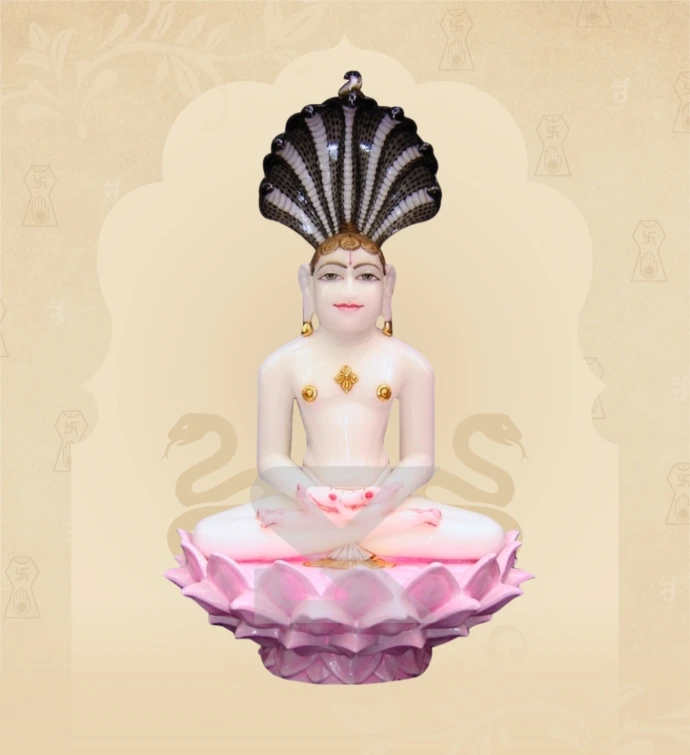
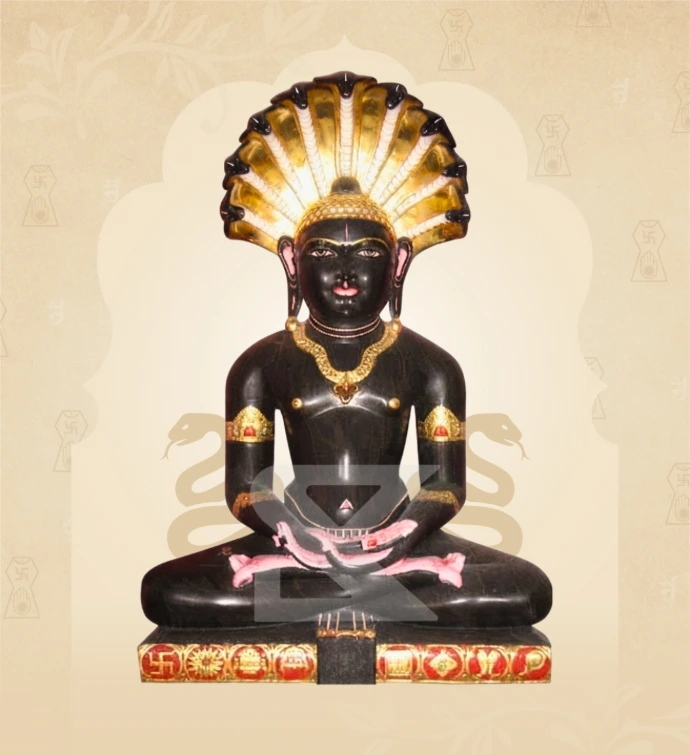
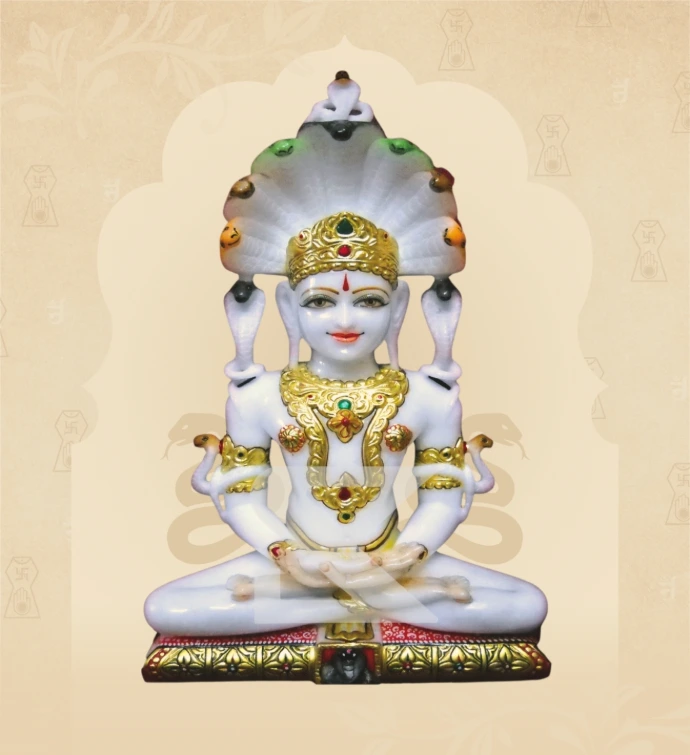
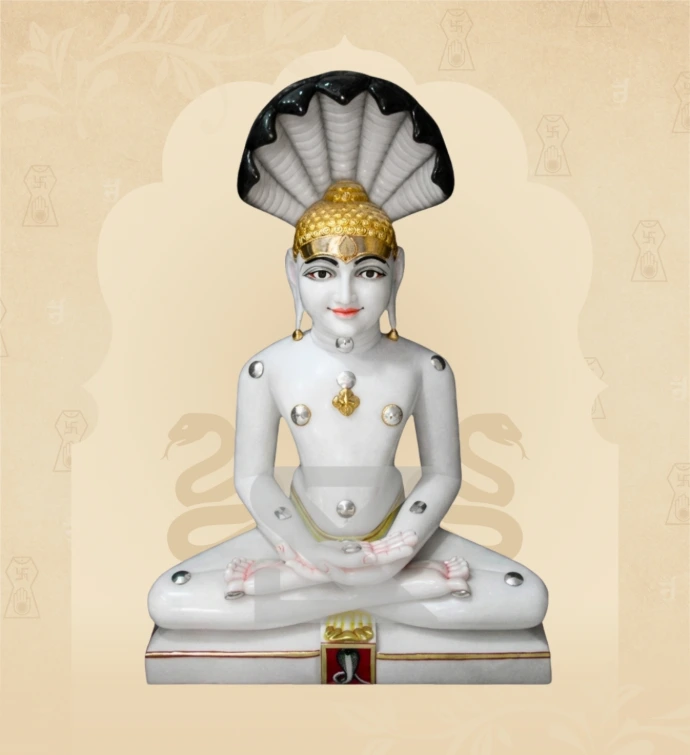
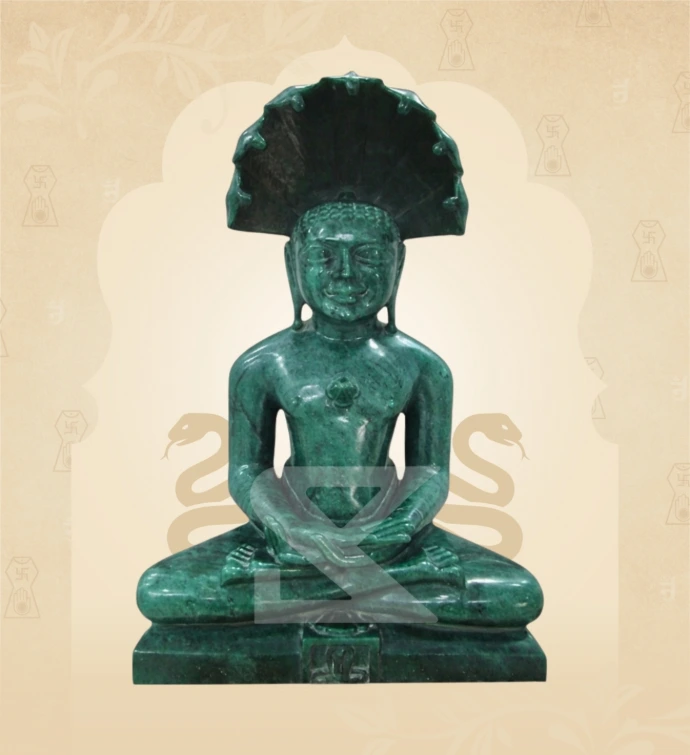
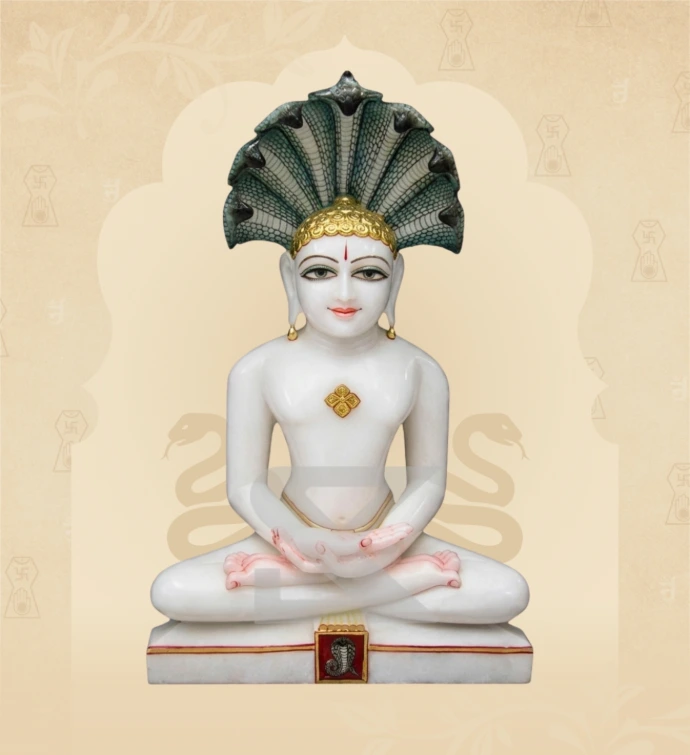
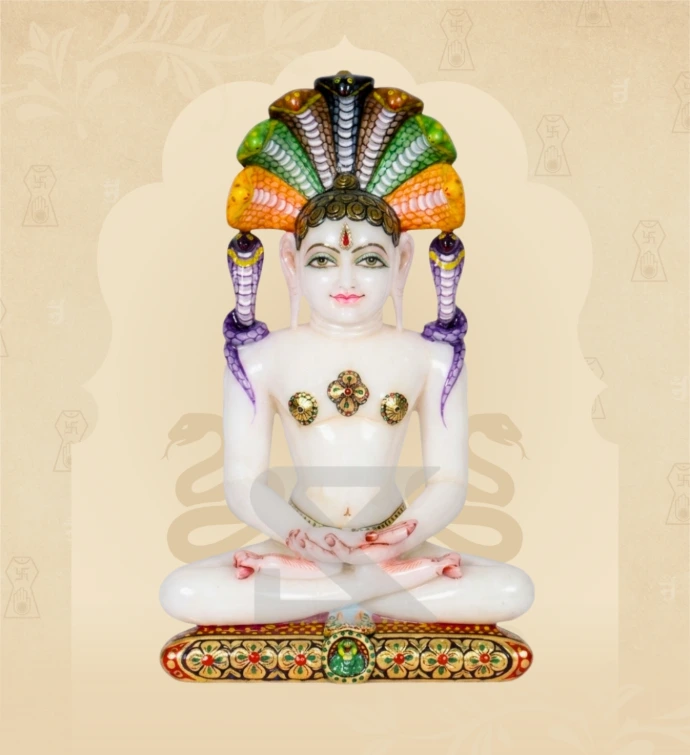
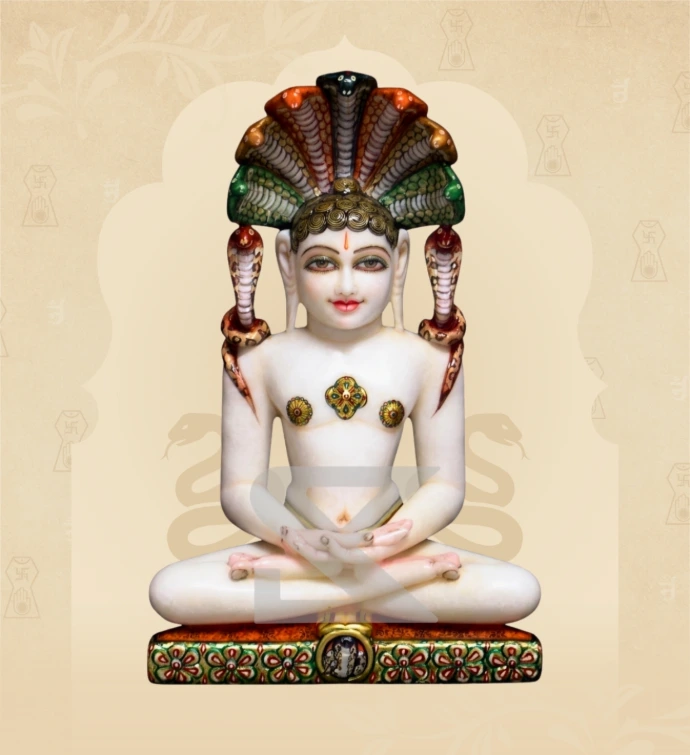
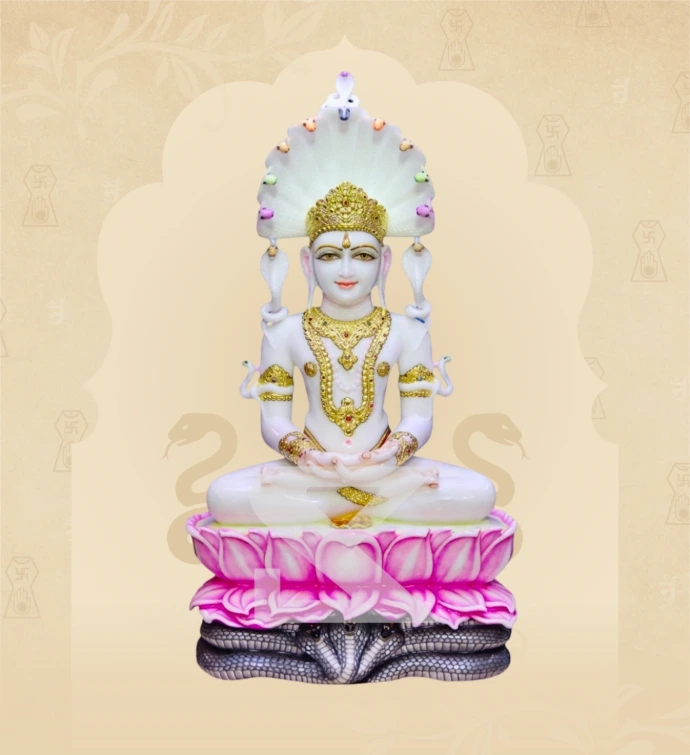
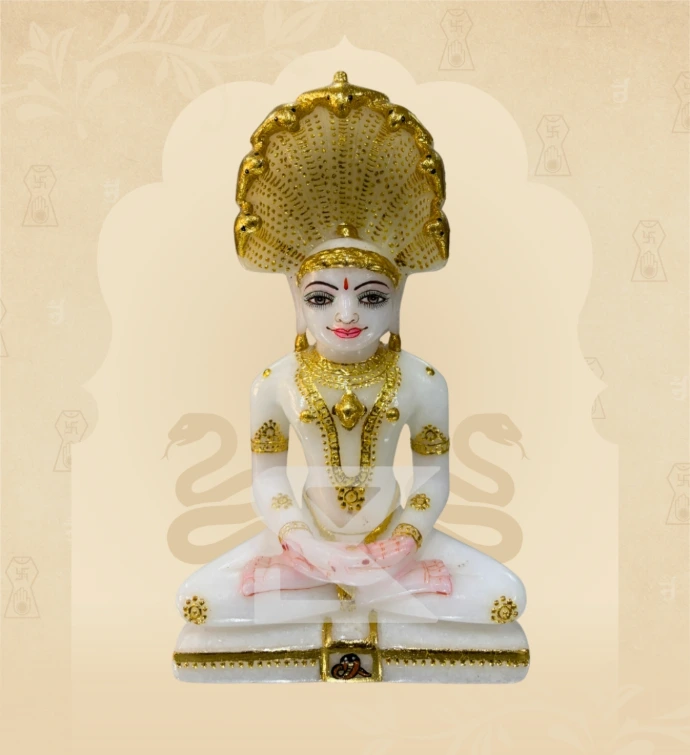
Parshvanath's iconography is instantly recognisable by the canopy of serpent hoods that rises above his head — a symbol of steadfast meditation protected by the serpent king Dharanendra. At Shilakrut, every handcrafted Marble Parshvanath Statue is sculpted from premium Makrana marble, preserving this sacred iconography with the serenity, balance, and quiet strength associated with the Tirthankara tradition.
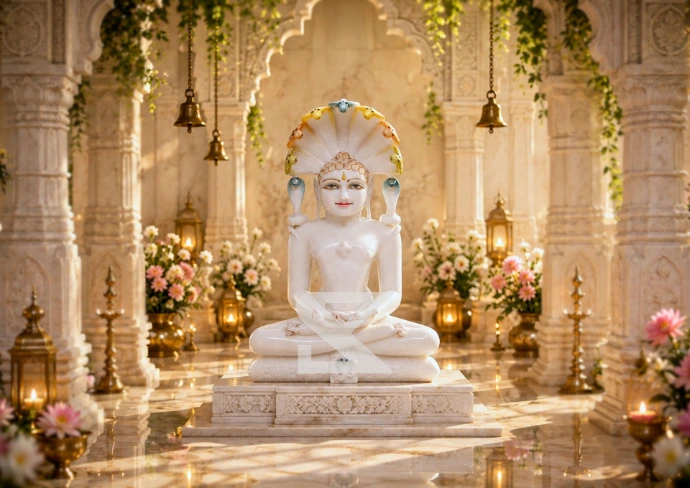
Parshvanath is among the most widely worshipped Tirthankaras across both Digambara and Shvetambara Jain traditions, with major pilgrimage centres including Shri Sammed Shikharji (Parasnath Hill) in Jharkhand, where he is believed to have attained liberation (moksha).
Every Marble Parshvanath Statue at Shilakrut is handcrafted from premium Makrana marble by master artisans — explore our collection of unique designs below and share any SKU code to enquire about sizes, pricing, and customisation.
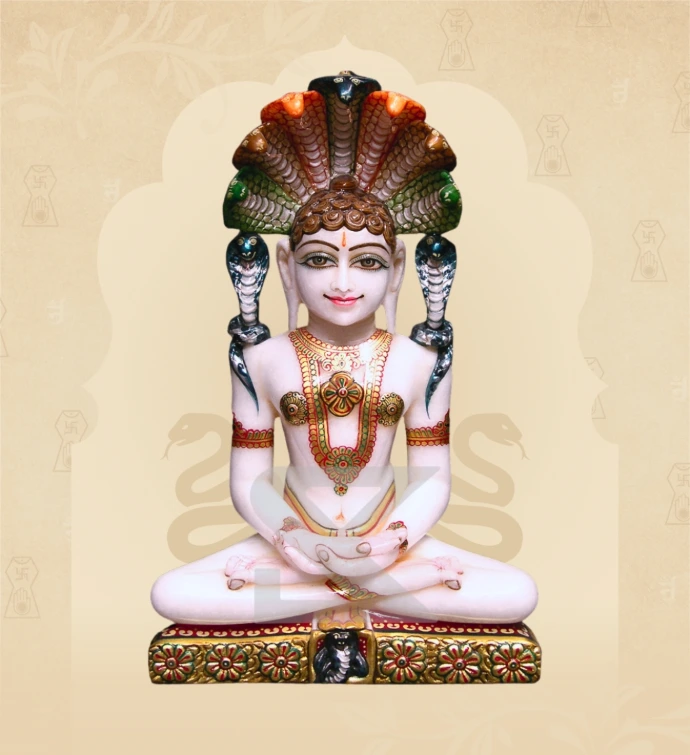
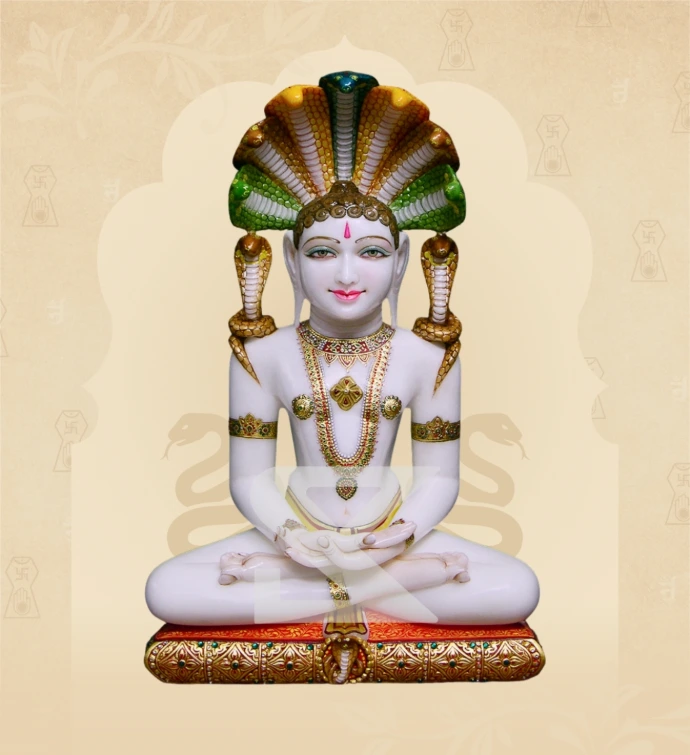
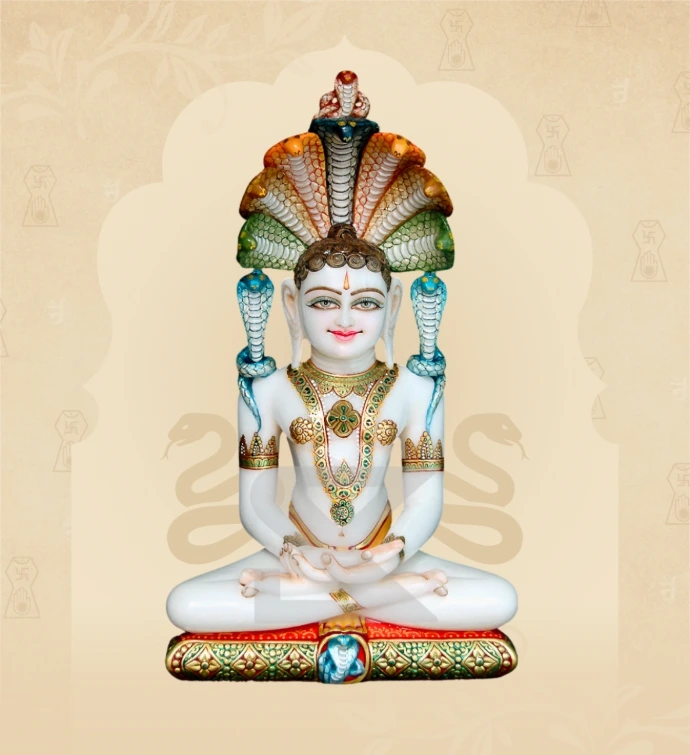
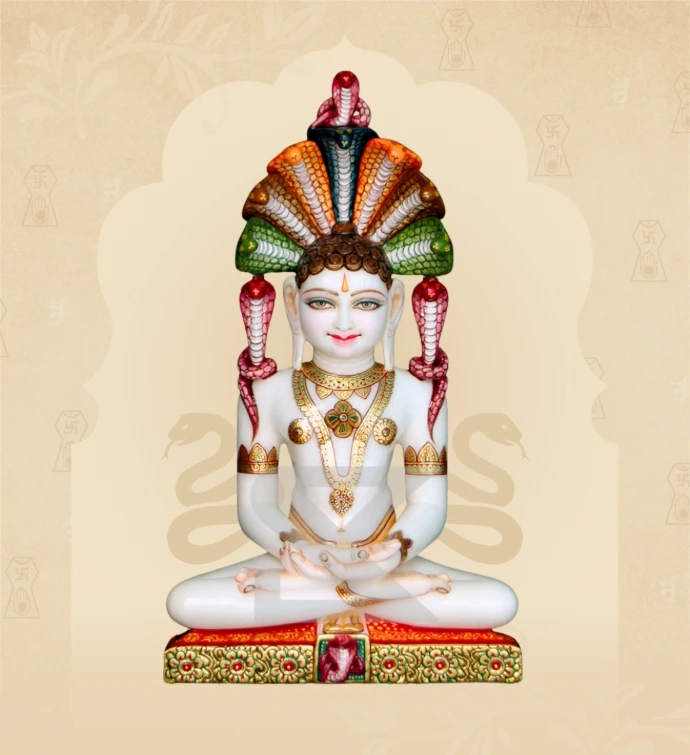
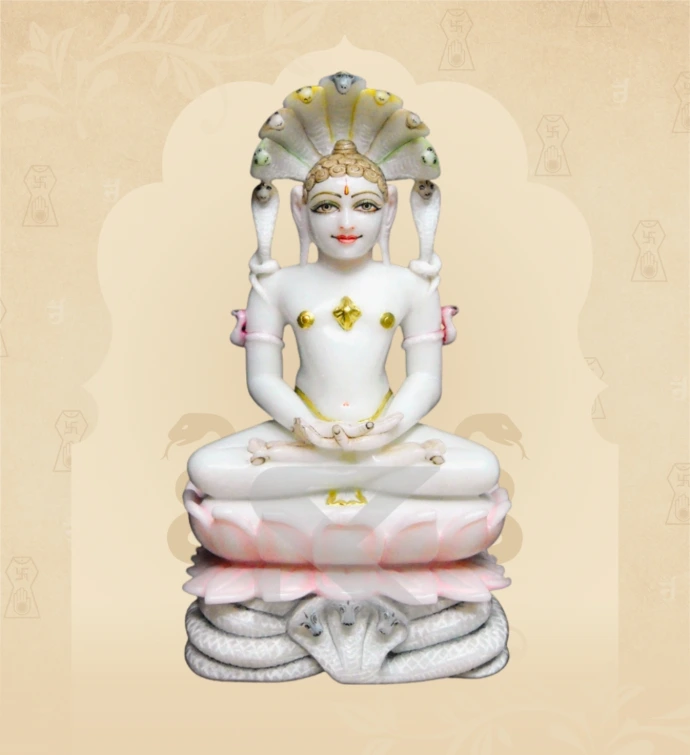
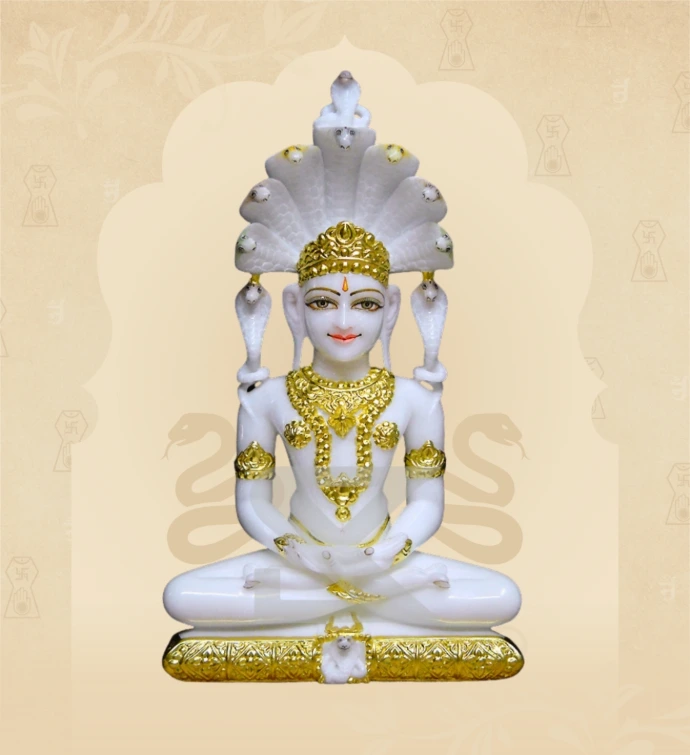
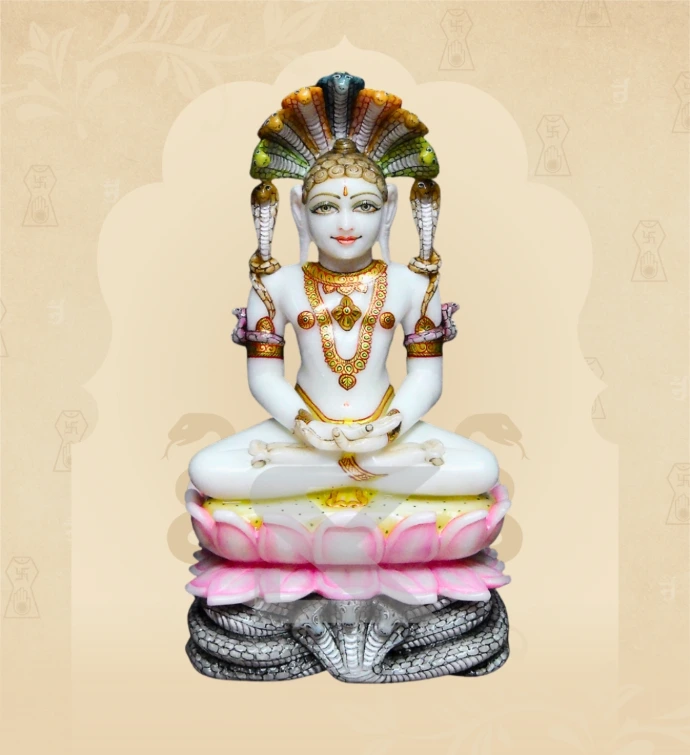
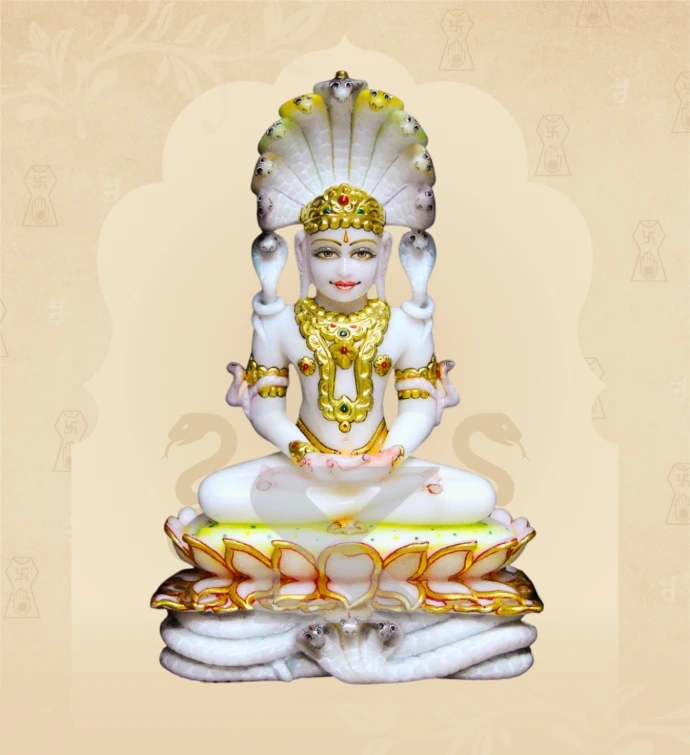
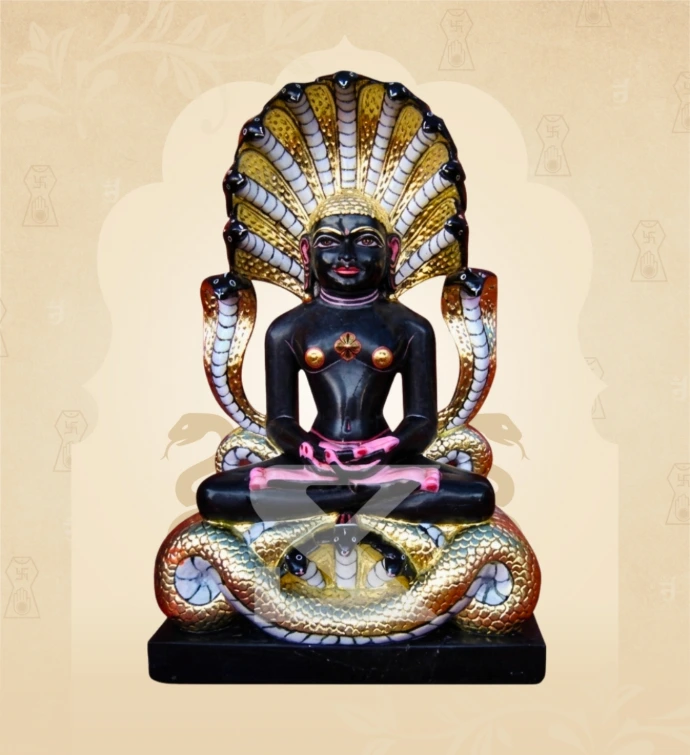
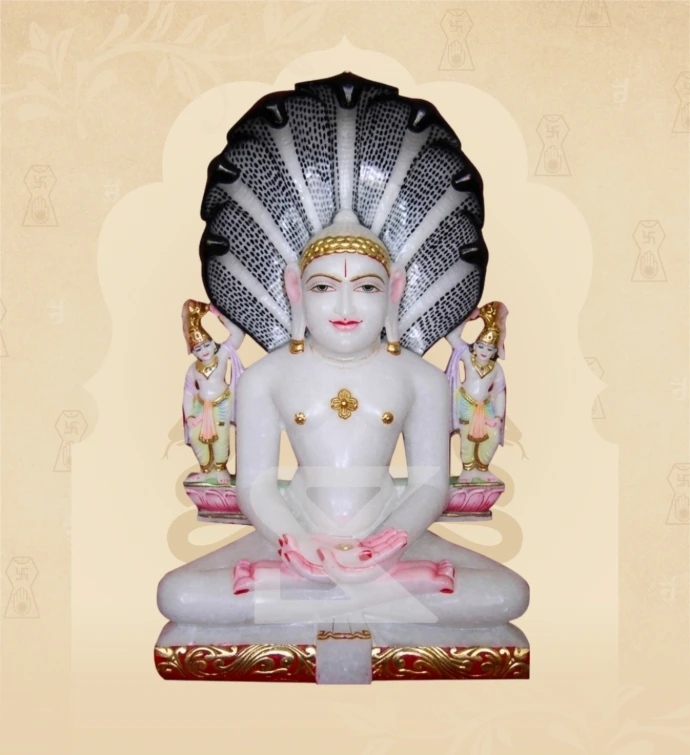
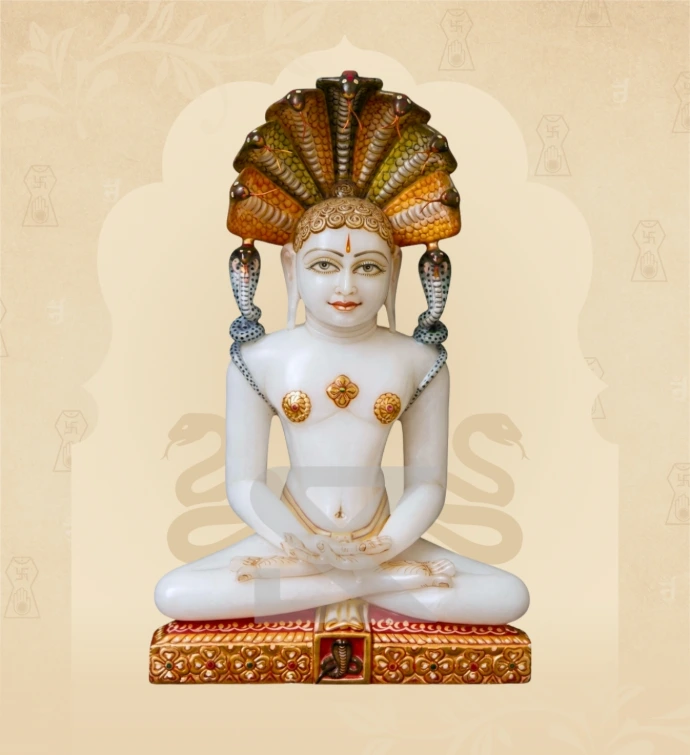
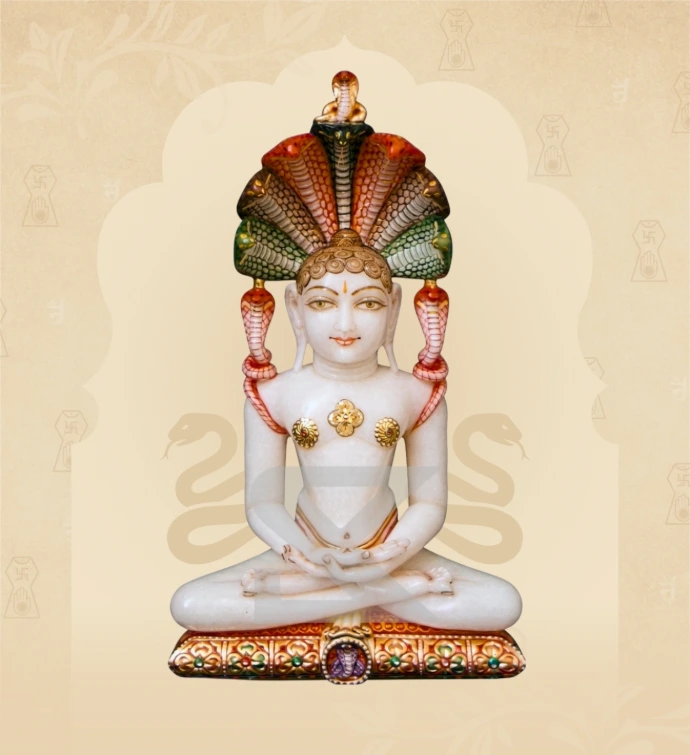
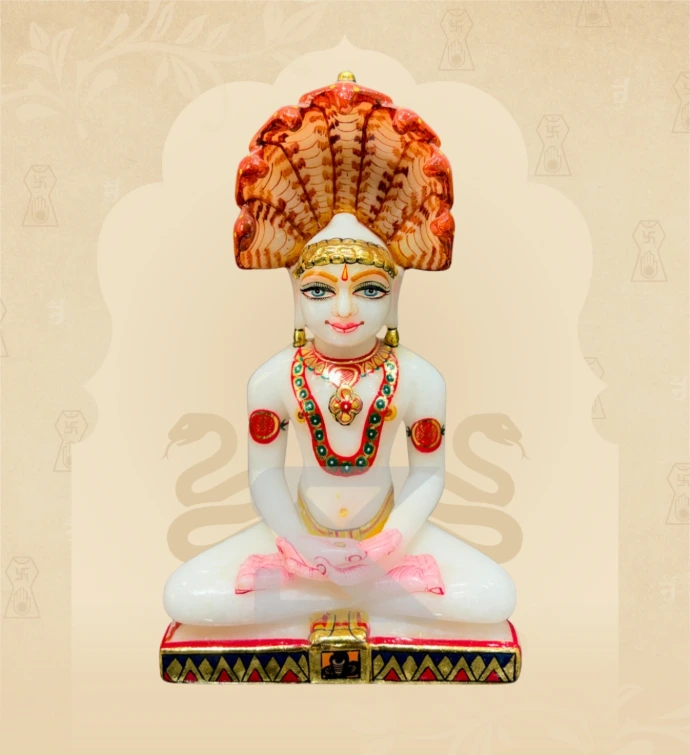
The life and teachings of Parshvanath are preserved through Jain scriptures, oral tradition, and centuries of continuous temple worship.
According to Jain tradition, Parshvanath renounced worldly life at a young age to pursue asceticism and, after a period of deep meditation, attained Kevala Jnana — omniscient knowledge. His teachings are known as Chaturyama Dharma, the four great vows: ahimsa (non-violence), satya (truth), asteya (non-stealing), and aparigraha (non-possession) — principles later expanded by Mahavira into the five great vows (Panch Mahavrata) followed by Jains today.
The serpent hoods that crown his image commemorate a well-known episode from his ascetic life, in which he remained unmoved in meditation despite an attack by a hostile spirit, and was sheltered by the serpent king Dharanendra and his consort Padmavati — a story that has come to symbolise unwavering inner steadiness in the face of adversity.
Each year, thousands of Jain pilgrims undertake the journey to Shri Sammed Shikharji, walking the sacred hill in quiet reverence for the Tirthankara who taught that liberation is found through discipline, truth, and non-violence.
At Shilakrut, sacred sculpture is approached as a meeting point between tradition, craftsmanship, and spiritual meaning — giving form to Jain devotion through stone.
Every element of Parshvanath's iconography carries deep spiritual meaning, distinguishing him from the other twenty-three Tirthankaras.
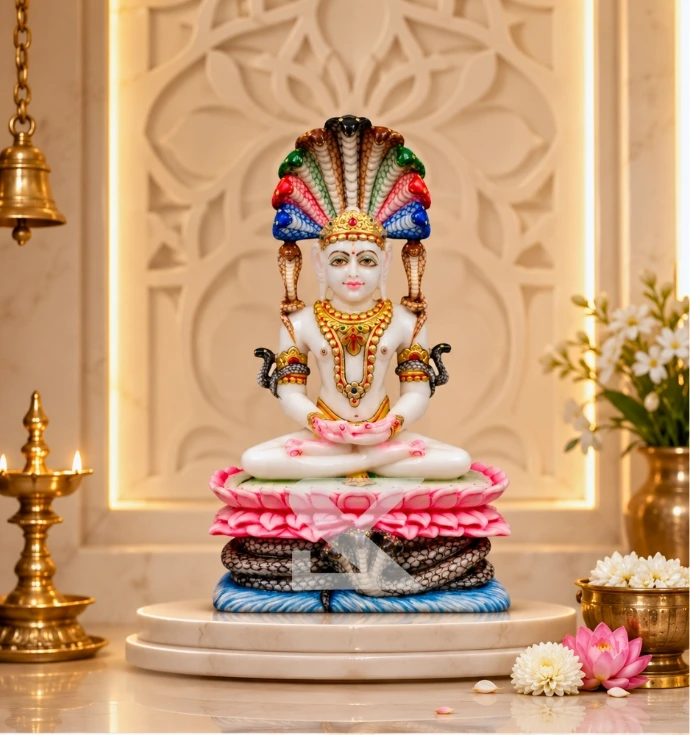
Parshvanath is depicted in a few classical forms — each capturing a distinct aspect of his ascetic and meditative presence.
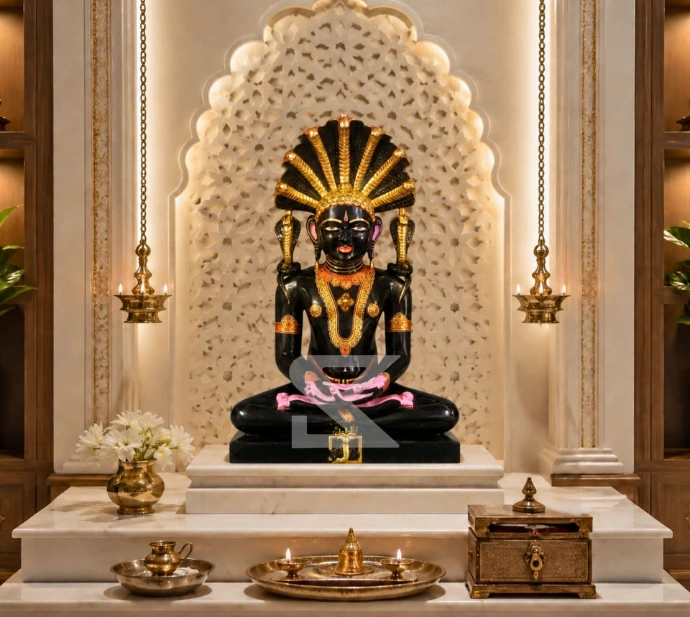
Traditional Jain devotional practices offer guidance for installing a Parshvanath murti — for formal ritual worship, families and derasars typically follow the guidance of their own acharya or sampradaya.
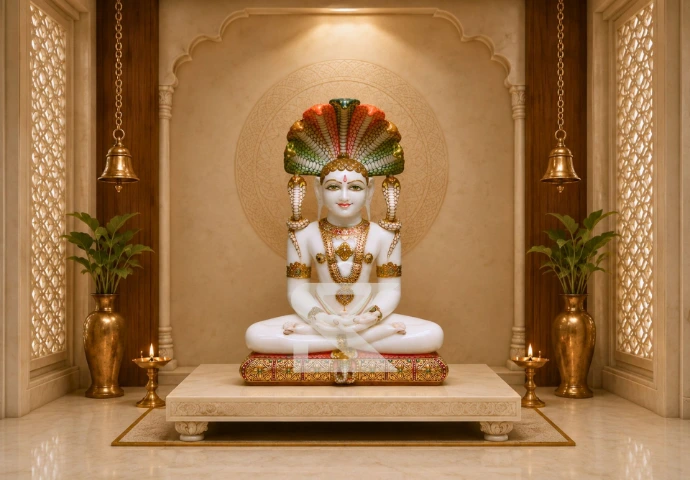
- Place the murti in a clean and elevated sacred space
- East or north-facing installations are commonly preferred in home derasars
- Keep the worship area peaceful, simple, and uncluttered
Every Marble Parshvanath Statue at Shilakrut is created through a careful seven-stage process — honouring the discipline and serenity central to the Tirthankara tradition.
The process begins with careful study of traditional Jain iconographic texts and temple sculptures, determining the exact posture, hood count, and proportions for the intended installation.
- Seated or standing posture
- Serpent hood count and arrangement
- Facial serenity and proportion
- Lotus pedestal design
- Shrivatsa and auspicious marks
Only premium Makrana marble is selected, its luminous white surface reflecting the purity central to Jain philosophy.
- Natural whiteness
- Fine grain and carving precision
- Structural strength
- Long-lasting brilliance
Each marble block is examined for cracks, fissures, and grain irregularities before carving begins.
- Cracks and fissures
- Grain uniformity
- Surface consistency
- Structural stability
Master artisans gradually establish the foundational form — this stage determines the sculpture's balance, symmetry, and proportion.
- Body proportions
- Posture alignment
- Serpent hood placement
- Pedestal structure
Every chisel stroke preserves the calm, unbroken serenity associated with Parshvanath's meditative form.
- Serene facial features
- Serpent hood detailing
- Lotus petals
- Shrivatsa mark
- Pedestal motifs
Multiple stages of hand polishing enhance the natural translucency of the marble, honouring the tradition's emphasis on purity.
- Soft devotional finish
- Satin finish
- High-lustre premium polish
Every statue is carefully prepared for transportation, ensuring the completed murti reaches its destination with its artistic integrity preserved.
- Protective packaging
- Reinforcement of delicate sections
- Secure handling
- Installation guidance for larger sculptures
A Marble Parshvanath Murti becomes both a sacred presence and a lasting expression of Jain devotion — a reminder of discipline, truth, and the path toward liberation.
Ideal for:
- Home derasars and personal shrines
- Jain temples (derasars)
- Community and Sangh institutions
- Pilgrimage sites and Tirtha installations
- Meditation and study spaces
- Cultural and heritage collections
- Housewarming and religious gifting
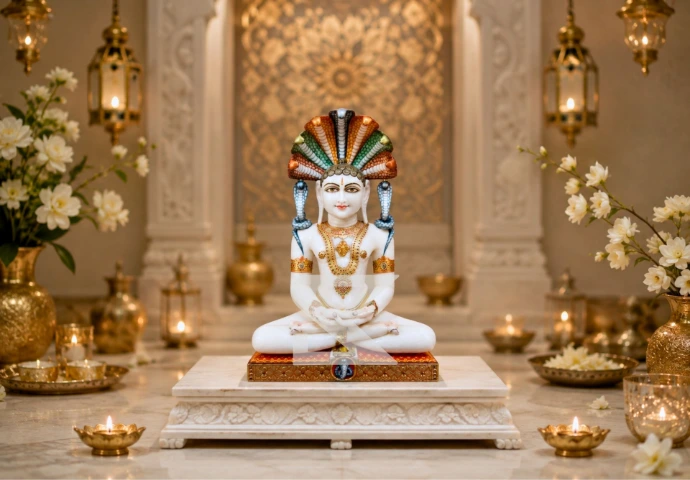
Parshvanath is the 23rd Tirthankara of Jainism, revered as an enlightened teacher whose life and teachings preceded Bhagwan Mahavira, the 24th Tirthankara.
According to Jain tradition, the serpent king Dharanendra sheltered Parshvanath with a canopy of hoods while he remained in deep meditation, symbolising steadfastness and protection.
Makrana marble is preferred for its purity, durability, and temple-grade quality, reflecting the emphasis on purity in Jain philosophy.
Yes. It is ideal for home derasars, personal shrines, and community temples.
East or north-facing installations are commonly preferred, though for formal worship families typically follow guidance from their own acharya or sampradaya.
Yes. Shilakrut offers bespoke sizes, postures, hood counts, finishes, and pedestal designs.
From compact home idols to monumental derasar and temple sculptures.
Yes, when properly maintained, Makrana marble offers exceptional longevity for lifelong devotional use.
Use a soft cloth and clean water. Avoid harsh chemicals and abrasive cleaners.
Yes. Parshvanath is revered across both major Jain traditions, with minor regional and sectarian variations in iconographic detail.
Yes. Shilakrut creates sculptures for derasars, Sangh institutions, and pilgrimage sites.
Because every sculpture combines authentic Jain iconography, master craftsmanship, premium Makrana marble, and a deep respect for India's sacred artistic traditions.
Shilakrut offers over 40 distinct Parshvanath designs, varying in posture, hood detailing, and finish, so devotees can choose a form suited to their sacred space.
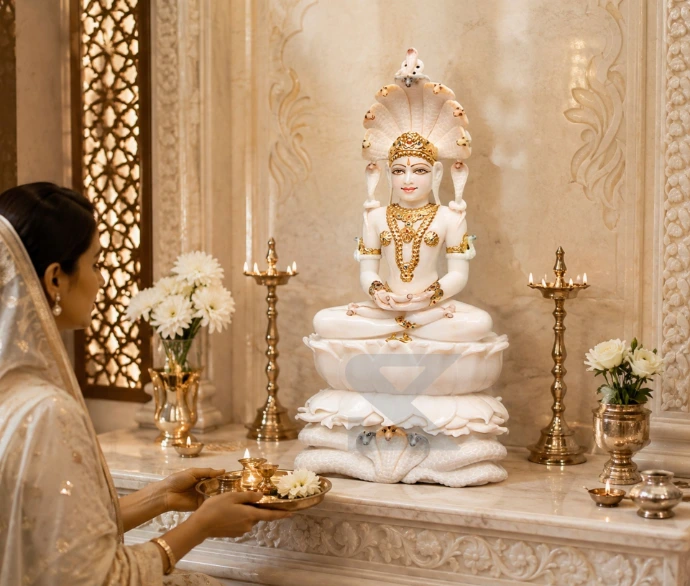
Honour the enduring teachings of Bhagwan Parshvanath with a handcrafted Makrana Marble Parshvanath Statue from Shilakrut.
Whether you wish to install a sacred murti in your home derasar, commission a temple sculpture, or create a custom heritage masterpiece, our team of master artisans is dedicated to transforming devotion into timeless stone. Share any SKU code and our team will reach out with complete details on sizes, pricing, customisation, and delivery timelines.
Shilakrut — Where the discipline and serenity of the Tirthankaras are shaped in stone, and devotion becomes timeless art.Bhagwan Parshvanath is revered as the 23rd Tirthankara of Jainism, preceding Bhagwan Mahavira. According to Jain tradition, he was born in Varanasi to King Ashwasena and Queen Vamadevi of the Ikshvaku dynasty, and is regarded by historians as among the earliest Tirthankaras for whom independent historical evidence exists.
Parshvanath's iconography is instantly recognisable by the canopy of serpent hoods that rises above his head — a symbol of steadfast meditation protected by the serpent king Dharanendra. At Shilakrut, every handcrafted Marble Parshvanath Statue is sculpted from premium Makrana marble, preserving this sacred iconography with the serenity, balance, and quiet strength associated with the Tirthankara tradition.
Parshvanath is among the most widely worshipped Tirthankaras across both Digambara and Shvetambara Jain traditions, with major pilgrimage centres including Shri Sammed Shikharji (Parasnath Hill) in Jharkhand, where he is believed to have attained liberation (moksha).
Every Marble Parshvanath Statue at Shilakrut is handcrafted from premium Makrana marble by master artisans — explore our collection of unique designs below and share any SKU code to enquire about sizes, pricing, and customisation.
The life and teachings of Parshvanath are preserved through Jain scriptures, oral tradition, and centuries of continuous temple worship.
According to Jain tradition, Parshvanath renounced worldly life at a young age to pursue asceticism and, after a period of deep meditation, attained Kevala Jnana — omniscient knowledge. His teachings are known as Chaturyama Dharma, the four great vows: ahimsa (non-violence), satya (truth), asteya (non-stealing), and aparigraha (non-possession) — principles later expanded by Mahavira into the five great vows (Panch Mahavrata) followed by Jains today.
The serpent hoods that crown his image commemorate a well-known episode from his ascetic life, in which he remained unmoved in meditation despite an attack by a hostile spirit, and was sheltered by the serpent king Dharanendra and his consort Padmavati — a story that has come to symbolise unwavering inner steadiness in the face of adversity.
Each year, thousands of Jain pilgrims undertake the journey to Shri Sammed Shikharji, walking the sacred hill in quiet reverence for the Tirthankara who taught that liberation is found through discipline, truth, and non-violence.
At Shilakrut, sacred sculpture is approached as a meeting point between tradition, craftsmanship, and spiritual meaning — giving form to Jain devotion through stone.
Every element of Parshvanath's iconography carries deep spiritual meaning, distinguishing him from the other twenty-three Tirthankaras.
Parshvanath is depicted in a few classical forms — each capturing a distinct aspect of his ascetic and meditative presence.
Traditional Jain devotional practices offer guidance for installing a Parshvanath murti — for formal ritual worship, families and derasars typically follow the guidance of their own acharya or sampradaya.
- Place the murti in a clean and elevated sacred space
- East or north-facing installations are commonly preferred in home derasars
- Keep the worship area peaceful, simple, and uncluttered
Every Marble Parshvanath Statue at Shilakrut is created through a careful seven-stage process — honouring the discipline and serenity central to the Tirthankara tradition.
The process begins with careful study of traditional Jain iconographic texts and temple sculptures, determining the exact posture, hood count, and proportions for the intended installation.
- Seated or standing posture
- Serpent hood count and arrangement
- Facial serenity and proportion
- Lotus pedestal design
- Shrivatsa and auspicious marks
Only premium Makrana marble is selected, its luminous white surface reflecting the purity central to Jain philosophy.
- Natural whiteness
- Fine grain and carving precision
- Structural strength
- Long-lasting brilliance
Each marble block is examined for cracks, fissures, and grain irregularities before carving begins.
- Cracks and fissures
- Grain uniformity
- Surface consistency
- Structural stability
Master artisans gradually establish the foundational form — this stage determines the sculpture's balance, symmetry, and proportion.
- Body proportions
- Posture alignment
- Serpent hood placement
- Pedestal structure
Every chisel stroke preserves the calm, unbroken serenity associated with Parshvanath's meditative form.
- Serene facial features
- Serpent hood detailing
- Lotus petals
- Shrivatsa mark
- Pedestal motifs
Multiple stages of hand polishing enhance the natural translucency of the marble, honouring the tradition's emphasis on purity.
- Soft devotional finish
- Satin finish
- High-lustre premium polish
Every statue is carefully prepared for transportation, ensuring the completed murti reaches its destination with its artistic integrity preserved.
- Protective packaging
- Reinforcement of delicate sections
- Secure handling
- Installation guidance for larger sculptures
A Marble Parshvanath Murti becomes both a sacred presence and a lasting expression of Jain devotion — a reminder of discipline, truth, and the path toward liberation.
Ideal for:
- Home derasars and personal shrines
- Jain temples (derasars)
- Community and Sangh institutions
- Pilgrimage sites and Tirtha installations
- Meditation and study spaces
- Cultural and heritage collections
- Housewarming and religious gifting
Parshvanath is the 23rd Tirthankara of Jainism, revered as an enlightened teacher whose life and teachings preceded Bhagwan Mahavira, the 24th Tirthankara.
According to Jain tradition, the serpent king Dharanendra sheltered Parshvanath with a canopy of hoods while he remained in deep meditation, symbolising steadfastness and protection.
Makrana marble is preferred for its purity, durability, and temple-grade quality, reflecting the emphasis on purity in Jain philosophy.
Yes. It is ideal for home derasars, personal shrines, and community temples.
East or north-facing installations are commonly preferred, though for formal worship families typically follow guidance from their own acharya or sampradaya.
Yes. Shilakrut offers bespoke sizes, postures, hood counts, finishes, and pedestal designs.
From compact home idols to monumental derasar and temple sculptures.
Yes, when properly maintained, Makrana marble offers exceptional longevity for lifelong devotional use.
Use a soft cloth and clean water. Avoid harsh chemicals and abrasive cleaners.
Yes. Parshvanath is revered across both major Jain traditions, with minor regional and sectarian variations in iconographic detail.
Yes. Shilakrut creates sculptures for derasars, Sangh institutions, and pilgrimage sites.
Because every sculpture combines authentic Jain iconography, master craftsmanship, premium Makrana marble, and a deep respect for India's sacred artistic traditions.
Shilakrut offers over 40 distinct Parshvanath designs, varying in posture, hood detailing, and finish, so devotees can choose a form suited to their sacred space.
Honour the enduring teachings of Bhagwan Parshvanath with a handcrafted Makrana Marble Parshvanath Statue from Shilakrut.
Whether you wish to install a sacred murti in your home derasar, commission a temple sculpture, or create a custom heritage masterpiece, our team of master artisans is dedicated to transforming devotion into timeless stone. Share any SKU code and our team will reach out with complete details on sizes, pricing, customisation, and delivery timelines.
Shilakrut — Where the discipline and serenity of the Tirthankaras are shaped in stone, and devotion becomes timeless art.