Marble Dwarkamai Sai Baba Statue
Dwarkamai Sai Baba — The Saint of Shirdi at His Sacred Home, Service & Universal LoveDwarkamai was where Sai Baba spent the heart of his earthly life — tending the sacred fire (dhuni), healing devotees with udi, feeding all who came regardless of caste or faith, and demonstrating through every daily act that the highest religion is service. It is said that the dhuni of Dwarkamai never went out during all of Sai Baba's years in Shirdi — an eternal flame of compassion that continues to burn as a symbol of his undying presence.
Shilakrut's marble Dwarkamai Sai Baba collection honours this most sacred of all Sai Baba's earthly associations across 6 refined interpretations. Hand-sculpted in premium Makrana marble, ideal for home mandirs, meditation spaces, and temples — and especially meaningful for those whose heart connection to Baba was formed through a visit to Shirdi.
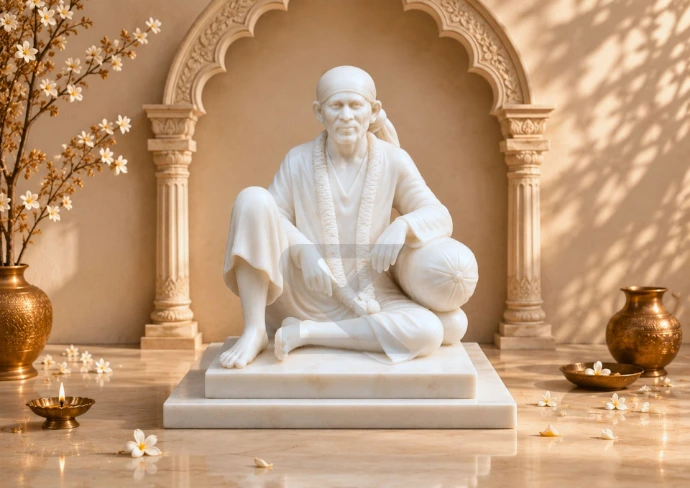
Explore 6 unique Dwarkamai Sai Baba designs — the saint at his sacred home in premium Makrana marble. Tap any icon below to enquire about sizes, pricing, and customisation.
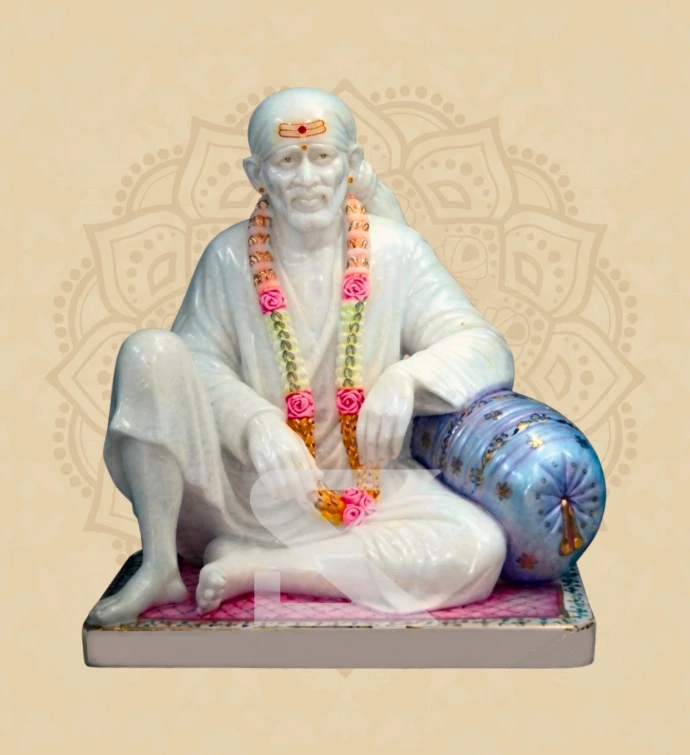
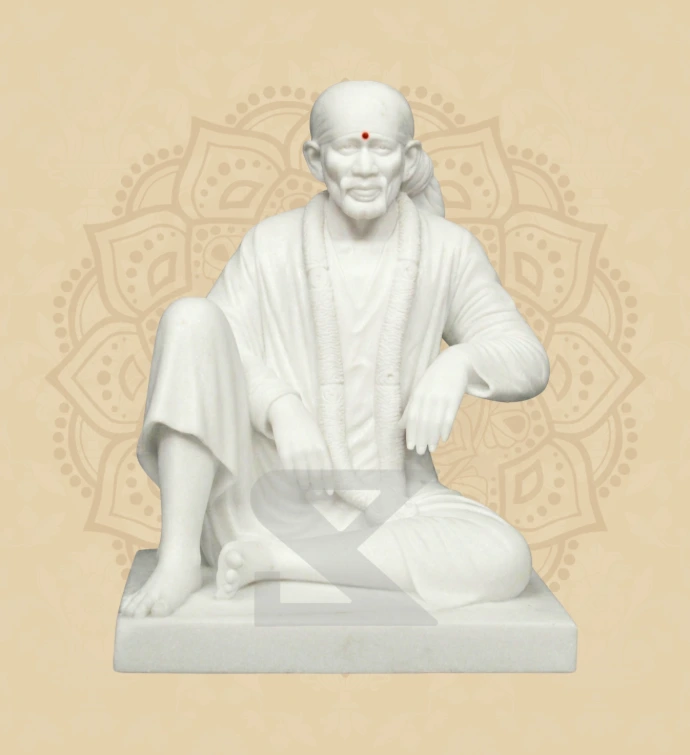
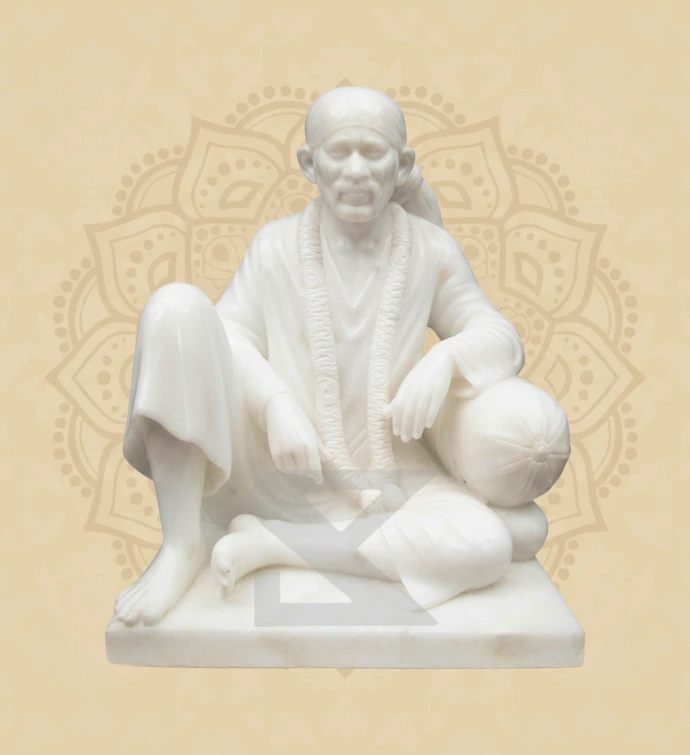
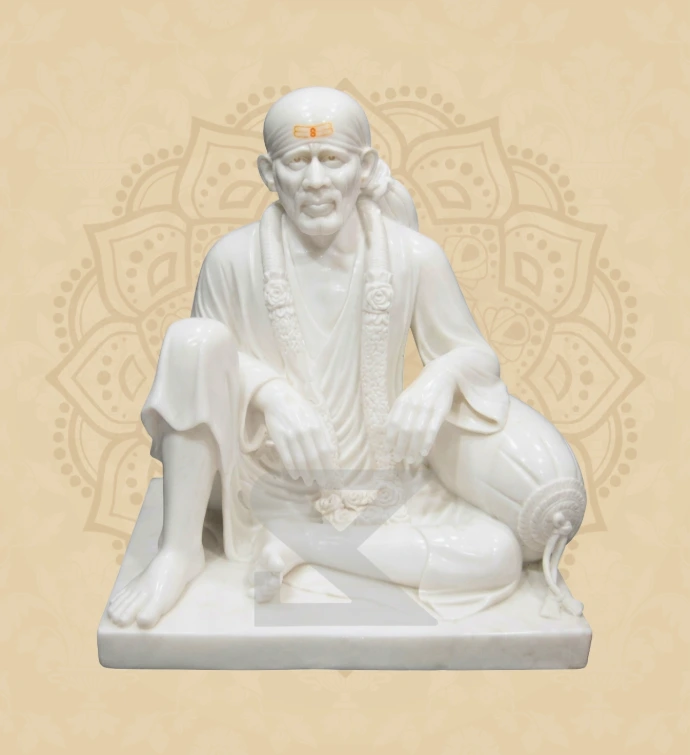
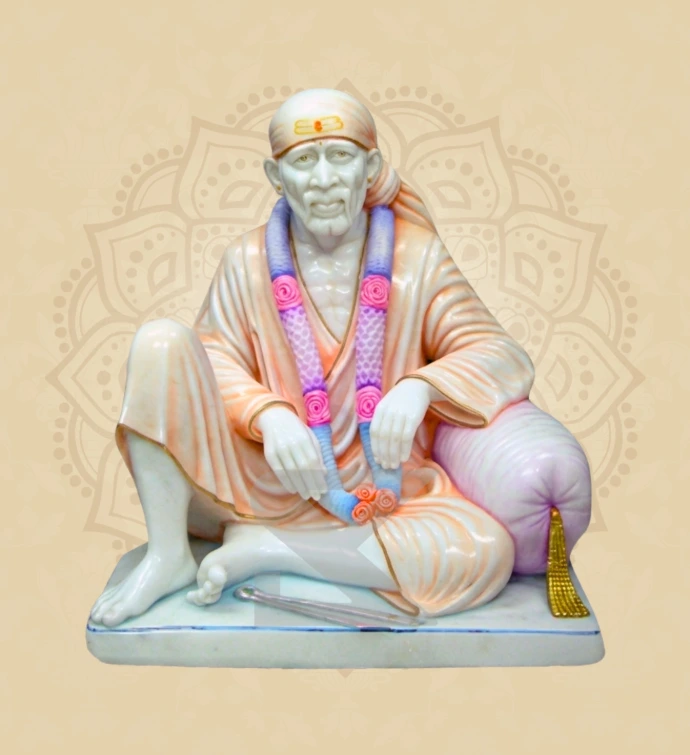
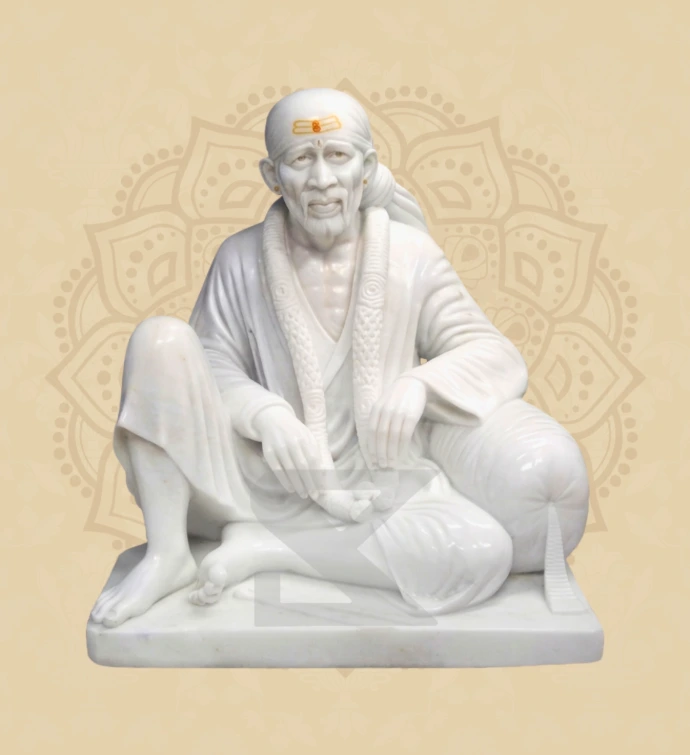
Dwarkamai holds a unique place among all sacred sites connected to Sai Baba. It was not a grand temple — it was a simple old mosque where Baba chose to live, where he tended the eternal dhuni, and where he proved that the divine has no preference for religion or caste. The Dwarkamai was, for Sai Baba, his earthly paradise — his divine home.
For those who have visited Shirdi or who feel a special connection to the spirit of selfless service, the Dwarkamai form carries a resonance unlike any other. Every Dwarkamai Sai Baba sculpture from Shilakrut honours that spirit — humble, accessible, radiating the warmth of a saint who gave everything and kept nothing for himself.
Dwarkamai Sai Baba is the most historically resonant of all Sai forms — perfect for home mandirs, meditation spaces, offices, healing centres, and all spaces where the energy of humble service, universal love, and Sai Baba's most intimate earthly presence is sought. It is especially meaningful for those who have visited Shirdi or who feel a strong connection to Baba's spirit of selfless service.
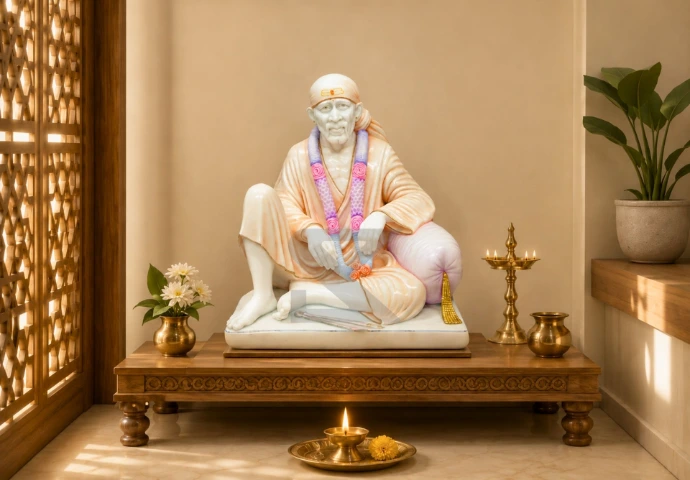
Place Dwarkamai Sai Baba facing East or Northeast — the most auspicious directions for home temples. The Dwarkamai form is especially suited to home mandirs, meditation rooms, and dedicated Sai Baba shrines, where its connection to Shirdi creates an atmosphere of deep devotional intimacy. Position on a clean, elevated platform or chowki. Udi (sacred ash), diya, and fresh flowers are the most traditionally resonant offerings for this form — honouring Baba as he lived in Dwarkamai.
A marble pedestal, decorated chowki, or formal temple platform allows the eight-armed form to be appreciated in its full grandeur. The murti should be placed at eye level or slightly above. Ensure adequate space in front for offerings, diyas, and daily aarti — lighting a diya near the Goddess is considered deeply auspicious. Avoid bedrooms, dining areas, and spaces near restrooms.
Common questions about Dwarkamai Sai Baba — meaning, history, placement, and ordering.
The Dwarkamai Sai Baba form depicts Sai Baba in or in the context of Dwarkamai — the sacred mosque in Shirdi where he lived for over sixty years. Dwarkamai means 'Mother Dwaraka' — a name that carries within it the saint's teaching that the divine is equally present in the Muslim mosque and the Hindu temple. The Dwarkamai Sai Baba form specifically honours this most intimate of all sacred places connected to Baba, making it the most personally resonant form for those with a connection to Shirdi.
Dwarkamai was the centre of Sai Baba's earthly existence and the embodiment of his teaching. It was here that he tended the sacred dhuni (eternal fire), dispensed udi (sacred ash) as blessing and medicine, fed the hungry, healed the sick, and demonstrated through every daily act that service to humanity is service to God. The fact that Sai Baba — revered equally by Hindus and Muslims — chose to live in a mosque called 'Mother Dwaraka' was itself his most powerful teaching: that the divine makes no distinction between religions.
Dwarkamai Sai Baba is ideally placed in home mandirs, meditation rooms, and dedicated Sai Baba shrines. Position facing East or Northeast on a clean, elevated platform or chowki. The Dwarkamai form carries a deep connection to Shirdi, making it especially powerful in spaces where Baba is worshipped with particular devotion. Udi (sacred ash), diya, and fresh flowers are the most traditionally resonant offerings. As always with Sai Baba, sincerity of heart matters more than ritual precision.
The dhuni — the eternal fire of Dwarkamai — is one of the most sacred symbols in all of Sai Baba devotion. It represents Sai Baba's undying compassion, his constant spiritual work for his devotees, and the purifying power of faith. The udi (ash from the dhuni) was Sai Baba's most famous gift to devotees — offered as medicine, blessing, and reminder of the impermanence of material life and the permanence of the soul. For devotees who work with udi in their practice, the Dwarkamai form creates the most resonant devotional context.
For home mandirs and personal devotional spaces, 1–2 ft creates a deeply intimate devotional presence — the Dwarkamai form's connection to Shirdi is fully present even at compact scales. For dedicated Sai Baba shrines and meditation rooms, 2–3 ft creates a warm, historically resonant centrepiece. For temples and community Sai spaces, 3 ft and above creates a commanding and deeply meaningful installation.
Each Dwarkamai Sai Baba is hand-sculpted in premium Makrana marble by Shilakrut's master artisans with 50+ years of legacy. The Dwarkamai form requires careful attention to the saint's humble, dignified posture, the serene expression that reflects decades of spiritual practice in the same sacred space, the flowing robes, and the overall quality of spiritual simplicity and devotional warmth that defines Sai Baba as he appeared at Dwarkamai. Customisation in size, painting style, and pedestal design is available — share the SKU code via WhatsApp or email for tailored options.
Discover the complete range of marble Sai Baba designs at Shilakrut.
Share any SKU code from this collection and our team will reach out with complete details — sizes, pricing, customisation, and delivery timelines. Welcome the spirit of Dwarkamai — humble service, universal love, and the eternal flame of Sai Baba's compassion — into your home or sacred space.
Marble Dwarkamai Sai Baba Statue
Dwarkamai Sai Baba — The Saint of Shirdi at His Sacred Home, Service & Universal LoveDwarkamai was where Sai Baba spent the heart of his earthly life — tending the sacred fire (dhuni), healing devotees with udi, feeding all who came regardless of caste or faith, and demonstrating through every daily act that the highest religion is service. It is said that the dhuni of Dwarkamai never went out during all of Sai Baba's years in Shirdi — an eternal flame of compassion that continues to burn as a symbol of his undying presence.
Shilakrut's marble Dwarkamai Sai Baba collection honours this most sacred of all Sai Baba's earthly associations across 6 refined interpretations. Hand-sculpted in premium Makrana marble, ideal for home mandirs, meditation spaces, and temples — and especially meaningful for those whose heart connection to Baba was formed through a visit to Shirdi.
Explore 6 unique Dwarkamai Sai Baba designs — the saint at his sacred home in premium Makrana marble. Tap any icon below to enquire about sizes, pricing, and customisation.
Dwarkamai holds a unique place among all sacred sites connected to Sai Baba. It was not a grand temple — it was a simple old mosque where Baba chose to live, where he tended the eternal dhuni, and where he proved that the divine has no preference for religion or caste. The Dwarkamai was, for Sai Baba, his earthly paradise — his divine home.
For those who have visited Shirdi or who feel a special connection to the spirit of selfless service, the Dwarkamai form carries a resonance unlike any other. Every Dwarkamai Sai Baba sculpture from Shilakrut honours that spirit — humble, accessible, radiating the warmth of a saint who gave everything and kept nothing for himself.
Dwarkamai Sai Baba is the most historically resonant of all Sai forms — perfect for home mandirs, meditation spaces, offices, healing centres, and all spaces where the energy of humble service, universal love, and Sai Baba's most intimate earthly presence is sought. It is especially meaningful for those who have visited Shirdi or who feel a strong connection to Baba's spirit of selfless service.
Place Dwarkamai Sai Baba facing East or Northeast — the most auspicious directions for home temples. The Dwarkamai form is especially suited to home mandirs, meditation rooms, and dedicated Sai Baba shrines, where its connection to Shirdi creates an atmosphere of deep devotional intimacy. Position on a clean, elevated platform or chowki. Udi (sacred ash), diya, and fresh flowers are the most traditionally resonant offerings for this form — honouring Baba as he lived in Dwarkamai.
A marble pedestal, decorated chowki, or formal temple platform allows the eight-armed form to be appreciated in its full grandeur. The murti should be placed at eye level or slightly above. Ensure adequate space in front for offerings, diyas, and daily aarti — lighting a diya near the Goddess is considered deeply auspicious. Avoid bedrooms, dining areas, and spaces near restrooms.
Common questions about Dwarkamai Sai Baba — meaning, history, placement, and ordering.
The Dwarkamai Sai Baba form depicts Sai Baba in or in the context of Dwarkamai — the sacred mosque in Shirdi where he lived for over sixty years. Dwarkamai means 'Mother Dwaraka' — a name that carries within it the saint's teaching that the divine is equally present in the Muslim mosque and the Hindu temple. The Dwarkamai Sai Baba form specifically honours this most intimate of all sacred places connected to Baba, making it the most personally resonant form for those with a connection to Shirdi.
Dwarkamai was the centre of Sai Baba's earthly existence and the embodiment of his teaching. It was here that he tended the sacred dhuni (eternal fire), dispensed udi (sacred ash) as blessing and medicine, fed the hungry, healed the sick, and demonstrated through every daily act that service to humanity is service to God. The fact that Sai Baba — revered equally by Hindus and Muslims — chose to live in a mosque called 'Mother Dwaraka' was itself his most powerful teaching: that the divine makes no distinction between religions.
Dwarkamai Sai Baba is ideally placed in home mandirs, meditation rooms, and dedicated Sai Baba shrines. Position facing East or Northeast on a clean, elevated platform or chowki. The Dwarkamai form carries a deep connection to Shirdi, making it especially powerful in spaces where Baba is worshipped with particular devotion. Udi (sacred ash), diya, and fresh flowers are the most traditionally resonant offerings. As always with Sai Baba, sincerity of heart matters more than ritual precision.
The dhuni — the eternal fire of Dwarkamai — is one of the most sacred symbols in all of Sai Baba devotion. It represents Sai Baba's undying compassion, his constant spiritual work for his devotees, and the purifying power of faith. The udi (ash from the dhuni) was Sai Baba's most famous gift to devotees — offered as medicine, blessing, and reminder of the impermanence of material life and the permanence of the soul. For devotees who work with udi in their practice, the Dwarkamai form creates the most resonant devotional context.
For home mandirs and personal devotional spaces, 1–2 ft creates a deeply intimate devotional presence — the Dwarkamai form's connection to Shirdi is fully present even at compact scales. For dedicated Sai Baba shrines and meditation rooms, 2–3 ft creates a warm, historically resonant centrepiece. For temples and community Sai spaces, 3 ft and above creates a commanding and deeply meaningful installation.
Each Dwarkamai Sai Baba is hand-sculpted in premium Makrana marble by Shilakrut's master artisans with 50+ years of legacy. The Dwarkamai form requires careful attention to the saint's humble, dignified posture, the serene expression that reflects decades of spiritual practice in the same sacred space, the flowing robes, and the overall quality of spiritual simplicity and devotional warmth that defines Sai Baba as he appeared at Dwarkamai. Customisation in size, painting style, and pedestal design is available — share the SKU code via WhatsApp or email for tailored options.
Discover the complete range of marble Sai Baba designs at Shilakrut.
Share any SKU code from this collection and our team will reach out with complete details — sizes, pricing, customisation, and delivery timelines. Welcome the spirit of Dwarkamai — humble service, universal love, and the eternal flame of Sai Baba's compassion — into your home or sacred space.