Marble Cow Statue & Kamdhenu Murti
Gau Mata — The Sacred Mother of Abundance and PurityFew figures hold a place in Indian households quite like the cow. Revered as Gau Mata — Mother Cow — she is seen not merely as an animal but as a living embodiment of motherhood, nourishment, and selfless giving. Ancient texts describe her as home to all thirty-three crore devas, and in her most celebrated form, Kamdhenu, she is the wish-fulfilling divine cow said to grant anything her devotee asks of her.
Shilakrut's marble cow statues capture this gentle reverence in hand-carved Makrana marble — from serene standing forms to the tender Cow & Calf composition long associated with Krishna's childhood in Vrindavan. Each murti is sculpted by master artisans with 50+ years of legacy, suited equally to home mandirs, goshalas, temple courtyards, and gifting on occasions of new beginnings.
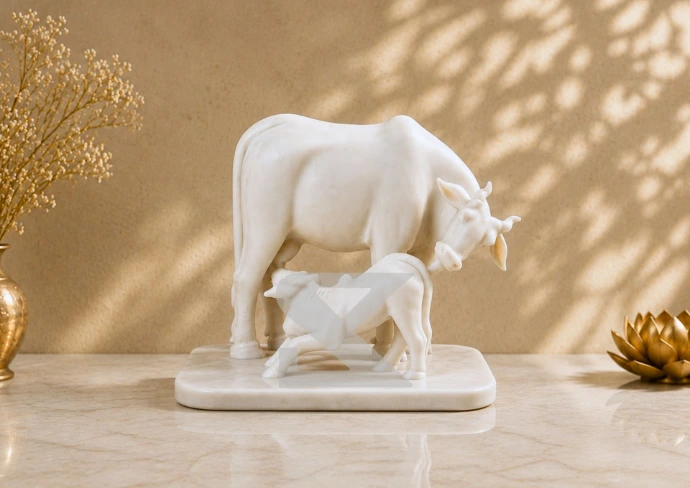
Explore 5 marble cow designs — from a quietly standing Gau Mata to the tender Cow & Calf form and the ornately painted Kamdhenu. Each hand-sculpted in premium Makrana marble. Tap any icon below to enquire about sizes, pricing, and customisation.
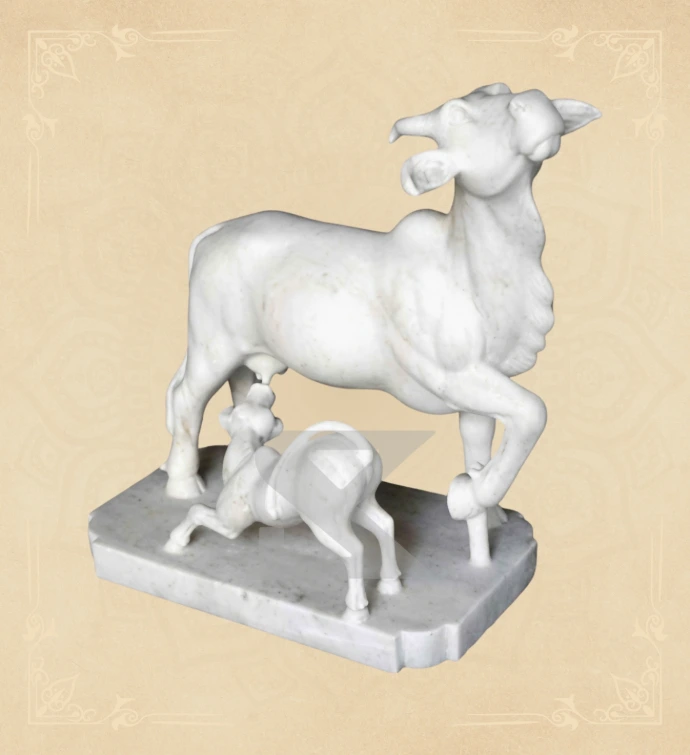
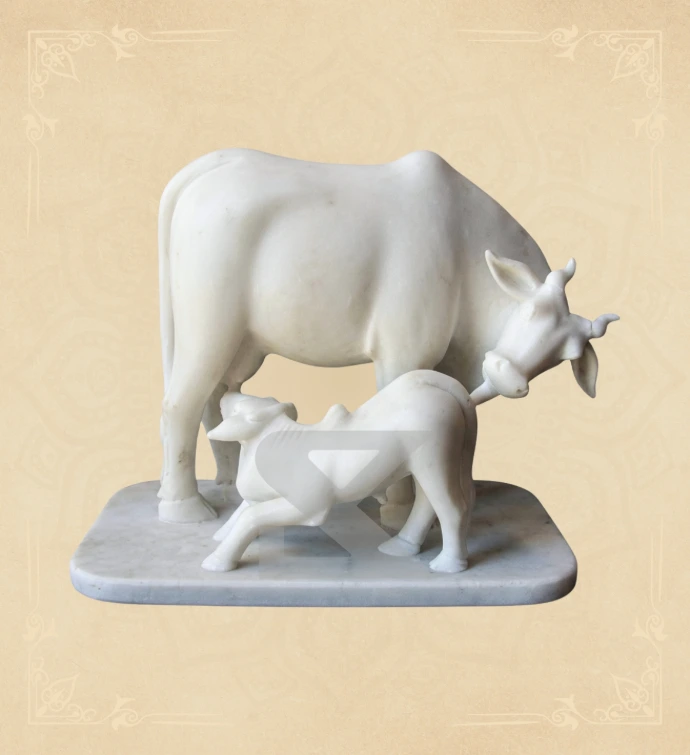
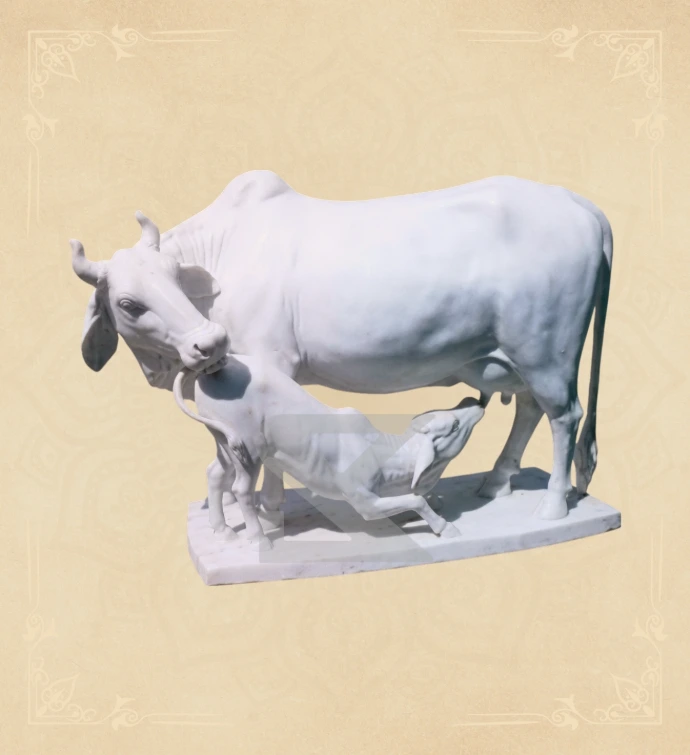
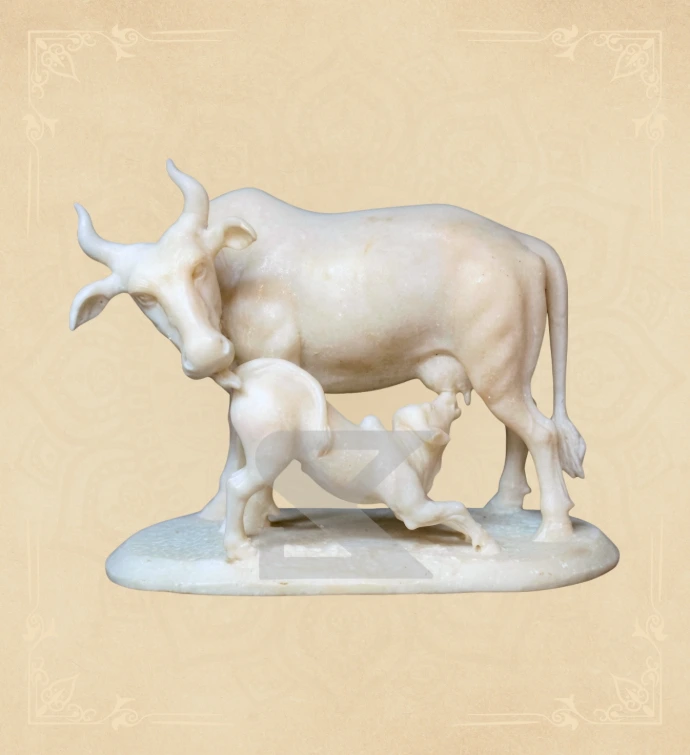
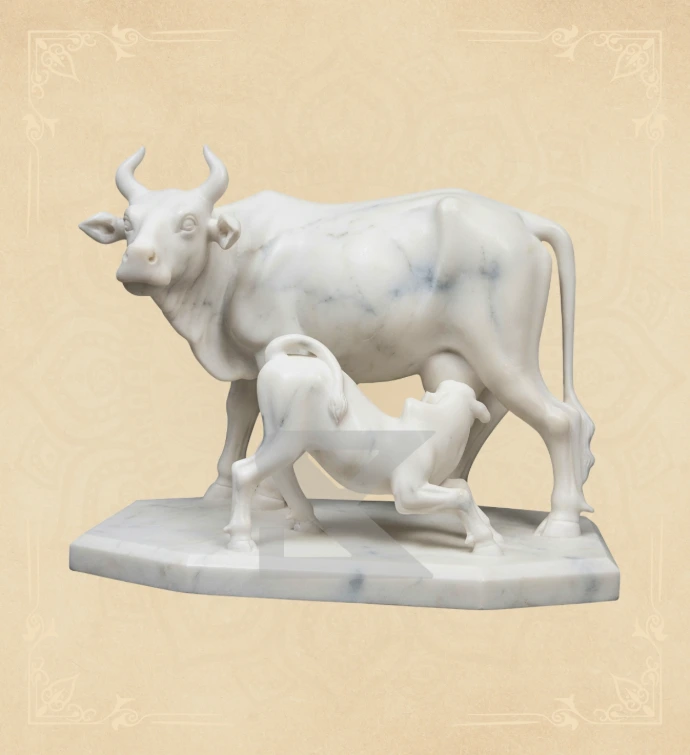
In Hindu tradition, the cow is never seen as an ordinary animal — she is addressed directly as mata, mother, because she gives without asking anything in return. Scripture holds that all thirty-three crore devas reside within her body, making her presence in a home or temple equivalent to inviting the entire pantheon under one roof. Krishna himself was raised among cows in Vrindavan and carries the name Govinda — protector of cows — a bond that runs through Indian devotional life to this day.
In her most celebrated form, the cow becomes Kamdhenu, the wish-fulfilling divine cow said to have emerged during the churning of the ocean, capable of granting any request made with a sincere heart. This is why a Kamdhenu murti is so often gifted at housewarmings and new beginnings — it carries the wish for a home that never wants for anything. The gentler Cow & Calf form, meanwhile, speaks to something simpler and just as enduring: the bond of a mother nourishing her young, unconditionally and without pause.
A marble cow statue settles gently into almost any devotional space — quietly auspicious rather than commanding attention, which is part of why families return to this form generation after generation.
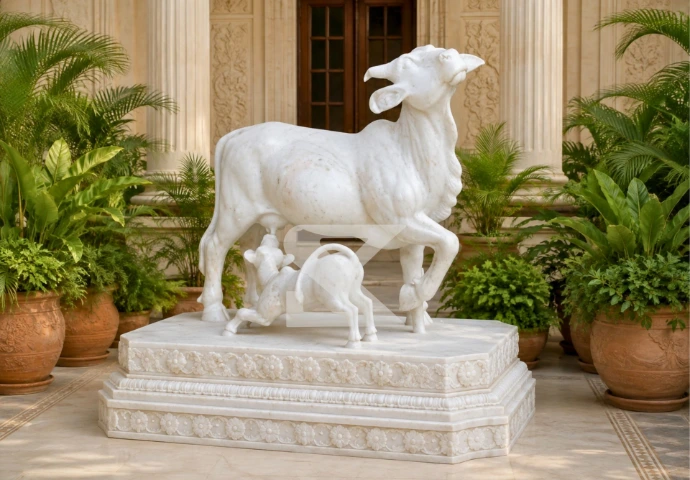
A marble cow murti is traditionally placed facing East or North, ideally near a tulsi plant or the household mandir where morning light reaches it first. Many families keep her facing the entrance, as a quiet gesture of welcome and abundance for anyone who steps inside. In goshalas and temple courtyards, an open, unobstructed setting allows the murti to be viewed and circumambulated with ease.
The Cow & Calf form works beautifully in family living areas and home mandirs alike, while a standalone Kamdhenu or Standing Cow suits more formal devotional corners. Keep the space around her clean and clutter-free, with room for a small diya or fresh flowers — she is, after all, a mother who prefers simplicity over grandeur.
Common questions about the marble cow statue and Kamdhenu murti — meaning, placement, and ordering.
The cow is revered as Gau Mata — Mother Cow — because she nourishes without expecting anything back, much like a mother. Scripture describes all thirty-three crore devas as residing within her, and her close association with Krishna, who grew up among cows in Vrindavan, has made her a central figure in Hindu devotional life for thousands of years.
Kamdhenu is the divine wish-fulfilling cow said to have emerged from the churning of the cosmic ocean, capable of granting any genuine wish to her devotee. While a Standing Cow or Cow & Calf murti represents gentle motherhood, a Kamdhenu design carries additional symbolism of abundance and is often chosen specifically for prosperity and new beginnings.
Place the murti facing East or North, ideally near your home mandir, tulsi plant, or entrance. A clean, uncluttered spot with room for a small diya or fresh flowers works best. Avoid placing her in bathrooms, near footwear, or in areas that feel neglected — she is best honoured in a calm, well-tended corner of the home.
Both forms are equally auspicious — the choice usually comes down to what the murti is meant to represent. Cow & Calf specifically emphasises the bond of motherhood, nurturing, and family harmony, making it a popular choice for family homes, while a Standing Cow or Kamdhenu murti is often chosen for broader blessings of abundance and protection.
For home mandirs and living spaces, 1–2 ft murtis are most common and easy to maintain daily. For entrances, courtyards, and gifting purposes, 2–3 ft pieces make a fuller visual statement. Temple installations and goshalas typically call for 3 ft and above, where the cow's calm, grounded form can be appreciated from a distance.
Each cow murti is hand-sculpted in premium Makrana marble by Shilakrut's master artisans, with careful attention given to the softness of the eyes, the folds of the dewlap, and the overall gentleness of posture that defines this form. Customisation in size, painted finish, pedestal design, and the Cow & Calf composition is available — share the SKU code via WhatsApp or email for tailored options.
Discover the complete range of marble animal designs at Shilakrut.
Share any SKU code from this collection and our team will reach out with complete details — sizes, pricing, customisation, and delivery timelines. Welcome the gentle, nurturing presence of Gau Mata into your home or temple.
Marble Cow Statue & Kamdhenu Murti
Gau Mata — The Sacred Mother of Abundance and PurityFew figures hold a place in Indian households quite like the cow. Revered as Gau Mata — Mother Cow — she is seen not merely as an animal but as a living embodiment of motherhood, nourishment, and selfless giving. Ancient texts describe her as home to all thirty-three crore devas, and in her most celebrated form, Kamdhenu, she is the wish-fulfilling divine cow said to grant anything her devotee asks of her.
Shilakrut's marble cow statues capture this gentle reverence in hand-carved Makrana marble — from serene standing forms to the tender Cow & Calf composition long associated with Krishna's childhood in Vrindavan. Each murti is sculpted by master artisans with 50+ years of legacy, suited equally to home mandirs, goshalas, temple courtyards, and gifting on occasions of new beginnings.
Explore 5 marble cow designs — from a quietly standing Gau Mata to the tender Cow & Calf form and the ornately painted Kamdhenu. Each hand-sculpted in premium Makrana marble. Tap any icon below to enquire about sizes, pricing, and customisation.
In Hindu tradition, the cow is never seen as an ordinary animal — she is addressed directly as mata, mother, because she gives without asking anything in return. Scripture holds that all thirty-three crore devas reside within her body, making her presence in a home or temple equivalent to inviting the entire pantheon under one roof. Krishna himself was raised among cows in Vrindavan and carries the name Govinda — protector of cows — a bond that runs through Indian devotional life to this day.
In her most celebrated form, the cow becomes Kamdhenu, the wish-fulfilling divine cow said to have emerged during the churning of the ocean, capable of granting any request made with a sincere heart. This is why a Kamdhenu murti is so often gifted at housewarmings and new beginnings — it carries the wish for a home that never wants for anything. The gentler Cow & Calf form, meanwhile, speaks to something simpler and just as enduring: the bond of a mother nourishing her young, unconditionally and without pause.
A marble cow statue settles gently into almost any devotional space — quietly auspicious rather than commanding attention, which is part of why families return to this form generation after generation.
A marble cow murti is traditionally placed facing East or North, ideally near a tulsi plant or the household mandir where morning light reaches it first. Many families keep her facing the entrance, as a quiet gesture of welcome and abundance for anyone who steps inside. In goshalas and temple courtyards, an open, unobstructed setting allows the murti to be viewed and circumambulated with ease.
The Cow & Calf form works beautifully in family living areas and home mandirs alike, while a standalone Kamdhenu or Standing Cow suits more formal devotional corners. Keep the space around her clean and clutter-free, with room for a small diya or fresh flowers — she is, after all, a mother who prefers simplicity over grandeur.
Common questions about the marble cow statue and Kamdhenu murti — meaning, placement, and ordering.
The cow is revered as Gau Mata — Mother Cow — because she nourishes without expecting anything back, much like a mother. Scripture describes all thirty-three crore devas as residing within her, and her close association with Krishna, who grew up among cows in Vrindavan, has made her a central figure in Hindu devotional life for thousands of years.
Kamdhenu is the divine wish-fulfilling cow said to have emerged from the churning of the cosmic ocean, capable of granting any genuine wish to her devotee. While a Standing Cow or Cow & Calf murti represents gentle motherhood, a Kamdhenu design carries additional symbolism of abundance and is often chosen specifically for prosperity and new beginnings.
Place the murti facing East or North, ideally near your home mandir, tulsi plant, or entrance. A clean, uncluttered spot with room for a small diya or fresh flowers works best. Avoid placing her in bathrooms, near footwear, or in areas that feel neglected — she is best honoured in a calm, well-tended corner of the home.
Both forms are equally auspicious — the choice usually comes down to what the murti is meant to represent. Cow & Calf specifically emphasises the bond of motherhood, nurturing, and family harmony, making it a popular choice for family homes, while a Standing Cow or Kamdhenu murti is often chosen for broader blessings of abundance and protection.
For home mandirs and living spaces, 1–2 ft murtis are most common and easy to maintain daily. For entrances, courtyards, and gifting purposes, 2–3 ft pieces make a fuller visual statement. Temple installations and goshalas typically call for 3 ft and above, where the cow's calm, grounded form can be appreciated from a distance.
Each cow murti is hand-sculpted in premium Makrana marble by Shilakrut's master artisans, with careful attention given to the softness of the eyes, the folds of the dewlap, and the overall gentleness of posture that defines this form. Customisation in size, painted finish, pedestal design, and the Cow & Calf composition is available — share the SKU code via WhatsApp or email for tailored options.
Discover the complete range of marble animal designs at Shilakrut.
Share any SKU code from this collection and our team will reach out with complete details — sizes, pricing, customisation, and delivery timelines. Welcome the gentle, nurturing presence of Gau Mata into your home or temple.