Marble Elephant Statue & Sculpture
Gajaraj — Strength, Memory, and Royal AbundanceThe elephant has stood beside kings, temples, and households across India for centuries — not as a mere beast of burden, but as Gajaraj, the noble elephant king, symbol of quiet strength and unshakeable memory. In celestial form he becomes Airavata, the pure white elephant that carries Indra himself and is said to have emerged from the churning of the cosmic ocean, ridden by the King of Devas.
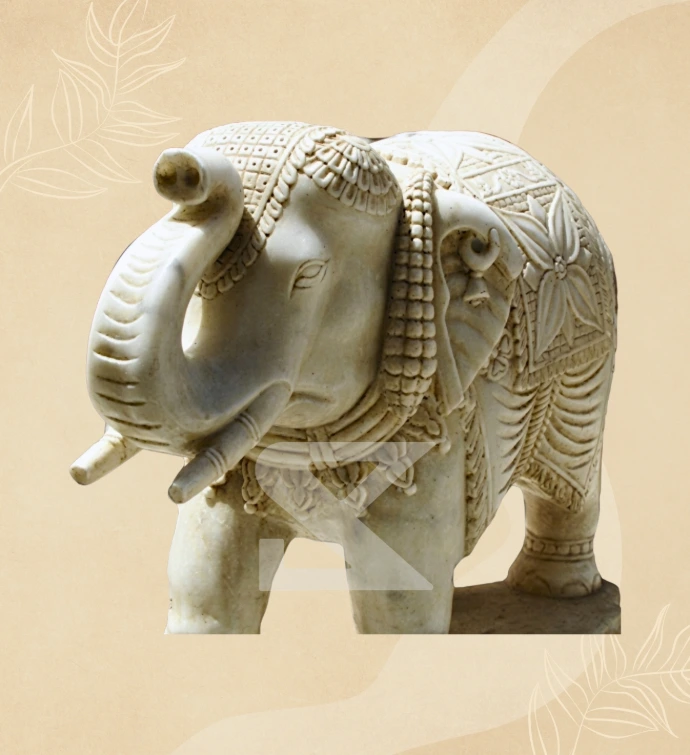
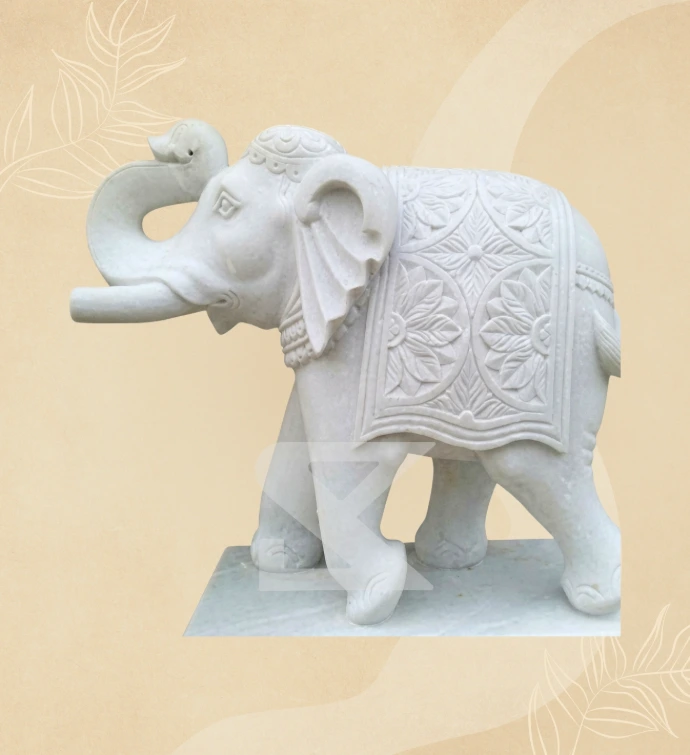
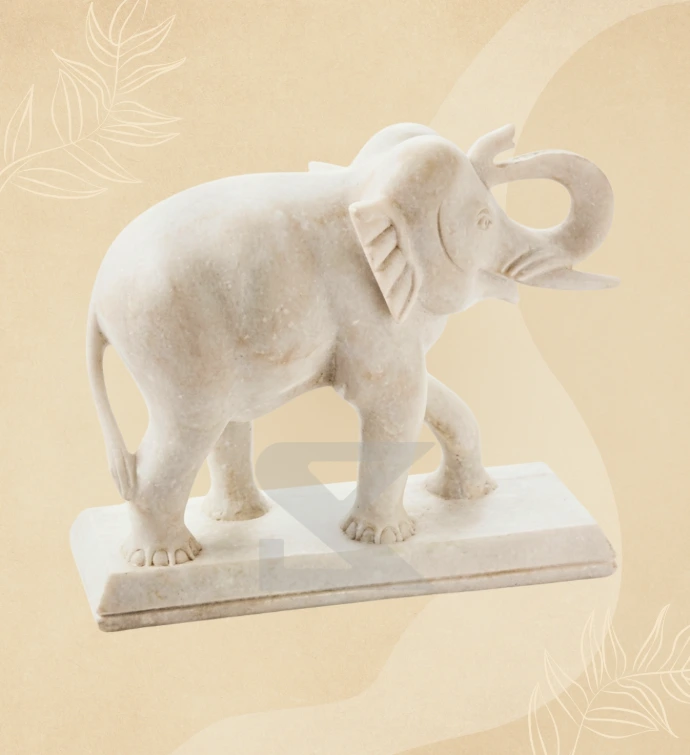
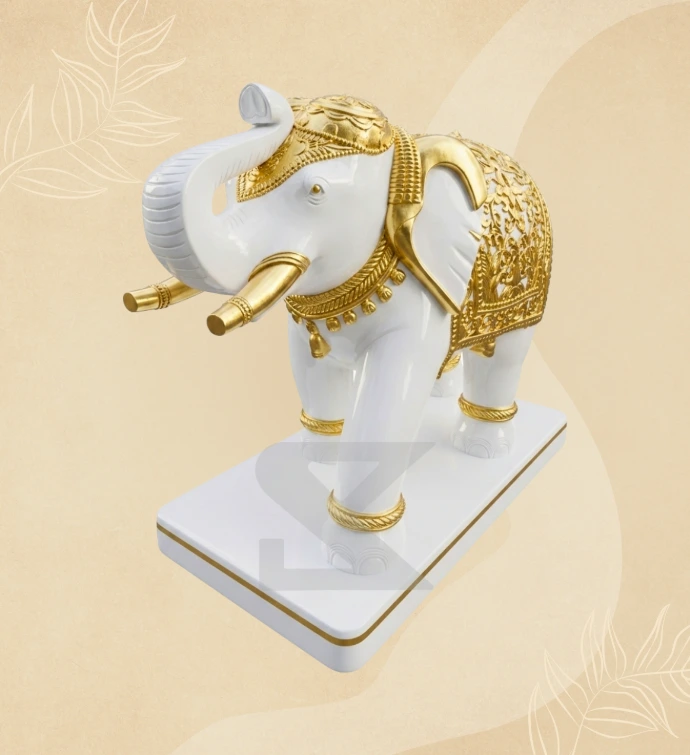
Shilakrut's marble elephant collection spans this range — from simple standing forms to richly caparisoned royal Ambari elephants, gentle pairs, and family groupings with a calf close by. Hand-sculpted in premium Makrana marble by artisans with 50+ years of legacy, each piece is built to anchor an entrance, a courtyard, or a formal reception with the same steady, auspicious presence the elephant has carried for generations.
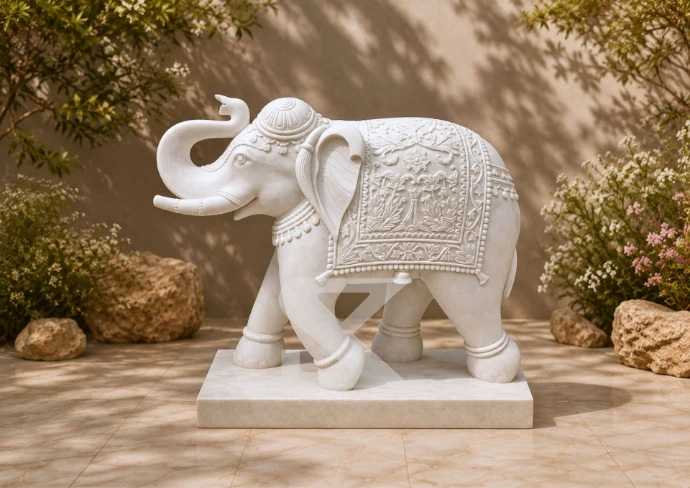
Explore 7 marble elephant designs — from understated standing forms to the celestial Airavata and richly detailed royal Ambari pieces. Each hand-sculpted in premium Makrana marble. Tap any icon below to enquire about sizes, pricing, and customisation.
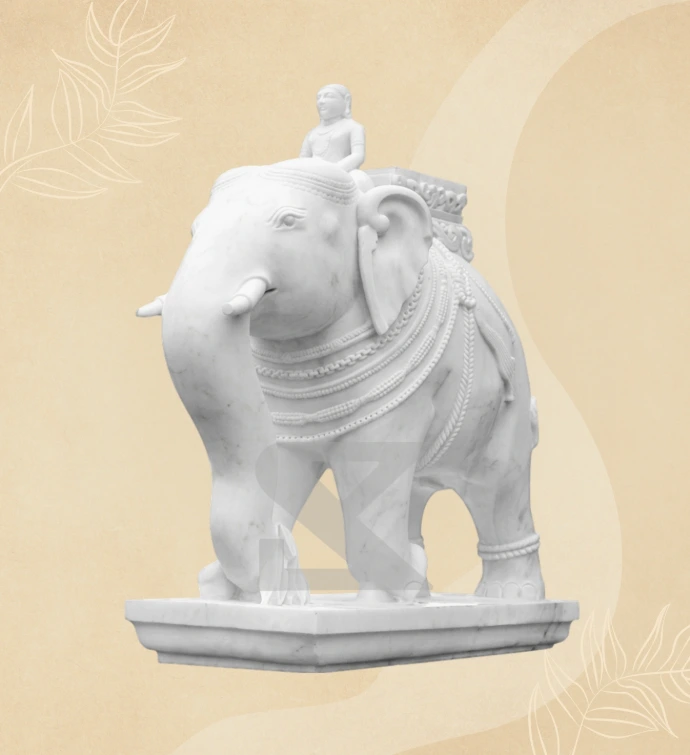
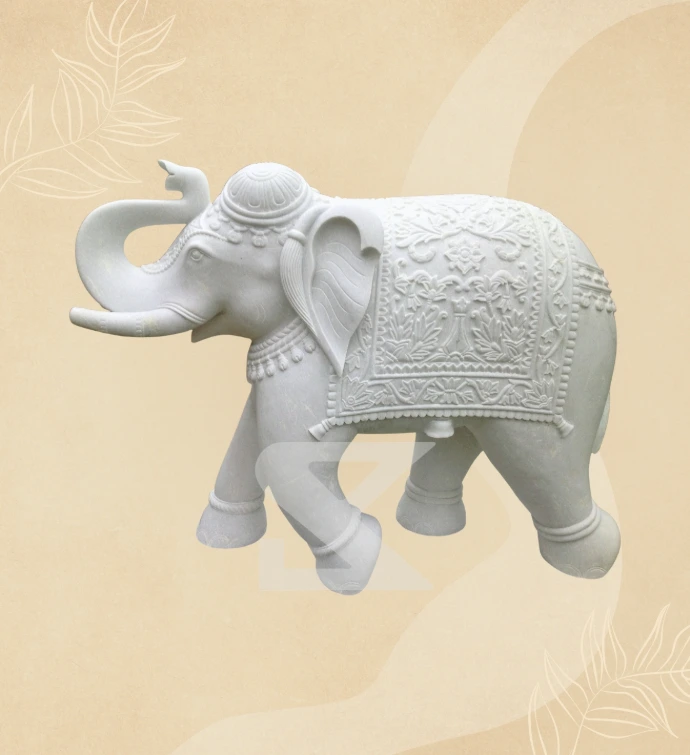
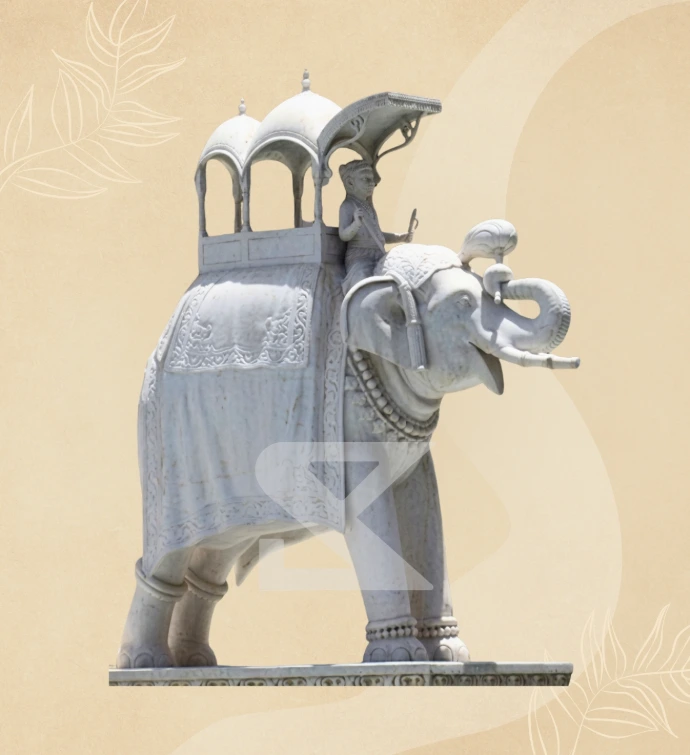
Long before the elephant became a decorative favourite, it was a royal one. Kings rode into battle and celebration alike upon elephants, and this same association with power, dignity, and unhurried confidence carried the animal straight into temple courtyards and household thresholds. As Gajaraj — elephant king — the form represents a strength that never needs to prove itself, and a memory so legendary that "an elephant never forgets" remains a saying to this day.
In its most celestial telling, the elephant becomes Airavata, the pure white, multi-tusked elephant that emerged from the churning of the ocean of milk and now carries Indra, king of the devas, across the heavens. Airavata is closely tied to rain, fertility, and royal abundance — which is why elephant murtis, especially with trunks raised, have long been placed at entrances as a gesture inviting prosperity to walk in rather than pass by.
The elephant's calm, commanding presence makes it one of the most versatile marble forms — equally at home guarding a gateway or quietly anchoring a living room console.
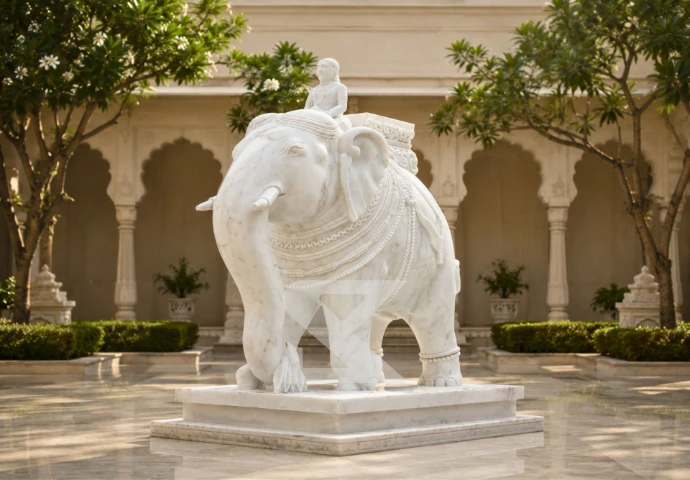
A single elephant, or better still a pair, is most commonly placed at the main entrance with trunks angled toward the door — a gesture traditionally read as drawing good fortune into the home rather than letting it wander out. For living rooms and office receptions, the South-West corner is considered especially steady and grounding, well suited to the elephant's calm nature.
Larger Ambari and pair formations work beautifully in open courtyards or garden entrances where they can be viewed from a distance, while a single Trunk-Up Elephant or the celestial Airavata form suits a console table, office desk, or mandir shelf. Keep the surrounding space uncluttered — the elephant's presence is meant to feel unhurried, not crowded.
Common questions about the marble elephant statue and Airavata murti — meaning, placement, and ordering.
The elephant has long represented strength, wisdom, and royal dignity in Indian tradition. Its celestial form, Airavata, carries Indra, king of the devas, and is tied to rain and abundance. Over centuries this royal, auspicious association carried over into homes and businesses, where an elephant murti is placed to invite steady prosperity and protection.
Airavata is the celestial, multi-tusked white elephant said to have emerged from the churning of the cosmic ocean, and who now carries Indra across the heavens. While a Standing Elephant or Elephant Pair represents general strength and prosperity, an Airavata murti carries a more specific mythological weight tied to royal power and divine abundance.
Many households prefer a Trunk-Up Elephant, as the raised trunk is traditionally read as a gesture of blessing and abundance flowing inward. When placed at an entrance, the trunk is usually angled to face into the home rather than out toward the street, symbolically drawing fortune inside rather than letting it walk away.
The main entrance is the most traditional spot, ideally as a pair flanking the door. For living rooms and office receptions, the South-West corner is considered particularly grounding. Avoid placing an elephant murti in bedrooms or bathrooms, and keep the surrounding area open and uncluttered to let its calm presence come through.
A pair is often preferred for entrances and gateways, as it creates a sense of balance and guardianship on either side of the threshold — much like the elephants historically stationed at palace and temple gates. A single Standing Elephant or Airavata, however, works just as well for consoles, desks, and smaller devotional corners.
Each elephant murti is hand-sculpted in premium Makrana marble by Shilakrut's master artisans, with particular care given to the folds of the ears, the texture of the hide, and the poise of the trunk that defines each design. Customisation in size, painted or plain finish, pedestal style, and pairing is available — share the SKU code via WhatsApp or email for tailored options.
Discover the complete range of marble animal designs at Shilakrut.
Share any SKU code from this collection and our team will reach out with complete details — sizes, pricing, customisation, and delivery timelines. Welcome the steady, prosperous presence of Gajaraj into your home, office, or temple.
Marble Elephant Statue & Sculpture
Gajaraj — Strength, Memory, and Royal AbundanceThe elephant has stood beside kings, temples, and households across India for centuries — not as a mere beast of burden, but as Gajaraj, the noble elephant king, symbol of quiet strength and unshakeable memory. In celestial form he becomes Airavata, the pure white elephant that carries Indra himself and is said to have emerged from the churning of the cosmic ocean, ridden by the King of Devas.
Shilakrut's marble elephant collection spans this range — from simple standing forms to richly caparisoned royal Ambari elephants, gentle pairs, and family groupings with a calf close by. Hand-sculpted in premium Makrana marble by artisans with 50+ years of legacy, each piece is built to anchor an entrance, a courtyard, or a formal reception with the same steady, auspicious presence the elephant has carried for generations.
Explore 7 marble elephant designs — from understated standing forms to the celestial Airavata and richly detailed royal Ambari pieces. Each hand-sculpted in premium Makrana marble. Tap any icon below to enquire about sizes, pricing, and customisation.
Long before the elephant became a decorative favourite, it was a royal one. Kings rode into battle and celebration alike upon elephants, and this same association with power, dignity, and unhurried confidence carried the animal straight into temple courtyards and household thresholds. As Gajaraj — elephant king — the form represents a strength that never needs to prove itself, and a memory so legendary that "an elephant never forgets" remains a saying to this day.
In its most celestial telling, the elephant becomes Airavata, the pure white, multi-tusked elephant that emerged from the churning of the ocean of milk and now carries Indra, king of the devas, across the heavens. Airavata is closely tied to rain, fertility, and royal abundance — which is why elephant murtis, especially with trunks raised, have long been placed at entrances as a gesture inviting prosperity to walk in rather than pass by.
The elephant's calm, commanding presence makes it one of the most versatile marble forms — equally at home guarding a gateway or quietly anchoring a living room console.
A single elephant, or better still a pair, is most commonly placed at the main entrance with trunks angled toward the door — a gesture traditionally read as drawing good fortune into the home rather than letting it wander out. For living rooms and office receptions, the South-West corner is considered especially steady and grounding, well suited to the elephant's calm nature.
Larger Ambari and pair formations work beautifully in open courtyards or garden entrances where they can be viewed from a distance, while a single Trunk-Up Elephant or the celestial Airavata form suits a console table, office desk, or mandir shelf. Keep the surrounding space uncluttered — the elephant's presence is meant to feel unhurried, not crowded.
Common questions about the marble elephant statue and Airavata murti — meaning, placement, and ordering.
The elephant has long represented strength, wisdom, and royal dignity in Indian tradition. Its celestial form, Airavata, carries Indra, king of the devas, and is tied to rain and abundance. Over centuries this royal, auspicious association carried over into homes and businesses, where an elephant murti is placed to invite steady prosperity and protection.
Airavata is the celestial, multi-tusked white elephant said to have emerged from the churning of the cosmic ocean, and who now carries Indra across the heavens. While a Standing Elephant or Elephant Pair represents general strength and prosperity, an Airavata murti carries a more specific mythological weight tied to royal power and divine abundance.
Many households prefer a Trunk-Up Elephant, as the raised trunk is traditionally read as a gesture of blessing and abundance flowing inward. When placed at an entrance, the trunk is usually angled to face into the home rather than out toward the street, symbolically drawing fortune inside rather than letting it walk away.
The main entrance is the most traditional spot, ideally as a pair flanking the door. For living rooms and office receptions, the South-West corner is considered particularly grounding. Avoid placing an elephant murti in bedrooms or bathrooms, and keep the surrounding area open and uncluttered to let its calm presence come through.
A pair is often preferred for entrances and gateways, as it creates a sense of balance and guardianship on either side of the threshold — much like the elephants historically stationed at palace and temple gates. A single Standing Elephant or Airavata, however, works just as well for consoles, desks, and smaller devotional corners.
Each elephant murti is hand-sculpted in premium Makrana marble by Shilakrut's master artisans, with particular care given to the folds of the ears, the texture of the hide, and the poise of the trunk that defines each design. Customisation in size, painted or plain finish, pedestal style, and pairing is available — share the SKU code via WhatsApp or email for tailored options.
Discover the complete range of marble animal designs at Shilakrut.
Share any SKU code from this collection and our team will reach out with complete details — sizes, pricing, customisation, and delivery timelines. Welcome the steady, prosperous presence of Gajaraj into your home, office, or temple.