Marble Tribhanga Lakshmi Murti
Tribhanga Lakshmi — The Graceful Standing Form of Flowing ProsperityTribhanga Lakshmi, depicted in the elegant Tribhanga posture where the body bends gracefully at three points, combines divine beauty with sacred symbolism. The gentle curves of the stance embody movement, grace, and the flowing nature of prosperity — celebrating the Goddess as the eternal source of abundance and harmony.
Shilakrut's marble Tribhanga Lakshmi collection portrays this graceful standing form with refined attention to posture, drapery, and divine ornamentation. Adorned with sacred attributes and blessing gestures, the form represents auspiciousness, abundance, and the benevolent blessings of Shubh (goodness) and Labh (gain). Hand-sculpted in premium Makrana marble by master artisans with 50+ years of legacy, each Tribhanga Lakshmi murti is ideal for home mandirs, entrances, offices, and temples seeking blessings of prosperity and harmony.
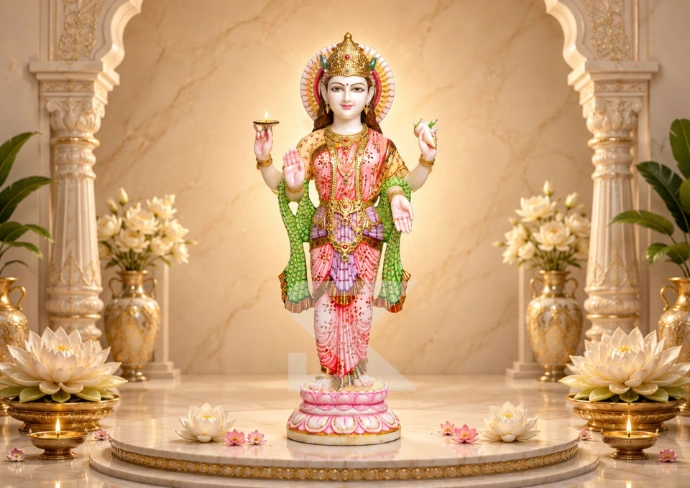
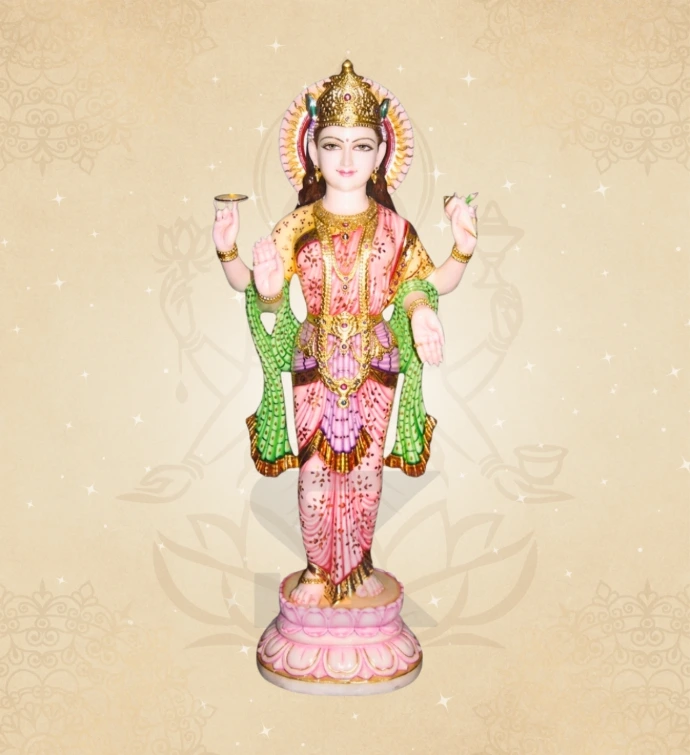
The standing Tribhanga posture — where the body bends gracefully at three points (neck, waist, and knee) — is one of the most celebrated stances in classical Indian sculpture. In Tribhanga Lakshmi, these flowing curves embody movement, grace, and the ever-flowing nature of prosperity, presenting the Goddess as dynamic and benevolent.
Tribhanga Lakshmi is revered as the gracious Mother Goddess of abundance — adorned with sacred attributes and blessing gestures, she represents auspiciousness and the benevolent blessings of Shubh (goodness) and Labh (gain). The graceful standing form symbolises active blessings and the movement of positive energy, making it deeply cherished for home mandirs, entrances, and Diwali worship.
Tribhanga Lakshmi is one of the most graceful forms — perfect for home mandirs, entrances, offices, and devotional spaces seeking blessings of prosperity and harmony. Its elegant standing composition makes it equally striking in traditional temples and contemporary devotional interiors.
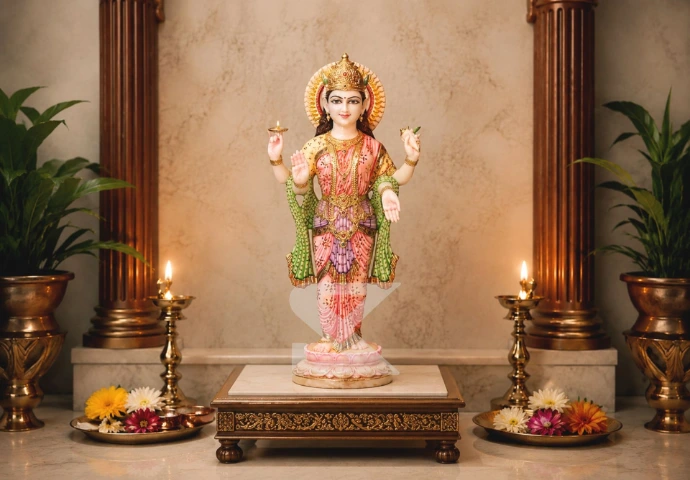
Place Tribhanga Lakshmi facing North or Northeast — the most auspicious directions for inviting prosperity. The graceful standing form is especially suited to home mandirs, entrances, and living areas, where standing Lakshmi forms symbolise active blessings and the movement of positive energy. Position the murti on a clean, elevated platform so the Goddess is honoured with dignity and reverence.
A marble pedestal, decorated chowki, or formal temple platform allows the eight-armed form to be appreciated in its full grandeur. The murti should be placed at eye level or slightly above. Ensure adequate space in front for offerings, diyas, and daily aarti — lighting a diya near the Goddess is considered deeply auspicious. Avoid bedrooms, dining areas, and spaces near restrooms.
Common questions about Tribhanga Lakshmi — meaning, iconography, placement, and ordering.
Tribhanga Lakshmi is the graceful standing form of Goddess Lakshmi depicted in the Tribhanga posture — where the body bends gently at three points (neck, waist, and knee). This classical Indian sculptural stance embodies movement, beauty, and the flowing nature of prosperity. Adorned with sacred attributes and blessing gestures, Tribhanga Lakshmi represents auspiciousness, abundance, and the benevolent blessings of Shubh (goodness) and Labh (gain).
The Tribhanga (three-bend) posture is one of the most celebrated stances in classical Indian art, conveying grace, movement, and dynamic energy. In Tribhanga Lakshmi, the flowing curves of the body symbolise the ever-flowing nature of prosperity and the active movement of positive energy. Standing Lakshmi forms are believed to represent blessings in motion — abundance that flows continuously into the devotee's life and space.
Tribhanga Lakshmi is traditionally placed in home mandirs, entrances, and living areas, where the elegant standing form symbolises active blessings and the flow of positive energy. Position the murti facing North or Northeast on a clean, elevated platform at eye level or slightly above. Ensure space in front for offerings and diyas — lighting a diya near the Goddess is considered deeply auspicious. Avoid bedrooms, dining areas, and spaces near restrooms.
Yes — Tribhanga Lakshmi is highly auspicious for home worship and is especially revered during Diwali Lakshmi Puja. The graceful standing form works beautifully in home mandirs, entrances, and living areas, inviting active blessings of prosperity and harmony. Daily aarti, offerings, and devotion are all welcomed, and lighting a diya near the Goddess is considered deeply auspicious.
For home mandirs and entrances, 1.5–2.5 ft is ideal — large enough to appreciate the graceful three-bend posture and flowing drapery. For living areas and offices, 2–3 ft creates an elegant, auspicious presence. Temple installations and larger homes benefit from sizes of 3 ft and above. The vertical standing form translates especially beautifully at larger scales.
Each Tribhanga Lakshmi is hand-sculpted in premium Makrana marble by Shilakrut's master artisans with 50+ years of legacy. The graceful three-bend posture demands exceptional balance and precision — the flowing curves, drapery pleats, jewelry, and serene facial expression all carved with care to capture movement and divine grace. Customisation in size, painting style, gold detailing, and pedestal design is available — share the SKU code via WhatsApp or email for tailored options.
Discover the complete range of marble Lakshmi designs at Shilakrut.
Share any SKU code from this collection and our team will reach out with complete details — sizes, pricing, customisation, and delivery timelines. Welcome the prosperous and auspicious presence of Maa Lakshmi into your home or temple.
Marble Tribhanga Lakshmi Murti
Tribhanga Lakshmi — The Graceful Standing Form of Flowing ProsperityTribhanga Lakshmi, depicted in the elegant Tribhanga posture where the body bends gracefully at three points, combines divine beauty with sacred symbolism. The gentle curves of the stance embody movement, grace, and the flowing nature of prosperity — celebrating the Goddess as the eternal source of abundance and harmony.
Shilakrut's marble Tribhanga Lakshmi collection portrays this graceful standing form with refined attention to posture, drapery, and divine ornamentation. Adorned with sacred attributes and blessing gestures, the form represents auspiciousness, abundance, and the benevolent blessings of Shubh (goodness) and Labh (gain). Hand-sculpted in premium Makrana marble by master artisans with 50+ years of legacy, each Tribhanga Lakshmi murti is ideal for home mandirs, entrances, offices, and temples seeking blessings of prosperity and harmony.
The standing Tribhanga posture — where the body bends gracefully at three points (neck, waist, and knee) — is one of the most celebrated stances in classical Indian sculpture. In Tribhanga Lakshmi, these flowing curves embody movement, grace, and the ever-flowing nature of prosperity, presenting the Goddess as dynamic and benevolent.
Tribhanga Lakshmi is revered as the gracious Mother Goddess of abundance — adorned with sacred attributes and blessing gestures, she represents auspiciousness and the benevolent blessings of Shubh (goodness) and Labh (gain). The graceful standing form symbolises active blessings and the movement of positive energy, making it deeply cherished for home mandirs, entrances, and Diwali worship.
Tribhanga Lakshmi is one of the most graceful forms — perfect for home mandirs, entrances, offices, and devotional spaces seeking blessings of prosperity and harmony. Its elegant standing composition makes it equally striking in traditional temples and contemporary devotional interiors.
Place Tribhanga Lakshmi facing North or Northeast — the most auspicious directions for inviting prosperity. The graceful standing form is especially suited to home mandirs, entrances, and living areas, where standing Lakshmi forms symbolise active blessings and the movement of positive energy. Position the murti on a clean, elevated platform so the Goddess is honoured with dignity and reverence.
A marble pedestal, decorated chowki, or formal temple platform allows the eight-armed form to be appreciated in its full grandeur. The murti should be placed at eye level or slightly above. Ensure adequate space in front for offerings, diyas, and daily aarti — lighting a diya near the Goddess is considered deeply auspicious. Avoid bedrooms, dining areas, and spaces near restrooms.
Common questions about Tribhanga Lakshmi — meaning, iconography, placement, and ordering.
Tribhanga Lakshmi is the graceful standing form of Goddess Lakshmi depicted in the Tribhanga posture — where the body bends gently at three points (neck, waist, and knee). This classical Indian sculptural stance embodies movement, beauty, and the flowing nature of prosperity. Adorned with sacred attributes and blessing gestures, Tribhanga Lakshmi represents auspiciousness, abundance, and the benevolent blessings of Shubh (goodness) and Labh (gain).
The Tribhanga (three-bend) posture is one of the most celebrated stances in classical Indian art, conveying grace, movement, and dynamic energy. In Tribhanga Lakshmi, the flowing curves of the body symbolise the ever-flowing nature of prosperity and the active movement of positive energy. Standing Lakshmi forms are believed to represent blessings in motion — abundance that flows continuously into the devotee's life and space.
Tribhanga Lakshmi is traditionally placed in home mandirs, entrances, and living areas, where the elegant standing form symbolises active blessings and the flow of positive energy. Position the murti facing North or Northeast on a clean, elevated platform at eye level or slightly above. Ensure space in front for offerings and diyas — lighting a diya near the Goddess is considered deeply auspicious. Avoid bedrooms, dining areas, and spaces near restrooms.
Yes — Tribhanga Lakshmi is highly auspicious for home worship and is especially revered during Diwali Lakshmi Puja. The graceful standing form works beautifully in home mandirs, entrances, and living areas, inviting active blessings of prosperity and harmony. Daily aarti, offerings, and devotion are all welcomed, and lighting a diya near the Goddess is considered deeply auspicious.
For home mandirs and entrances, 1.5–2.5 ft is ideal — large enough to appreciate the graceful three-bend posture and flowing drapery. For living areas and offices, 2–3 ft creates an elegant, auspicious presence. Temple installations and larger homes benefit from sizes of 3 ft and above. The vertical standing form translates especially beautifully at larger scales.
Each Tribhanga Lakshmi is hand-sculpted in premium Makrana marble by Shilakrut's master artisans with 50+ years of legacy. The graceful three-bend posture demands exceptional balance and precision — the flowing curves, drapery pleats, jewelry, and serene facial expression all carved with care to capture movement and divine grace. Customisation in size, painting style, gold detailing, and pedestal design is available — share the SKU code via WhatsApp or email for tailored options.
Discover the complete range of marble Lakshmi designs at Shilakrut.
Share any SKU code from this collection and our team will reach out with complete details — sizes, pricing, customisation, and delivery timelines. Welcome the prosperous and auspicious presence of Maa Lakshmi into your home or temple.