Marble Baba Balaknath Statue, Murti & Idol — Premium Handcrafted in India
Handcrafted in premium Makrana marble by master artisans with 50+ years of legacy. Explore sitting and standing Marble Baba Balaknath Statue designs, hand-carved with intricate detailing — Rudraksha, Kamandal, and traditional yogic attributes. Custom sizes available.
Baba Balaknath, lovingly known as Sidh Baba Balak Nath, is revered across Himachal Pradesh, Punjab, Haryana, Jammu, and neighbouring regions as a powerful yogic saint and a compassionate protector of devotees. His worship is especially associated with the sacred Deotsidh temple at Shah Talai, where generations of devotees have travelled seeking his blessings.
A handcrafted Marble Baba Balaknath Statue brings this deeply cherished tradition into sculptural form. Carved in luminous marble, his youthful appearance represents not childhood alone, but the purity of a consciousness untouched by worldly attachment. His yogic presence reminds devotees that spiritual wisdom does not depend upon age — it arises through discipline, devotion, and inner realisation.
At Shilakrut, every Baba Balaknath murti is created with respect for the distinctive visual traditions associated with the saint — the serene face, youthful form, yogic posture, traditional ornaments, and symbolic attributes carefully sculpted to preserve the spiritual character of this beloved Himalayan deity.
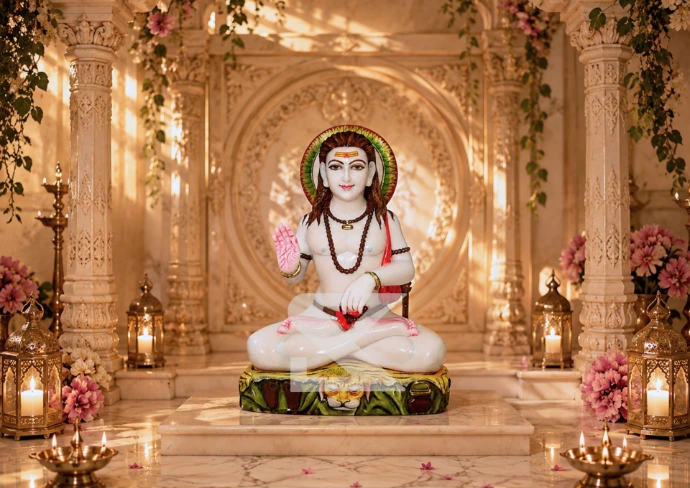
More than an artistic representation, the Marble Baba Balaknath Statue becomes a bridge between folk memory, regional devotion, Himalayan spirituality, and India's living traditions of sacred sculpture. Each murti is handcrafted in premium Makrana marble by master artisans with 50+ years of legacy.
Browse our collection of 3 unique designs — share any SKU code to enquire about sizes, pricing, and customisation.
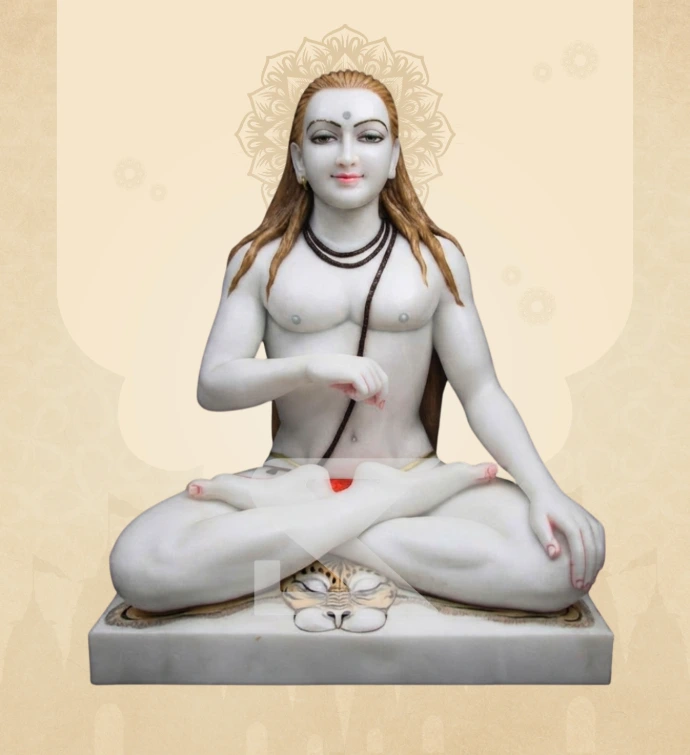
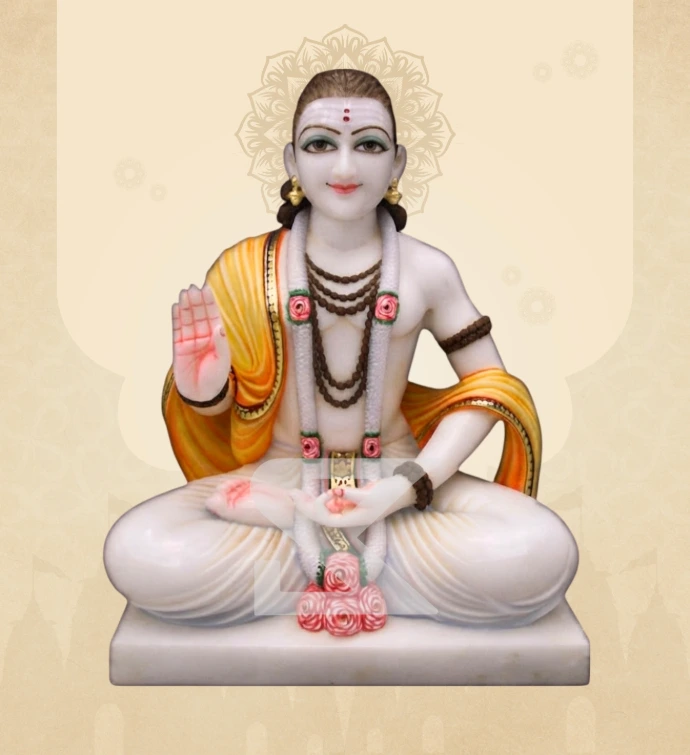
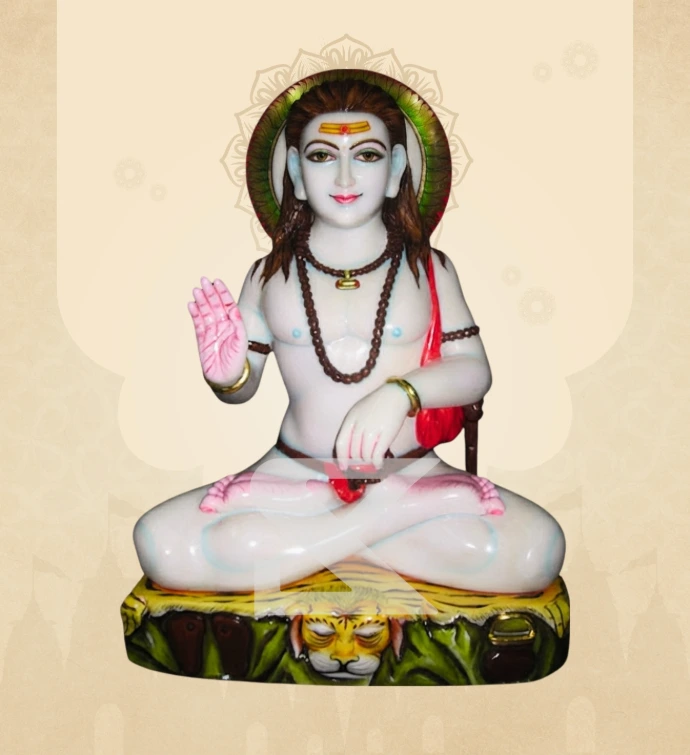
The traditions surrounding Baba Balaknath are preserved through regional oral histories, devotional narratives, and local folklore — a living story carried across generations of faith in the Himalayan foothills.
According to popular belief, Baba Balaknath was a highly accomplished yogi who chose to manifest in a youthful form. His appearance as a balak, or child, is central to his identity and is understood by devotees as a symbol of spiritual purity and detachment. One of the most beloved traditions connects Baba Balaknath with Shah Talai, where he is said to have spent time in deep spiritual practice — local folklore speaking of his miraculous powers and ability to transform ordinary events through spiritual force.
Among the most important pilgrimage sites associated with Baba Balaknath is Deotsidh in Himachal Pradesh. The cave shrine is believed by devotees to be connected with the saint's spiritual presence and remains a major centre of pilgrimage. The sacred cave therefore represents more than a physical location — it becomes a symbol of the inner cave of consciousness, where the seeker turns away from worldly distraction and moves toward spiritual awakening.
ॐ नमो भगवते बालकनाथाय नमः।
❈The hills, caves, forests, and temples become part of the story — and the story continues through every generation that walks toward his shrine.
At Shilakrut, sacred sculpture is approached as a meeting point between tradition, craftsmanship, and spiritual meaning — giving form to faith through stone.
A traditional Marble Baba Balaknath statue is distinguished by the saint's youthful yet deeply composed appearance — every sculptural detail carrying profound meaning from the Himalayan yogic tradition.
The most suitable murti is one that inspires regular contemplation and seamlessly integrates into your sacred environment. Whether for a personal home shrine or a large temple installation, the right form depends on the nature of your devotional space.
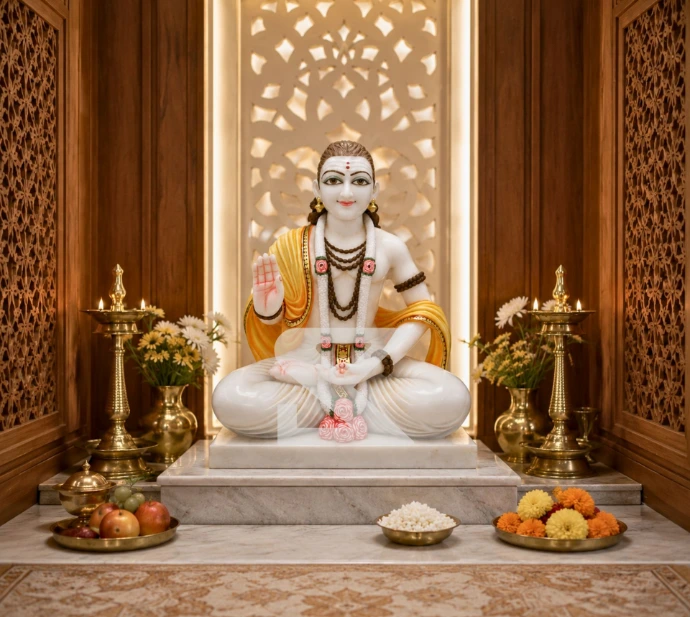
For home mandirs, the seated meditative form is most traditionally preferred — the stillness of the yogic posture creating a contemplative atmosphere ideal for daily devotion. The youthful face should be positioned at a height that allows comfortable eye contact during puja.
Price Factors: size, marble quality, complexity of iconographic detailing — the Jata, Rudraksha beads, Kamandal, ascetic garments, and custom attributes all require individual artisanal attention — and customisation requirements including posture, pedestal, and finish variations.
In devotional tradition, Baba Balaknath's murti is placed in a clean, respectful space dedicated to prayer or meditation — his serene yogic presence most powerfully felt in an environment of sincere devotion and spiritual discipline.
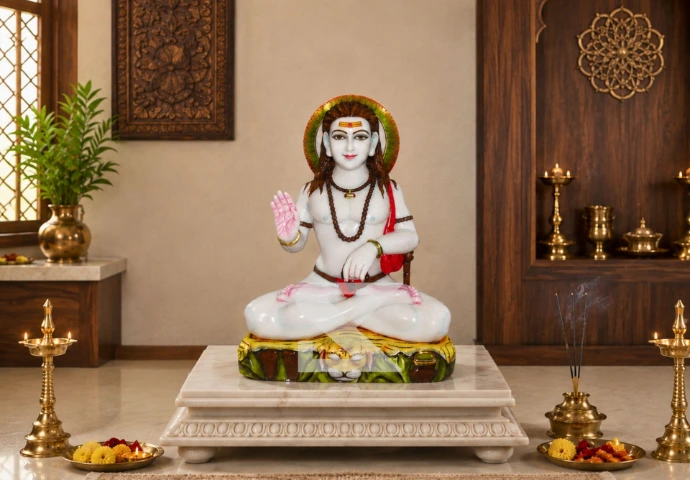
- Place in a dedicated home mandir, temple sanctum, or meditation room — a clean elevated platform or dedicated chowki approached with reverence and spiritual simplicity
- For formal temple installations, the design, dimensions, and installation should follow the relevant religious and architectural traditions of the temple
- Keep the surrounding space clean and uncluttered — Baba Balaknath's yogic presence is most powerfully felt in a simple, serene environment that reflects the ascetic values he embodies
- Traditional offerings vary by regional devotional tradition — families may follow the guidance of their own spiritual community and the customs observed at the Deotsidh and Shah Talai shrines
- Especially auspicious on Sundays and the devotional festivals associated with Baba Balaknath's worship in Himachal and northern India
- Chanting "ॐ नमो भगवते बालकनाथाय नमः" creates a devotional atmosphere of simplicity, discipline, and inner awareness
Every Marble Baba Balaknath Statue at Shilakrut is created through a careful seven-stage process — the central artistic challenge being to capture both aspects of his identity: the innocence of the child and the wisdom of the Siddha.
The process begins by studying the desired representation of Baba Balaknath — artisans determine the youthful facial expression, meditative posture, hand gestures, hair and ascetic details, Rudraksha and ornaments, Kamandal or symbolic attributes, garments, and pedestal design. The central challenge: to capture both childlike purity and yogic depth in a single face.
- Youthful yet wise facial expression
- Seated or standing yogic posture
- Jata, Rudraksha, Kamandal
- Ascetic garments and ornaments
- Pedestal design and proportions
Premium marble is carefully selected — natural whiteness, grain consistency, structural strength, surface quality, and suitability for detailed carving. The stone must be capable of supporting delicate facial features, fingers, ornaments, and yogic details that define Baba Balaknath's sacred representation.
- Natural whiteness and luminosity
- Fine grain for facial detailing
- Structural strength
- Long-term durability
Each block is examined for cracks, fissures, discoloration, grain irregularities, and structural stability — ensuring the sculpture can withstand the detailed carving required to create the saint's expressive face and delicate attributes.
- Cracks and fissures
- Grain uniformity
- Surface consistency
- Structural stability
The raw block is gradually shaped into the foundational form — body proportions, seated posture, head position, limb placement, garment structure, and pedestal proportions. The youthful form must maintain natural proportion while conveying the stillness of a seasoned yogi.
- Body proportions
- Seated yogic posture
- Head and limb placement
- Pedestal structure
This is where the spiritual character of Baba Balaknath begins to emerge. Particular attention is given to the face — the expression must communicate childlike purity without losing yogic depth. Serene facial expression, eyes, Jata, Rudraksha beads, ascetic garments, fingers and mudras, Kamandal, and pedestal detailing are all carefully refined.
- Serene face — purity + yogic depth
- Eyes, eyebrows, Jata
- Rudraksha beads
- Ascetic garments and mudras
- Kamandal and symbolic attributes
The statue is carefully polished to enhance the natural beauty of the marble. Final treatment highlights the face, hands, ornaments, and folds of the garments without compromising the handcrafted character of the sculpture.
- Soft matte devotional finish
- Satin finish
- High-lustre premium polish
The finished statue is carefully prepared for transportation — protective packaging, reinforcement of delicate sections, secure handling, transportation support, and installation guidance for larger sculptures — ensuring the completed Baba Balaknath statue reaches its destination with its artistic integrity preserved.
- Protective packaging
- Reinforcement of delicate sections
- Secure handling
- Installation guidance
A handcrafted Marble Baba Balaknath Statue can become a meaningful presence in spaces dedicated to prayer, meditation, and spiritual reflection. In a home, his serene presence serves as a reminder of simplicity, self-discipline, faith, and spiritual courage.
Ideal for:
- Home mandirs & personal prayer rooms
- Temple sanctums & prayer halls
- Spiritual centres & ashrams
- Meditation spaces
- Community worship spaces
- Cultural institutions & religious establishments
- Sacred gifting for Himachali & North Indian devotees
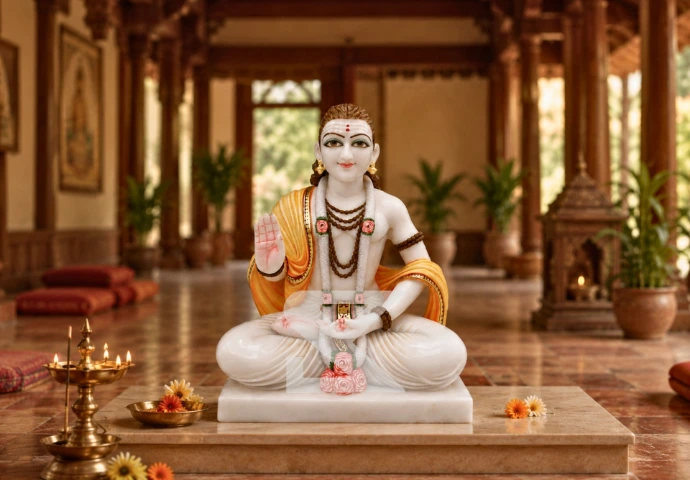
Baba Balaknath, also known as Siddh Baba Balak Nath, is a revered yogic saint worshipped particularly across Himachal Pradesh and northern India. He is associated with the sacred Deotsidh shrine and is venerated as a powerful Siddha who appeared in a youthful form while carrying the wisdom of countless lifetimes of yogic practice.
His youthful appearance reflects the name Balak Nath and symbolises spiritual purity, innocence, and freedom from worldly attachment. His identity as a Siddha represents profound yogic wisdom — the combination of childlike purity and the stillness of a seasoned yogi is the most distinctive quality of his sacred iconography.
His major pilgrimage centre is associated with Deotsidh in Himachal Pradesh, one of the most significant sacred sites of northern India. His worship is also prevalent in Punjab, Haryana, Jammu, and other parts of northern India — with generations of devotees travelling to Shah Talai seeking his blessings.
Deotsidh is a major sacred centre associated with Baba Balaknath and is believed by devotees to be connected with his spiritual presence. The sacred cave represents more than a physical location — it becomes a symbol of the inner cave of consciousness, where the seeker turns away from worldly distraction and moves toward spiritual awakening.
A Baba Balaknath statue can be placed in a clean, respectful space dedicated to prayer or meditation. For formal ritual worship, families may follow the guidance of their own spiritual tradition and the customs observed at the Deotsidh and Shah Talai shrines.
Marble offers durability, refined detailing, and a naturally luminous appearance that complements the saint's serene and spiritually pure representation. The white surface beautifully complements the symbolism of purity, simplicity, and spiritual stillness associated with the child-yogi — with greater permanence than wood and more refined detailing than stone or brass.
Yes. Shilakrut can create customised statues based on size, posture, detailing, pedestal design, and project requirements. Share any SKU code for a detailed consultation on sizes, pricing, customisation, and delivery timelines.
Baba Balaknath is deeply connected with yogic and ascetic traditions, and his worship is often understood within the broader spiritual landscape of Shaiva and Siddha traditions. His Rudraksha, ascetic practices, and Kamandal all reflect this Shaiva yogic heritage. Specific interpretations may vary among devotees and regional traditions.
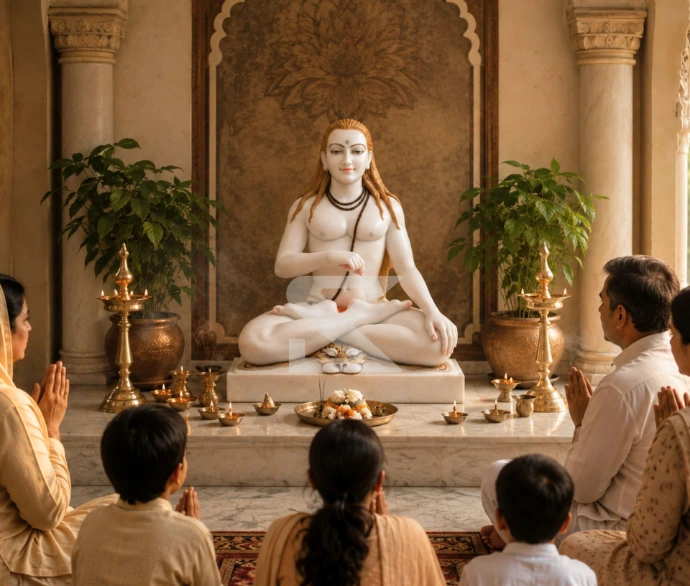
From the hills of Himachal to the homes and hearts of devotees across northern India, the story of Baba Balaknath continues to live through faith, folklore, pilgrimage, and memory. At Shilakrut, we honour that living tradition by transforming sacred stories into enduring sculpture.
A face carved in marble. A yogi captured in stillness. A child-like form carrying the wisdom of the Siddhas. Share any SKU code and our team will reach out with complete details on sizes, pricing, customisation, and delivery timelines.
Shilakrut — Where India's living traditions are shaped in stone, and devotion becomes timeless art.Baba Balaknath, lovingly known as Sidh Baba Balak Nath, is revered across Himachal Pradesh, Punjab, Haryana, Jammu, and neighbouring regions as a powerful yogic saint and a compassionate protector of devotees. His worship is especially associated with the sacred Deotsidh temple at Shah Talai, where generations of devotees have travelled seeking his blessings.
A handcrafted Marble Baba Balaknath Statue brings this deeply cherished tradition into sculptural form. Carved in luminous marble, his youthful appearance represents not childhood alone, but the purity of a consciousness untouched by worldly attachment. His yogic presence reminds devotees that spiritual wisdom does not depend upon age — it arises through discipline, devotion, and inner realisation.
At Shilakrut, every Baba Balaknath murti is created with respect for the distinctive visual traditions associated with the saint — the serene face, youthful form, yogic posture, traditional ornaments, and symbolic attributes carefully sculpted to preserve the spiritual character of this beloved Himalayan deity.
More than an artistic representation, the Marble Baba Balaknath Statue becomes a bridge between folk memory, regional devotion, Himalayan spirituality, and India's living traditions of sacred sculpture. Each murti is handcrafted in premium Makrana marble by master artisans with 50+ years of legacy.
Browse our collection of 3 unique designs — share any SKU code to enquire about sizes, pricing, and customisation.
The traditions surrounding Baba Balaknath are preserved through regional oral histories, devotional narratives, and local folklore — a living story carried across generations of faith in the Himalayan foothills.
According to popular belief, Baba Balaknath was a highly accomplished yogi who chose to manifest in a youthful form. His appearance as a balak, or child, is central to his identity and is understood by devotees as a symbol of spiritual purity and detachment. One of the most beloved traditions connects Baba Balaknath with Shah Talai, where he is said to have spent time in deep spiritual practice — local folklore speaking of his miraculous powers and ability to transform ordinary events through spiritual force.
Among the most important pilgrimage sites associated with Baba Balaknath is Deotsidh in Himachal Pradesh. The cave shrine is believed by devotees to be connected with the saint's spiritual presence and remains a major centre of pilgrimage. The sacred cave therefore represents more than a physical location — it becomes a symbol of the inner cave of consciousness, where the seeker turns away from worldly distraction and moves toward spiritual awakening.
ॐ नमो भगवते बालकनाथाय नमः।
❈The hills, caves, forests, and temples become part of the story — and the story continues through every generation that walks toward his shrine.
At Shilakrut, sacred sculpture is approached as a meeting point between tradition, craftsmanship, and spiritual meaning — giving form to faith through stone.
A traditional Marble Baba Balaknath statue is distinguished by the saint's youthful yet deeply composed appearance — every sculptural detail carrying profound meaning from the Himalayan yogic tradition.
The most suitable murti is one that inspires regular contemplation and seamlessly integrates into your sacred environment. Whether for a personal home shrine or a large temple installation, the right form depends on the nature of your devotional space.
For home mandirs, the seated meditative form is most traditionally preferred — the stillness of the yogic posture creating a contemplative atmosphere ideal for daily devotion. The youthful face should be positioned at a height that allows comfortable eye contact during puja.
Price Factors: size, marble quality, complexity of iconographic detailing — the Jata, Rudraksha beads, Kamandal, ascetic garments, and custom attributes all require individual artisanal attention — and customisation requirements including posture, pedestal, and finish variations.
In devotional tradition, Baba Balaknath's murti is placed in a clean, respectful space dedicated to prayer or meditation — his serene yogic presence most powerfully felt in an environment of sincere devotion and spiritual discipline.
- Place in a dedicated home mandir, temple sanctum, or meditation room — a clean elevated platform or dedicated chowki approached with reverence and spiritual simplicity
- For formal temple installations, the design, dimensions, and installation should follow the relevant religious and architectural traditions of the temple
- Keep the surrounding space clean and uncluttered — Baba Balaknath's yogic presence is most powerfully felt in a simple, serene environment that reflects the ascetic values he embodies
- Traditional offerings vary by regional devotional tradition — families may follow the guidance of their own spiritual community and the customs observed at the Deotsidh and Shah Talai shrines
- Especially auspicious on Sundays and the devotional festivals associated with Baba Balaknath's worship in Himachal and northern India
- Chanting "ॐ नमो भगवते बालकनाथाय नमः" creates a devotional atmosphere of simplicity, discipline, and inner awareness
Every Marble Baba Balaknath Statue at Shilakrut is created through a careful seven-stage process — the central artistic challenge being to capture both aspects of his identity: the innocence of the child and the wisdom of the Siddha.
The process begins by studying the desired representation of Baba Balaknath — artisans determine the youthful facial expression, meditative posture, hand gestures, hair and ascetic details, Rudraksha and ornaments, Kamandal or symbolic attributes, garments, and pedestal design. The central challenge: to capture both childlike purity and yogic depth in a single face.
- Youthful yet wise facial expression
- Seated or standing yogic posture
- Jata, Rudraksha, Kamandal
- Ascetic garments and ornaments
- Pedestal design and proportions
Premium marble is carefully selected — natural whiteness, grain consistency, structural strength, surface quality, and suitability for detailed carving. The stone must be capable of supporting delicate facial features, fingers, ornaments, and yogic details that define Baba Balaknath's sacred representation.
- Natural whiteness and luminosity
- Fine grain for facial detailing
- Structural strength
- Long-term durability
Each block is examined for cracks, fissures, discoloration, grain irregularities, and structural stability — ensuring the sculpture can withstand the detailed carving required to create the saint's expressive face and delicate attributes.
- Cracks and fissures
- Grain uniformity
- Surface consistency
- Structural stability
The raw block is gradually shaped into the foundational form — body proportions, seated posture, head position, limb placement, garment structure, and pedestal proportions. The youthful form must maintain natural proportion while conveying the stillness of a seasoned yogi.
- Body proportions
- Seated yogic posture
- Head and limb placement
- Pedestal structure
This is where the spiritual character of Baba Balaknath begins to emerge. Particular attention is given to the face — the expression must communicate childlike purity without losing yogic depth. Serene facial expression, eyes, Jata, Rudraksha beads, ascetic garments, fingers and mudras, Kamandal, and pedestal detailing are all carefully refined.
- Serene face — purity + yogic depth
- Eyes, eyebrows, Jata
- Rudraksha beads
- Ascetic garments and mudras
- Kamandal and symbolic attributes
The statue is carefully polished to enhance the natural beauty of the marble. Final treatment highlights the face, hands, ornaments, and folds of the garments without compromising the handcrafted character of the sculpture.
- Soft matte devotional finish
- Satin finish
- High-lustre premium polish
The finished statue is carefully prepared for transportation — protective packaging, reinforcement of delicate sections, secure handling, transportation support, and installation guidance for larger sculptures — ensuring the completed Baba Balaknath statue reaches its destination with its artistic integrity preserved.
- Protective packaging
- Reinforcement of delicate sections
- Secure handling
- Installation guidance
A handcrafted Marble Baba Balaknath Statue can become a meaningful presence in spaces dedicated to prayer, meditation, and spiritual reflection. In a home, his serene presence serves as a reminder of simplicity, self-discipline, faith, and spiritual courage.
Ideal for:
- Home mandirs & personal prayer rooms
- Temple sanctums & prayer halls
- Spiritual centres & ashrams
- Meditation spaces
- Community worship spaces
- Cultural institutions & religious establishments
- Sacred gifting for Himachali & North Indian devotees
Baba Balaknath, also known as Siddh Baba Balak Nath, is a revered yogic saint worshipped particularly across Himachal Pradesh and northern India. He is associated with the sacred Deotsidh shrine and is venerated as a powerful Siddha who appeared in a youthful form while carrying the wisdom of countless lifetimes of yogic practice.
His youthful appearance reflects the name Balak Nath and symbolises spiritual purity, innocence, and freedom from worldly attachment. His identity as a Siddha represents profound yogic wisdom — the combination of childlike purity and the stillness of a seasoned yogi is the most distinctive quality of his sacred iconography.
His major pilgrimage centre is associated with Deotsidh in Himachal Pradesh, one of the most significant sacred sites of northern India. His worship is also prevalent in Punjab, Haryana, Jammu, and other parts of northern India — with generations of devotees travelling to Shah Talai seeking his blessings.
Deotsidh is a major sacred centre associated with Baba Balaknath and is believed by devotees to be connected with his spiritual presence. The sacred cave represents more than a physical location — it becomes a symbol of the inner cave of consciousness, where the seeker turns away from worldly distraction and moves toward spiritual awakening.
A Baba Balaknath statue can be placed in a clean, respectful space dedicated to prayer or meditation. For formal ritual worship, families may follow the guidance of their own spiritual tradition and the customs observed at the Deotsidh and Shah Talai shrines.
Marble offers durability, refined detailing, and a naturally luminous appearance that complements the saint's serene and spiritually pure representation. The white surface beautifully complements the symbolism of purity, simplicity, and spiritual stillness associated with the child-yogi — with greater permanence than wood and more refined detailing than stone or brass.
Yes. Shilakrut can create customised statues based on size, posture, detailing, pedestal design, and project requirements. Share any SKU code for a detailed consultation on sizes, pricing, customisation, and delivery timelines.
Baba Balaknath is deeply connected with yogic and ascetic traditions, and his worship is often understood within the broader spiritual landscape of Shaiva and Siddha traditions. His Rudraksha, ascetic practices, and Kamandal all reflect this Shaiva yogic heritage. Specific interpretations may vary among devotees and regional traditions.
From the hills of Himachal to the homes and hearts of devotees across northern India, the story of Baba Balaknath continues to live through faith, folklore, pilgrimage, and memory. At Shilakrut, we honour that living tradition by transforming sacred stories into enduring sculpture.
A face carved in marble. A yogi captured in stillness. A child-like form carrying the wisdom of the Siddhas. Share any SKU code and our team will reach out with complete details on sizes, pricing, customisation, and delivery timelines.
Shilakrut — Where India's living traditions are shaped in stone, and devotion becomes timeless art.