Marble Ram Darbar Murti
Ram Darbar — Rama, Sita, Lakshmana & Hanuman in Eternal Sacred HarmonyEach figure in the Ram Darbar carries a sacred ideal: Shri Ram as Maryada Purushottam — the ideal human being; Sita as divine Shakti — compassion, purity, and resilient grace; Lakshmana as eternal seva — selfless duty and discipline; Hanuman as supreme bhakti — surrender and unwavering devotion.
Shilakrut's Ram Darbar collection brings this complete sacred vision to life across 22 refined interpretations — available in multiple sizes from compact home mandir pieces (1–2 ft) to grand temple installations (5 ft+). Hand-sculpted in premium Makrana marble, ideal for home mandirs, temples, and sacred gifting.
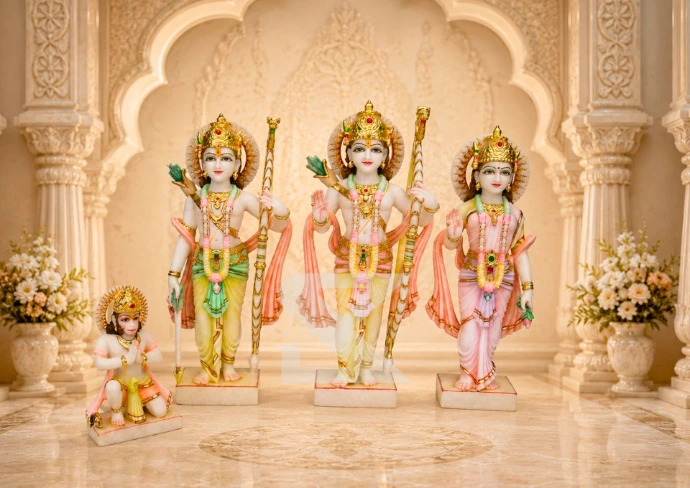
Explore 22 unique Ram Darbar designs — from classic compositions to richly ornamented temple pieces in premium Makrana marble. Tap any icon below to enquire about sizes, pricing, and customisation.
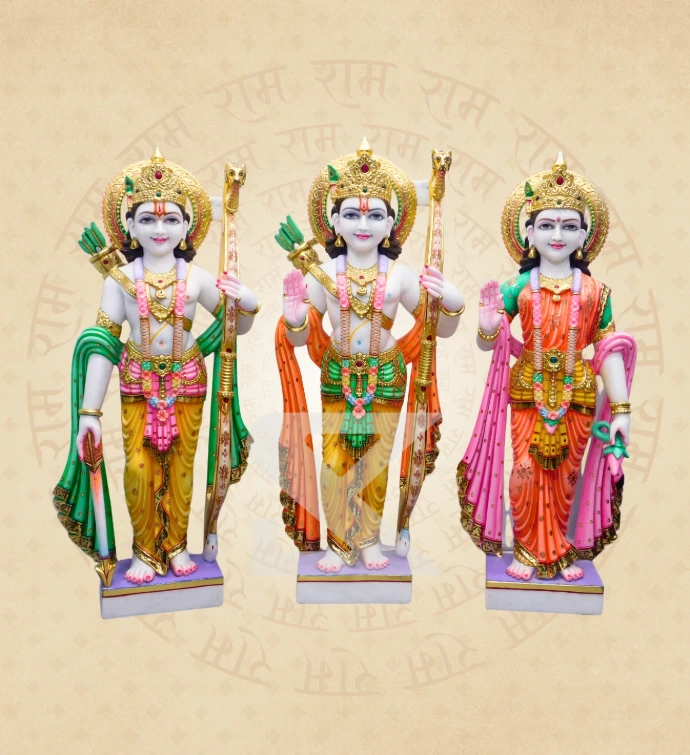
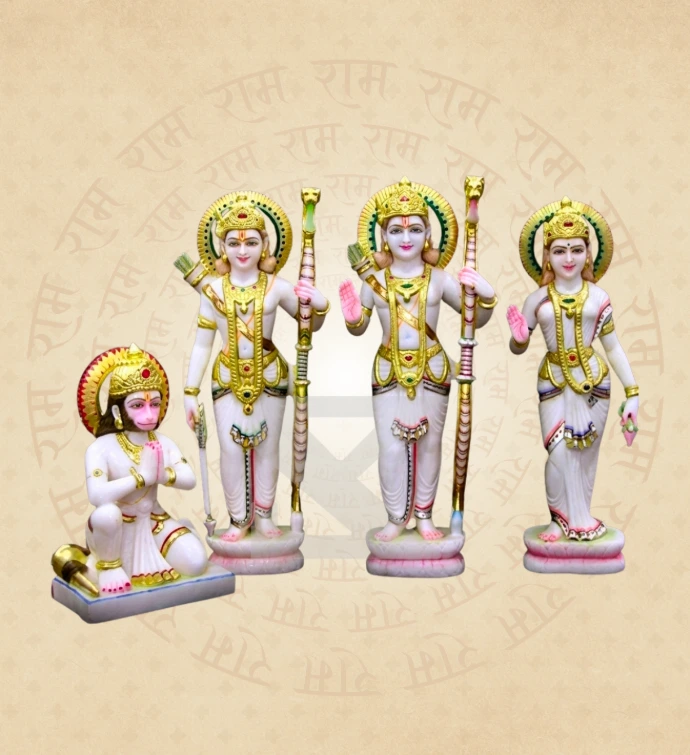
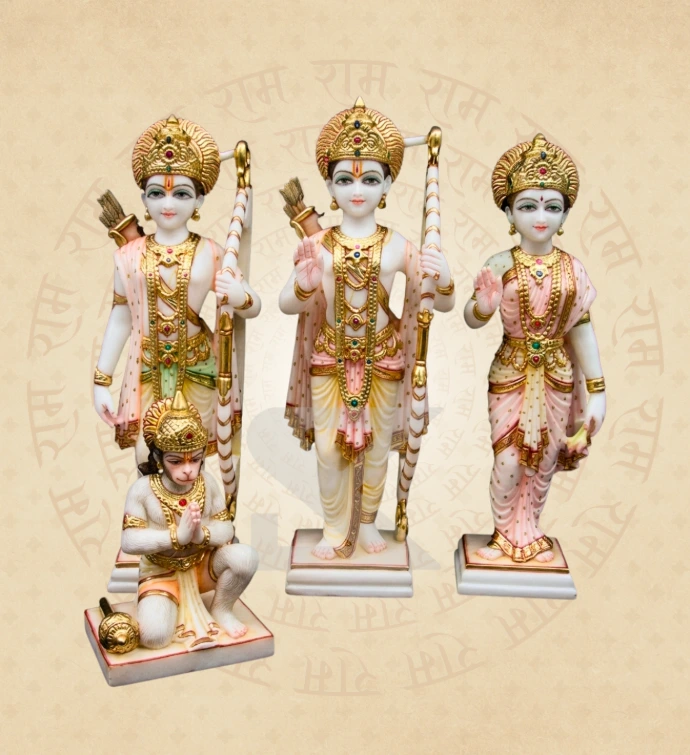
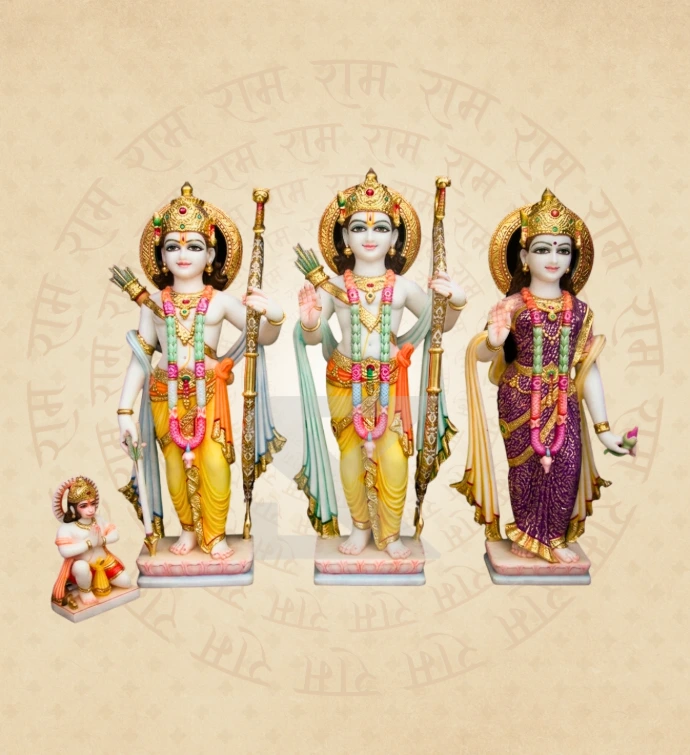
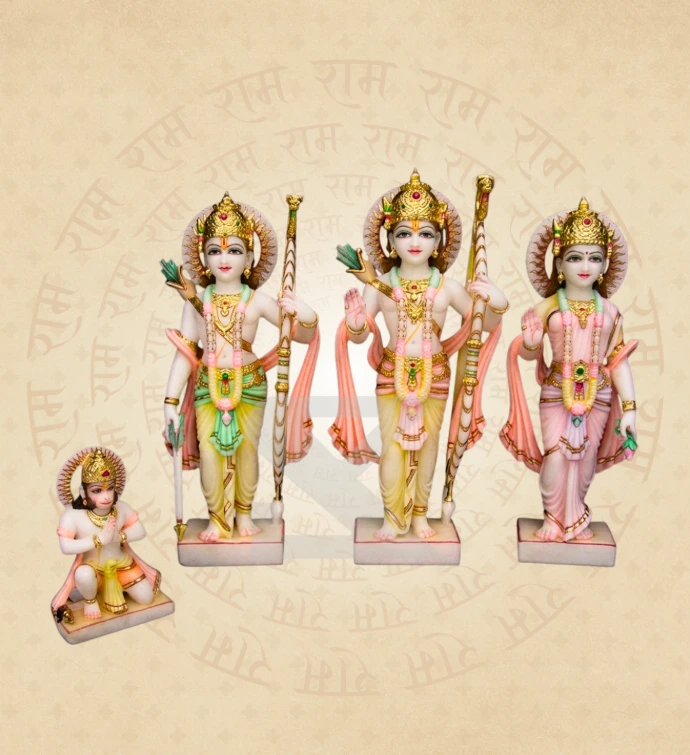
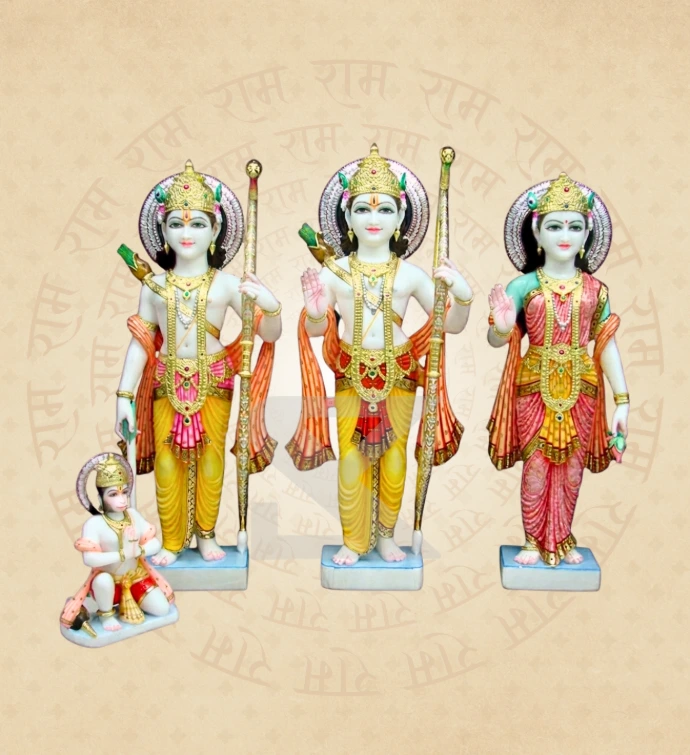
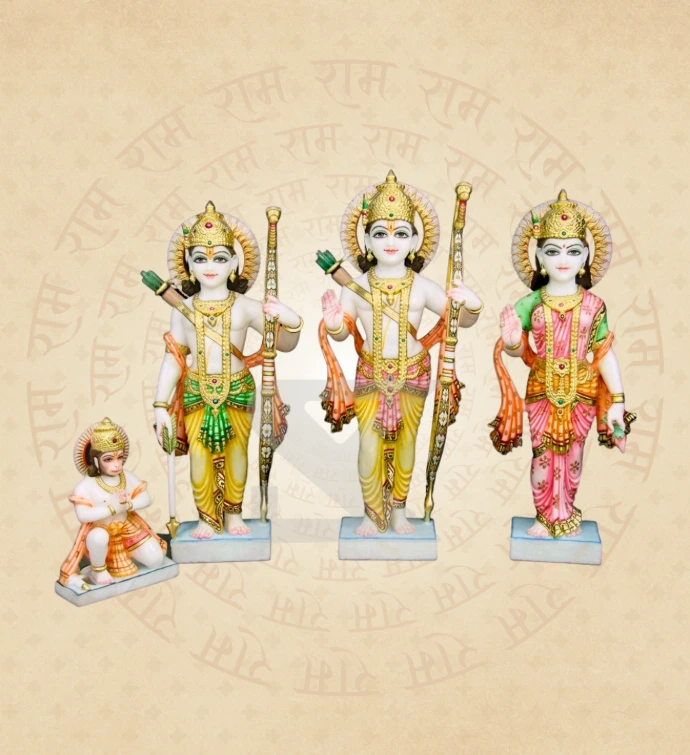
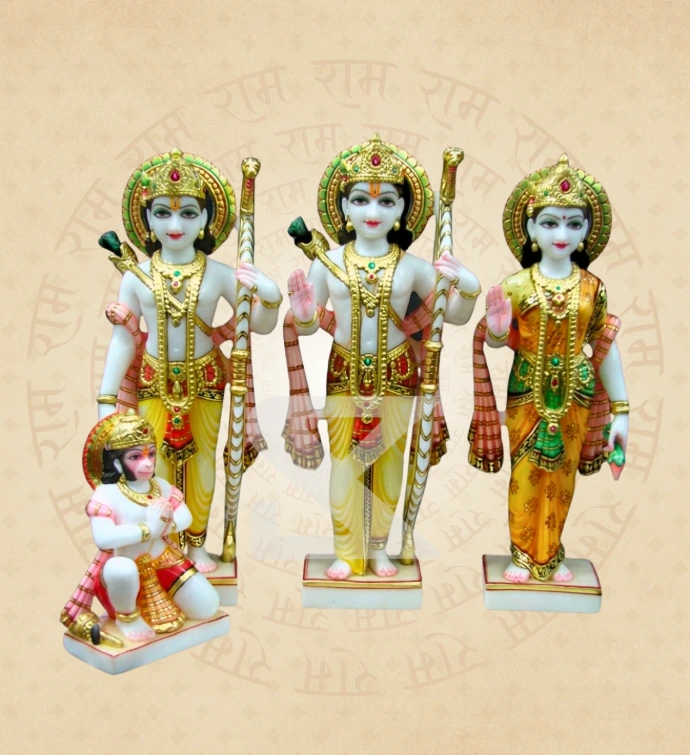
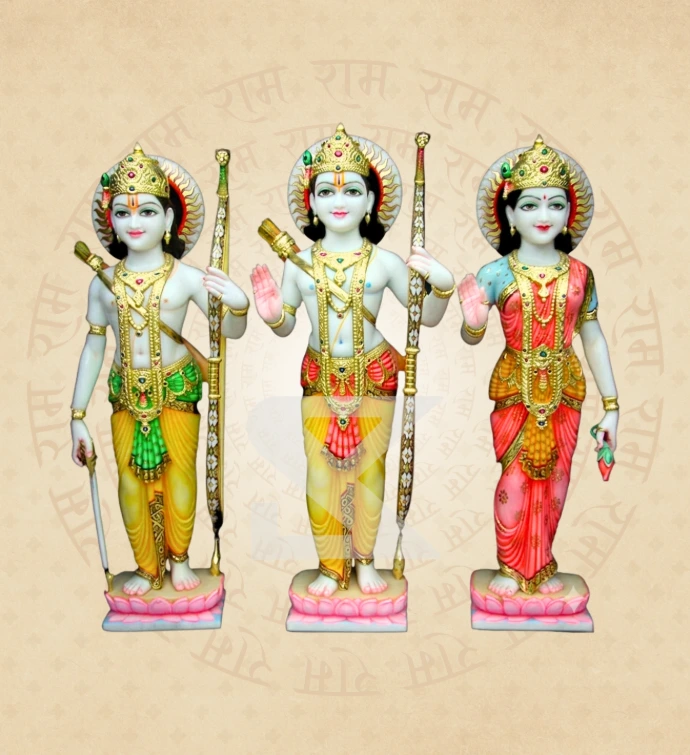
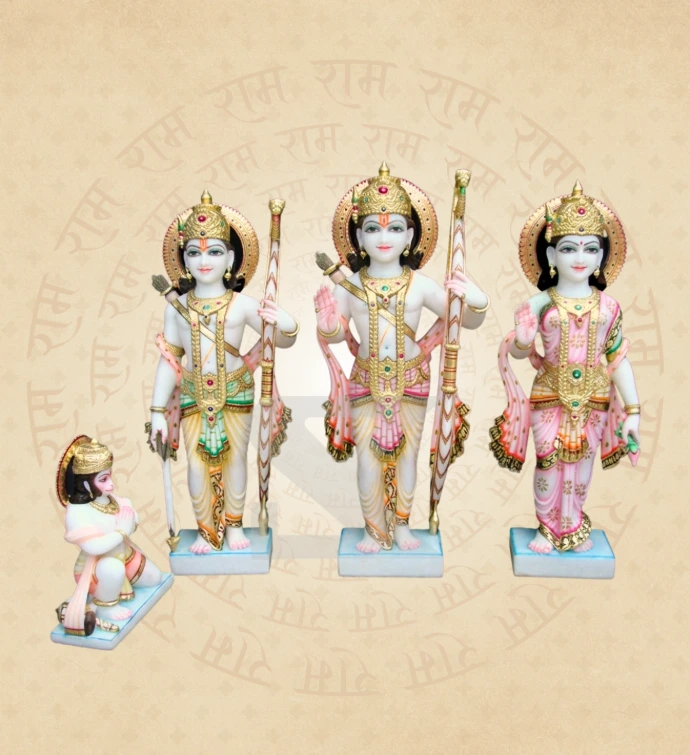
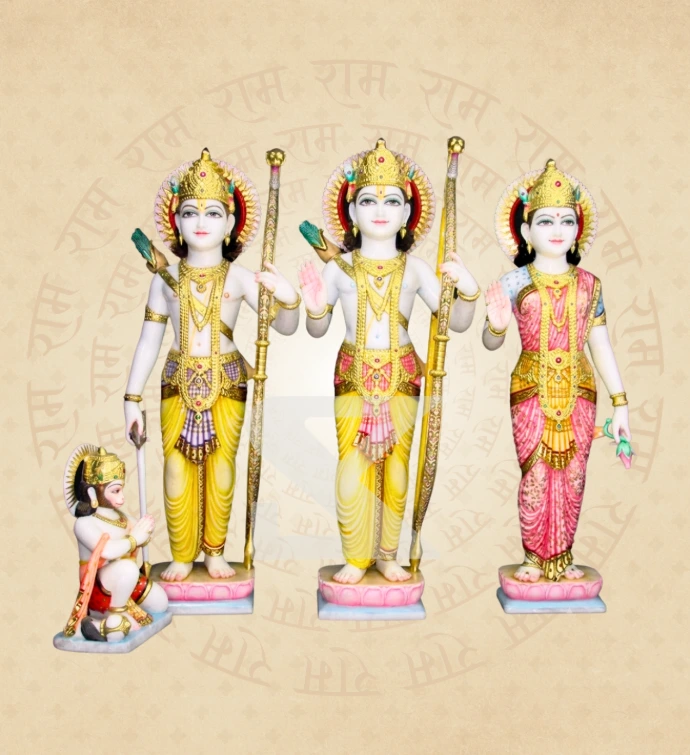
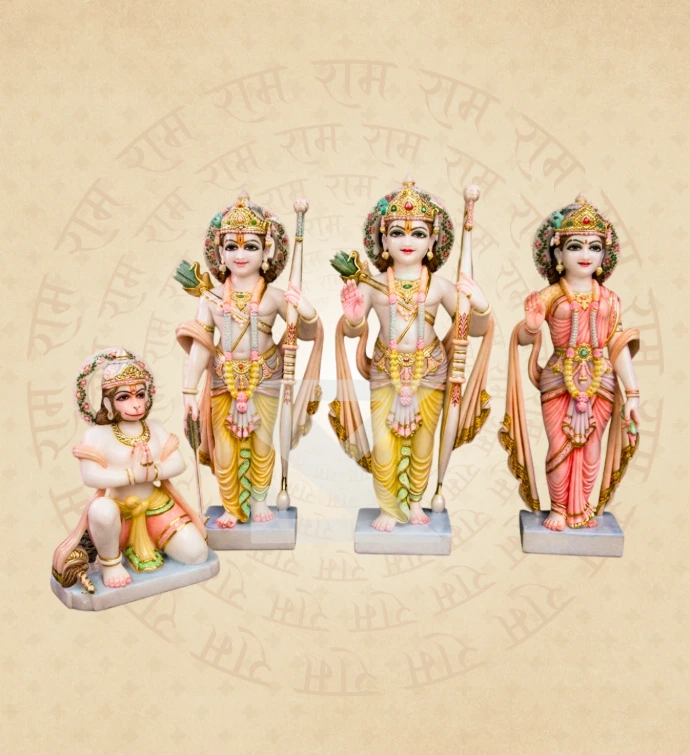
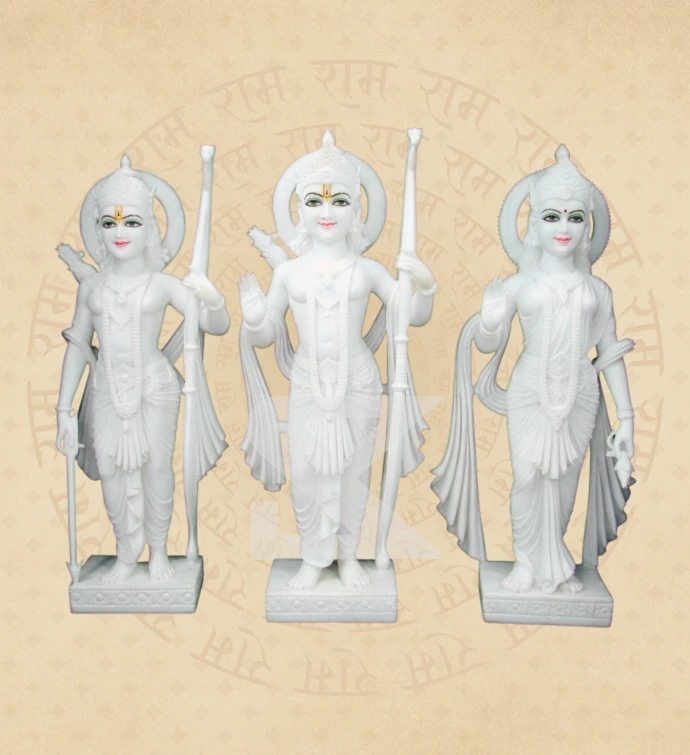
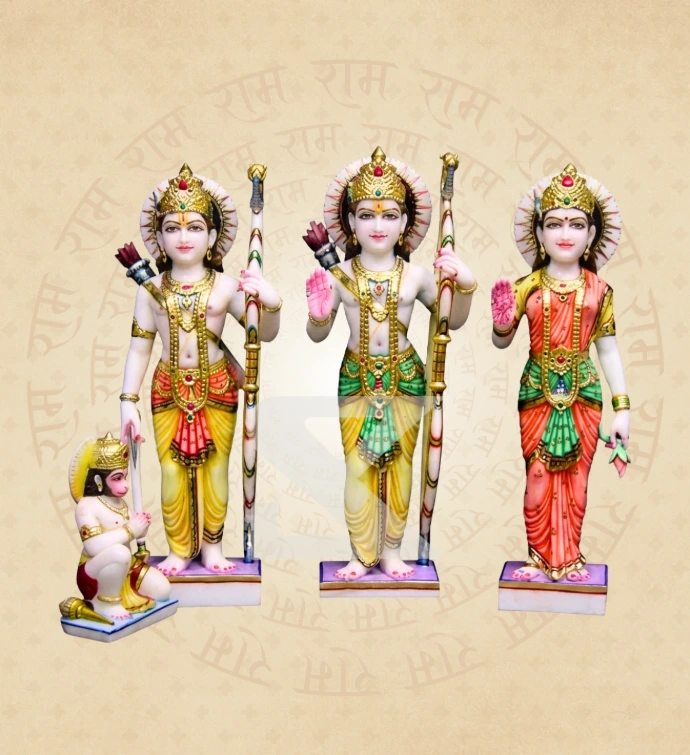
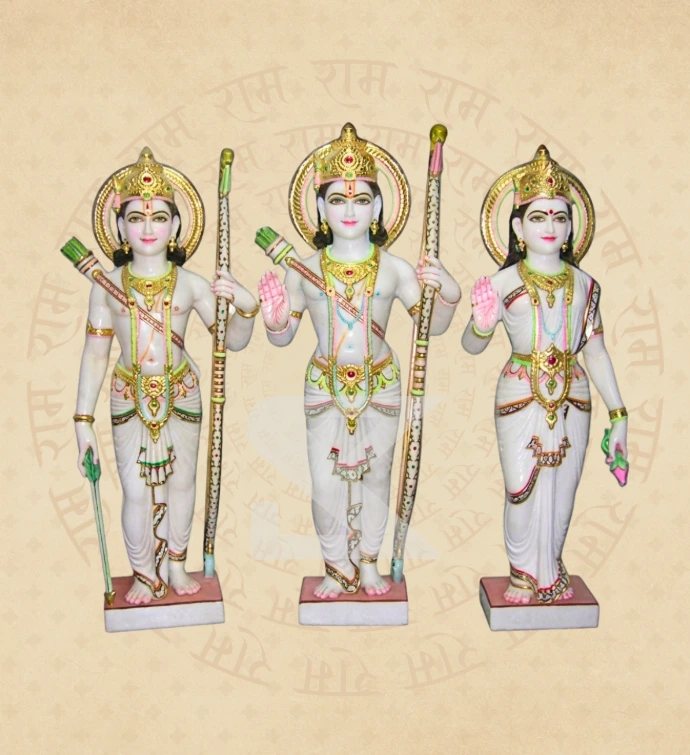
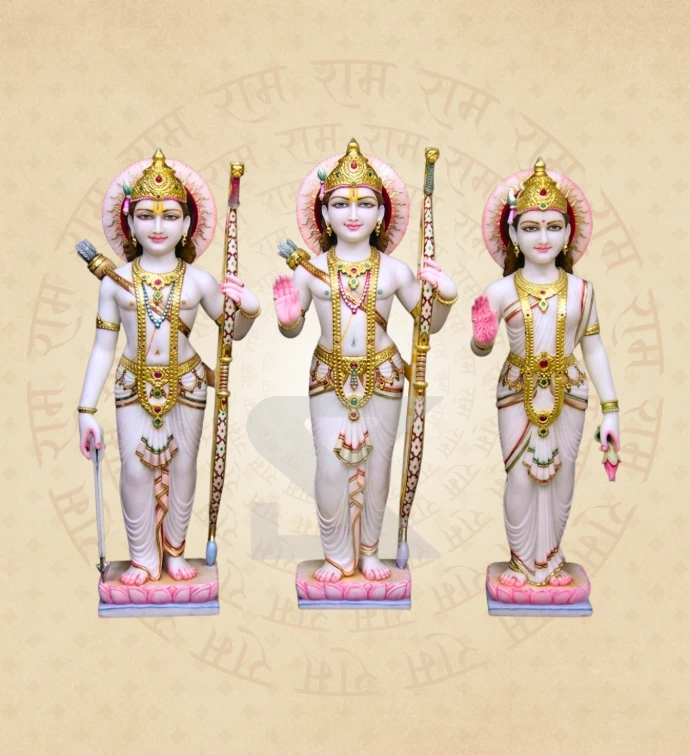
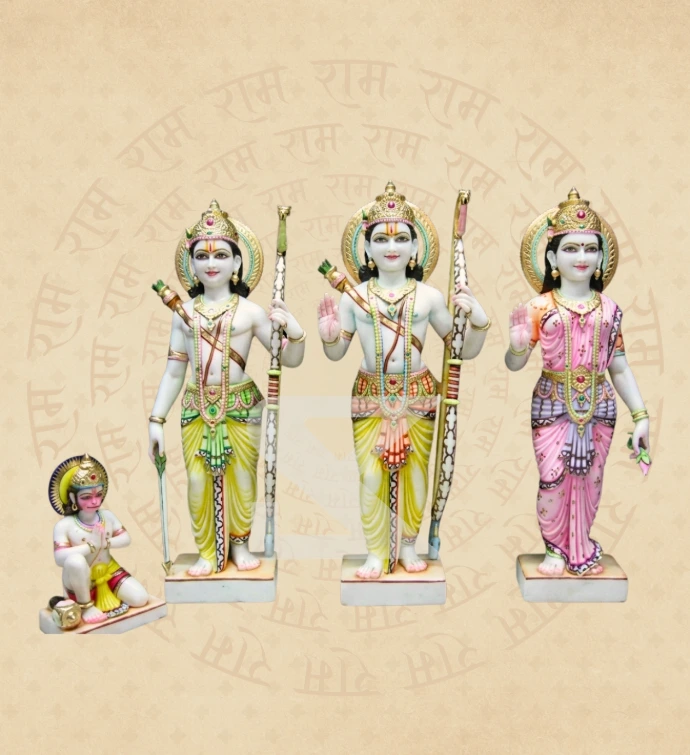
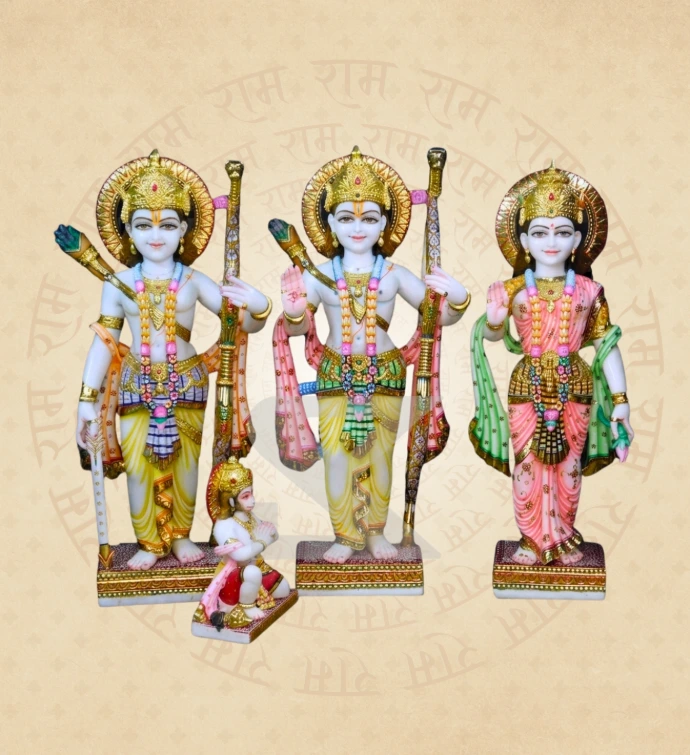
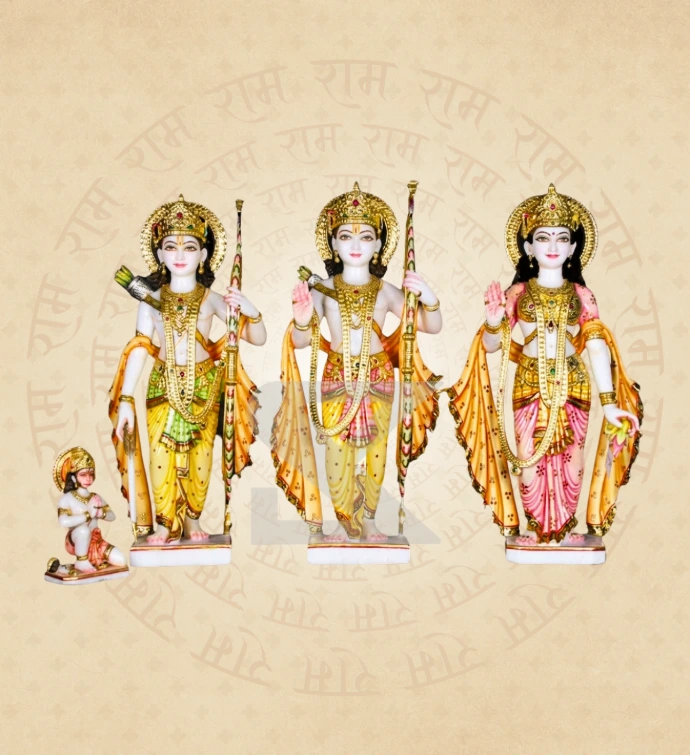
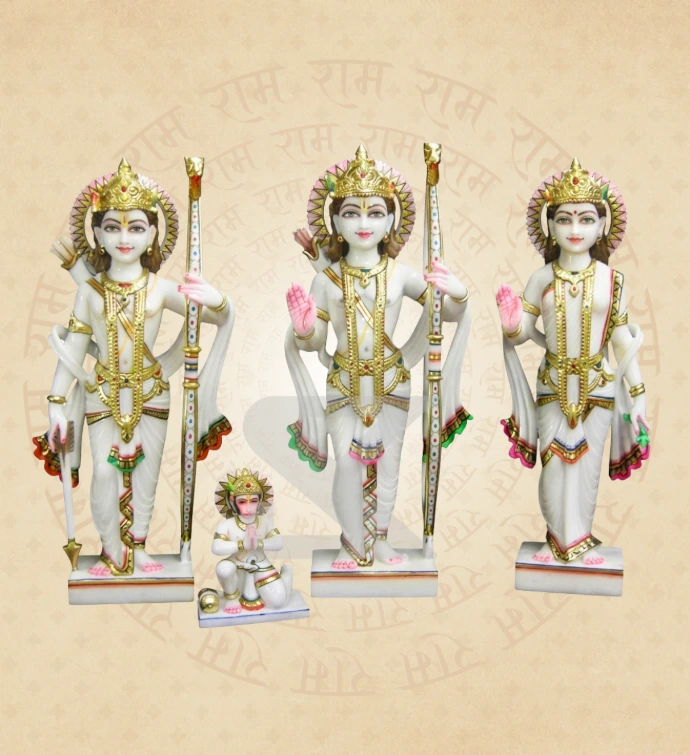
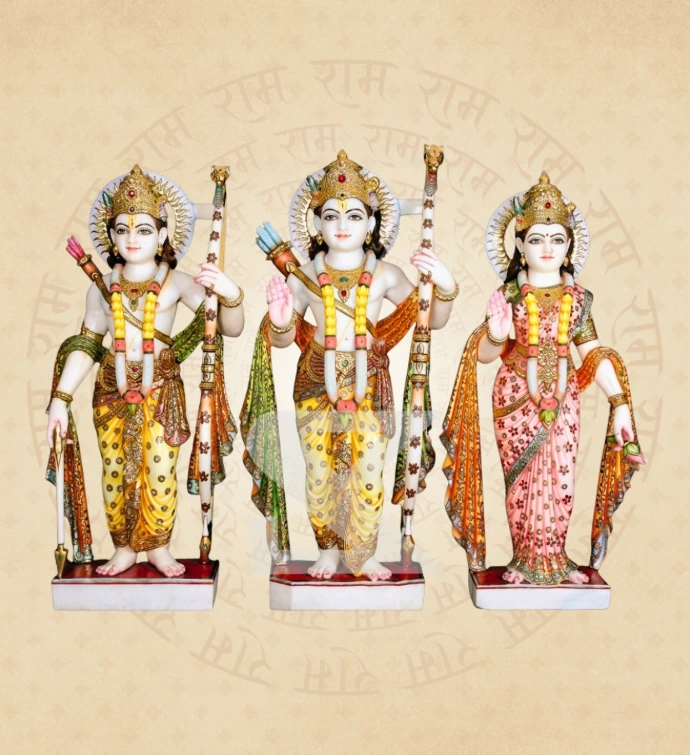
The Ram Darbar is the most complete devotional composition in the Vaishnava tradition — a single sacred frame that holds the entire teaching of the Ramayana. Shri Ram's serene authority embodies dharma in action. Sita's graceful presence embodies shakti — not as power but as the quiet, resilient force of love and devotion. Lakshmana's watchful stance embodies seva. And Hanuman's humble posture at Rama's feet embodies the highest of all virtues: bhakti — pure, selfless surrender to the divine.
For generations, devotees have found in the Ram Darbar not just an image to worship but a living instruction in how to inhabit every role — as a leader, a partner, a sibling, a devotee. The Ram Darbar reminds us that dharma is not a single virtue but a harmony of virtues, and that Shri Rama's life is the most complete expression of that harmony. This is why the Ram Darbar is among the most cherished devotional forms across the length and breadth of India.
The Ram Darbar is the most universally beloved of all Vaishnava compositions — perfect for home mandirs, temple sanctums, living rooms, meditation halls, and all spaces seeking the blessings of harmony, dharma, and devotional warmth. Its complete sacred composition makes it especially meaningful for families, spiritual communities, and all who revere the Ramayana tradition.
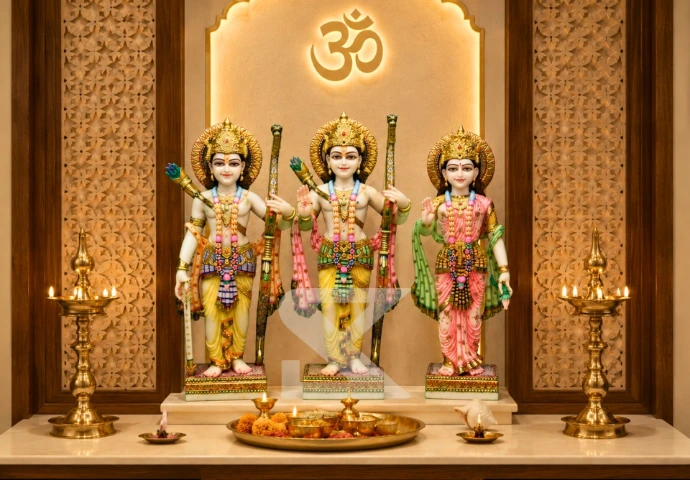
Place Ram Darbar facing East or Northeast — the most auspicious directions for home temples. The composition is especially suited to home mandirs, living rooms, and temple sanctums, where it creates an atmosphere of harmony, righteousness, and devotional warmth. Position the Ram Darbar on a clean, elevated platform — ensure Lord Rama is at the centre and all figures are clearly visible and honoured with dignity. Avoid bedrooms, dining areas, and spaces near restrooms.
A marble pedestal, decorated chowki, or formal temple platform allows the eight-armed form to be appreciated in its full grandeur. The murti should be placed at eye level or slightly above. Ensure adequate space in front for offerings, diyas, and daily aarti — lighting a diya near the Goddess is considered deeply auspicious. Avoid bedrooms, dining areas, and spaces near restrooms.
Common questions about Ram Darbar — meaning, composition, placement, and ordering.
The Ram Darbar is the most complete and emotionally resonant composition in Vaishnava devotional art — depicting Lord Rama, Goddess Sita, Lakshmana, and Hanuman together in a single sacred frame. It represents the divine household of Shri Ram, where dharma, devotion, seva, and bhakti coexist in perfect harmony. In some compositions, Bharat and Shatrughna are also included, representing selfless love and sacrifice.
Each figure in the Ram Darbar carries a sacred ideal: Lord Rama represents dharma — truth, righteousness, and ideal leadership as Maryada Purushottam. Goddess Sita represents shakti — compassion, sacrifice, purity, and resilient grace. Lakshmana represents seva — selfless service, discipline, and protection. And Hanuman represents bhakti — surrender, courage, and the highest form of devotion. Together, they form the most complete vision of righteous, harmonious, and devotional living.
Ram Darbar is ideally placed in the home mandir, pooja room, or dedicated devotional space facing East or Northeast. Position the composition on a clean, elevated platform, ensuring Lord Rama is at the centre and all figures are clearly visible. The Ram Darbar is also auspicious in living rooms, meditation halls, and temple sanctums. Avoid bedrooms, dining areas, and spaces near restrooms.
Yes — Ram Darbar is among the most auspicious and widely worshipped compositions for home mandirs. It works beautifully in home temples, living rooms, and meditation spaces, bringing the blessings of harmony, dharma, and devotional warmth. Daily aarti, offerings of tulsi and flowers, and devotion are all welcomed. It is especially revered during Ram Navami and throughout the month of Chaitra.
For compact home mandirs and personal prayer spaces, 1–2 ft is ideal. For living rooms and meditation halls, 2–3 ft creates a commanding, warm presence. For temple installations and community spaces, 3–5 ft is appropriate. For grand entrances and large sanctums, 5 ft and above. The Ram Darbar is impactful at every scale — the emotional warmth of the composition grows with size.
Each Ram Darbar is hand-sculpted in premium Makrana marble by Shilakrut's master artisans with 50+ years of legacy. This composition demands exceptional precision — Lord Rama's serene yet authoritative expression, Sita's graceful posture, Hanuman's humble stance, Lakshmana's protective form, crown detailing, Kodanda bow, flowing drapery, and lotus pedestal all carved with care to preserve the sacred emotional relationship at the heart of the Ram Darbar. Customisation in size, composition, painting style, gold detailing, and pedestal design is available — share the SKU code via WhatsApp or email for tailored options.
Discover the complete range of sacred marble sculptures at Shilakrut.
Share any SKU code from this collection and our team will reach out with complete details — sizes, pricing, customisation, and delivery timelines. Welcome the sacred harmony of dharma, grace, seva, and bhakti into your home or temple.
Marble Ram Darbar Murti
Ram Darbar — Rama, Sita, Lakshmana & Hanuman in Eternal Sacred HarmonyEach figure in the Ram Darbar carries a sacred ideal: Shri Ram as Maryada Purushottam — the ideal human being; Sita as divine Shakti — compassion, purity, and resilient grace; Lakshmana as eternal seva — selfless duty and discipline; Hanuman as supreme bhakti — surrender and unwavering devotion.
Shilakrut's Ram Darbar collection brings this complete sacred vision to life across 22 refined interpretations — available in multiple sizes from compact home mandir pieces (1–2 ft) to grand temple installations (5 ft+). Hand-sculpted in premium Makrana marble, ideal for home mandirs, temples, and sacred gifting.
Explore 22 unique Ram Darbar designs — from classic compositions to richly ornamented temple pieces in premium Makrana marble. Tap any icon below to enquire about sizes, pricing, and customisation.
The Ram Darbar is the most complete devotional composition in the Vaishnava tradition — a single sacred frame that holds the entire teaching of the Ramayana. Shri Ram's serene authority embodies dharma in action. Sita's graceful presence embodies shakti — not as power but as the quiet, resilient force of love and devotion. Lakshmana's watchful stance embodies seva. And Hanuman's humble posture at Rama's feet embodies the highest of all virtues: bhakti — pure, selfless surrender to the divine.
For generations, devotees have found in the Ram Darbar not just an image to worship but a living instruction in how to inhabit every role — as a leader, a partner, a sibling, a devotee. The Ram Darbar reminds us that dharma is not a single virtue but a harmony of virtues, and that Shri Rama's life is the most complete expression of that harmony. This is why the Ram Darbar is among the most cherished devotional forms across the length and breadth of India.
The Ram Darbar is the most universally beloved of all Vaishnava compositions — perfect for home mandirs, temple sanctums, living rooms, meditation halls, and all spaces seeking the blessings of harmony, dharma, and devotional warmth. Its complete sacred composition makes it especially meaningful for families, spiritual communities, and all who revere the Ramayana tradition.
Place Ram Darbar facing East or Northeast — the most auspicious directions for home temples. The composition is especially suited to home mandirs, living rooms, and temple sanctums, where it creates an atmosphere of harmony, righteousness, and devotional warmth. Position the Ram Darbar on a clean, elevated platform — ensure Lord Rama is at the centre and all figures are clearly visible and honoured with dignity. Avoid bedrooms, dining areas, and spaces near restrooms.
A marble pedestal, decorated chowki, or formal temple platform allows the eight-armed form to be appreciated in its full grandeur. The murti should be placed at eye level or slightly above. Ensure adequate space in front for offerings, diyas, and daily aarti — lighting a diya near the Goddess is considered deeply auspicious. Avoid bedrooms, dining areas, and spaces near restrooms.
Common questions about Ram Darbar — meaning, composition, placement, and ordering.
The Ram Darbar is the most complete and emotionally resonant composition in Vaishnava devotional art — depicting Lord Rama, Goddess Sita, Lakshmana, and Hanuman together in a single sacred frame. It represents the divine household of Shri Ram, where dharma, devotion, seva, and bhakti coexist in perfect harmony. In some compositions, Bharat and Shatrughna are also included, representing selfless love and sacrifice.
Each figure in the Ram Darbar carries a sacred ideal: Lord Rama represents dharma — truth, righteousness, and ideal leadership as Maryada Purushottam. Goddess Sita represents shakti — compassion, sacrifice, purity, and resilient grace. Lakshmana represents seva — selfless service, discipline, and protection. And Hanuman represents bhakti — surrender, courage, and the highest form of devotion. Together, they form the most complete vision of righteous, harmonious, and devotional living.
Ram Darbar is ideally placed in the home mandir, pooja room, or dedicated devotional space facing East or Northeast. Position the composition on a clean, elevated platform, ensuring Lord Rama is at the centre and all figures are clearly visible. The Ram Darbar is also auspicious in living rooms, meditation halls, and temple sanctums. Avoid bedrooms, dining areas, and spaces near restrooms.
Yes — Ram Darbar is among the most auspicious and widely worshipped compositions for home mandirs. It works beautifully in home temples, living rooms, and meditation spaces, bringing the blessings of harmony, dharma, and devotional warmth. Daily aarti, offerings of tulsi and flowers, and devotion are all welcomed. It is especially revered during Ram Navami and throughout the month of Chaitra.
For compact home mandirs and personal prayer spaces, 1–2 ft is ideal. For living rooms and meditation halls, 2–3 ft creates a commanding, warm presence. For temple installations and community spaces, 3–5 ft is appropriate. For grand entrances and large sanctums, 5 ft and above. The Ram Darbar is impactful at every scale — the emotional warmth of the composition grows with size.
Each Ram Darbar is hand-sculpted in premium Makrana marble by Shilakrut's master artisans with 50+ years of legacy. This composition demands exceptional precision — Lord Rama's serene yet authoritative expression, Sita's graceful posture, Hanuman's humble stance, Lakshmana's protective form, crown detailing, Kodanda bow, flowing drapery, and lotus pedestal all carved with care to preserve the sacred emotional relationship at the heart of the Ram Darbar. Customisation in size, composition, painting style, gold detailing, and pedestal design is available — share the SKU code via WhatsApp or email for tailored options.
Discover the complete range of sacred marble sculptures at Shilakrut.
Share any SKU code from this collection and our team will reach out with complete details — sizes, pricing, customisation, and delivery timelines. Welcome the sacred harmony of dharma, grace, seva, and bhakti into your home or temple.