Marble Standing Sai Baba Statue
Standing Sai Baba — The Ever-Present Guide, Compassion in Every StepIn the Standing Sai Baba form, the saint is depicted with one hand raised in the Abhaya mudra — the gesture of fearlessness and protection — and his other hand often resting at his side or holding a satka (staff). This posture carries a profound message: Baba is always standing watch over his devotees, ready to protect them from fear, suffering, and doubt.
Shilakrut's marble Standing Sai Baba collection brings this living, compassionate form to life in 2 refined interpretations. Each piece is hand-sculpted in premium Makrana marble — ideal for home mandirs, offices, meditation spaces, and temple entrances where Sai Baba's active presence creates an atmosphere of faith, protection, and calm.
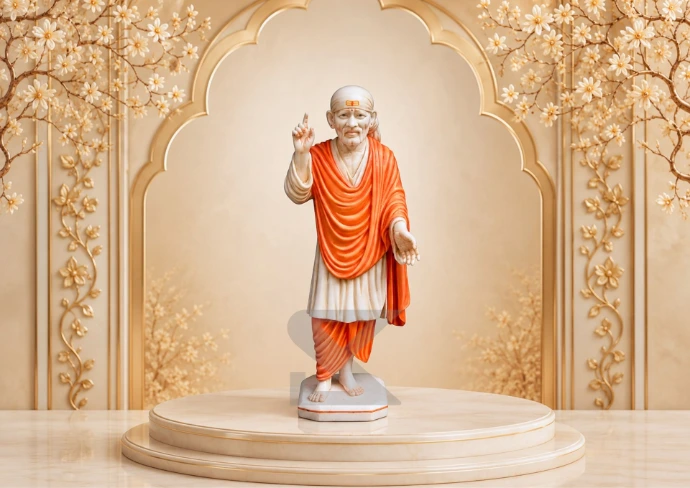
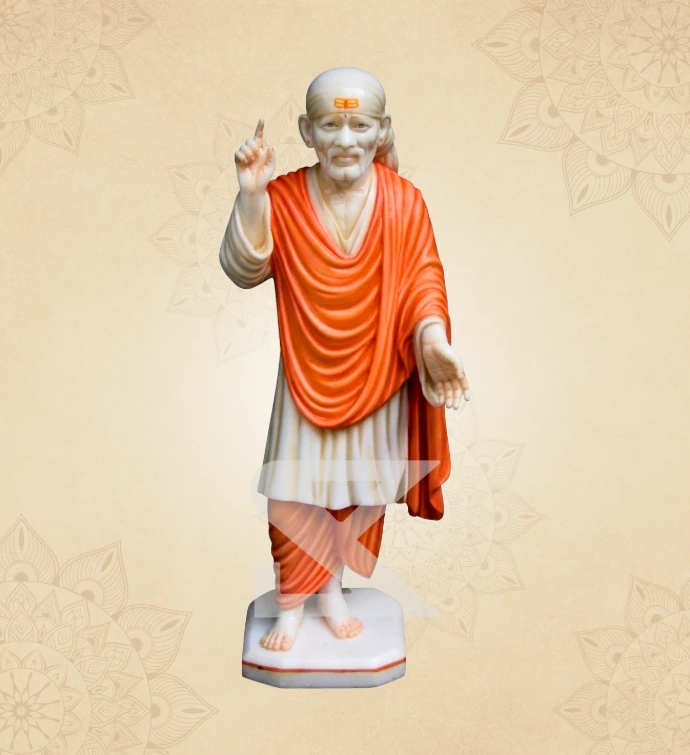
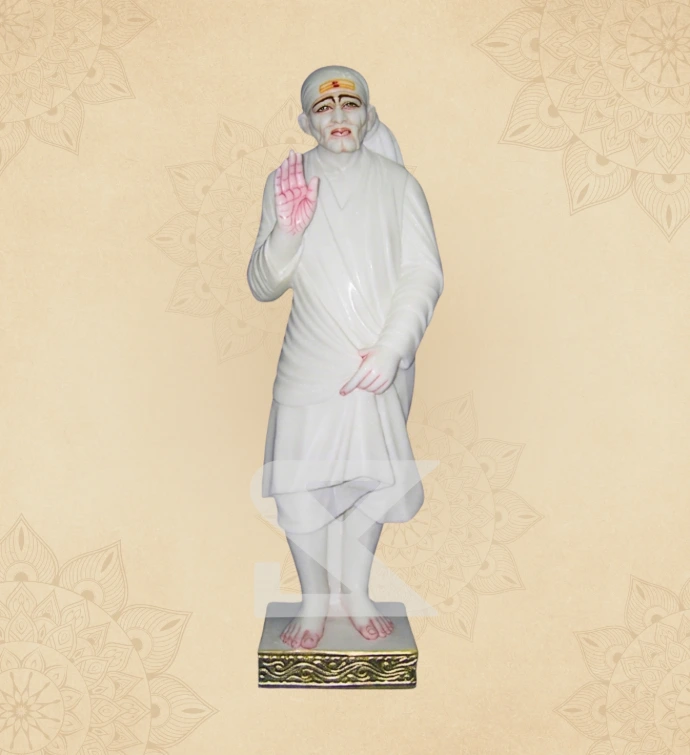
Among all the forms of Sai Baba, the Standing form carries a unique quality: it is the form of Baba in action. Not in meditation, not in rest — but present, moving, and available. This is Sai Baba as he appeared to countless devotees in Shirdi: walking barefoot through the streets, distributing food to the hungry, healing the sick, and meeting every person exactly where they were, with exactly what they needed.
The Standing Sai Baba is especially associated with protection and guidance during life's journeys — both literal and spiritual. Many devotees keep a Standing Sai Baba at the entrance of their home or office, welcoming Baba's active blessing into the space. His raised Abhaya hand at the threshold is a constant assurance: "Why fear when I am here."
Standing Sai Baba is the most dynamic and guardian-like of all Sai forms — perfect for entrances, home mandirs, offices, and all spaces seeking the active blessings of faith, protection, and Sai Baba's living compassion. His standing posture creates an atmosphere of watchful grace and divine presence.
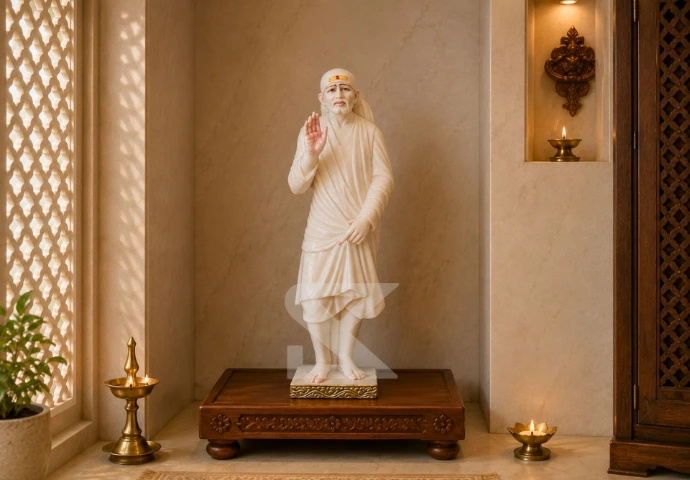
Place Standing Sai Baba facing the entrance or East — Baba's blessing hand extended toward devotees as they enter is considered deeply auspicious. The standing form is especially suited to home entrances, office receptions, temples, and home mandirs. Position on a clean, elevated platform or pedestal. Sai Baba's universal presence makes the standing form suitable for spaces of all faiths. A simple diya and fresh flowers are the most beloved offerings.
A marble pedestal, decorated chowki, or formal temple platform allows the eight-armed form to be appreciated in its full grandeur. The murti should be placed at eye level or slightly above. Ensure adequate space in front for offerings, diyas, and daily aarti — lighting a diya near the Goddess is considered deeply auspicious. Avoid bedrooms, dining areas, and spaces near restrooms.
Common questions about Standing Sai Baba — meaning, placement, and ordering.
The Standing Sai Baba form depicts the beloved saint of Shirdi in an upright posture — one hand raised in the Abhaya mudra (gesture of protection and fearlessness) and his compassionate gaze directed at the devotee. Unlike the more meditative seated forms, the Standing Sai Baba conveys Baba in active, living presence: walking with his devotees, protecting them on their journey, and extending his blessing to all who stand before him.
The Abhaya mudra — the raised open hand — is one of the most powerful of all devotional gestures. It carries Sai Baba's most famous assurance: 'Why fear when I am here.' This gesture represents fearlessness, divine protection, and the saint's promise to stand between his devotees and all harm. It is a gesture not of power but of love — the outstretched hand of a father who will not let anything harm his children.
Standing Sai Baba is ideally placed at the main entrance of a home or office — Baba's blessing hand extended toward all who enter creates an atmosphere of protection and divine welcome. It is also auspicious in home mandirs, meditation rooms, and temple spaces. Position on a clean, elevated platform or pedestal. A simple diya and fresh flowers are the most beloved offerings. Sai Baba's universal presence makes this form suitable for people of all faiths.
Yes — the Standing Sai Baba is especially beloved for entrances and offices. At the entrance, Baba's raised blessing hand greets everyone who enters, creating an atmosphere of divine protection and welcome. In an office, his calm, compassionate presence brings focus, positive energy, and the reminder of Shraddha (faith) and Saburi (patience) in all endeavours. Many devotees keep a Standing Sai Baba on their desk or in their reception area.
For home mandirs, desks, and personal devotional spaces, 1–2 ft is ideal. For home entrances and living rooms, 2–3 ft creates a commanding, welcoming presence. For temple installations and large entrances, 3 ft and above creates a powerful, devotional centrepiece. The standing form makes a particularly powerful impression at larger scales.
Each Standing Sai Baba is hand-sculpted in premium Makrana marble by Shilakrut's master artisans with 50+ years of legacy. The standing form demands careful attention to the saint's graceful upright posture, the precise rendering of the Abhaya mudra, the flowing robes and drapery, the compassionate facial expression, and the overall sense of active, living divine presence. Customisation in size, painting style, and pedestal design is available — share the SKU code via WhatsApp or email for tailored options.
Discover the complete range of marble Sai Baba designs at Shilakrut.
Share any SKU code from this collection and our team will reach out with complete details — sizes, pricing, customisation, and delivery timelines. Welcome Sai Baba's active blessing and ever-present guidance into your home, office, or sacred space.
Marble Standing Sai Baba Statue
Standing Sai Baba — The Ever-Present Guide, Compassion in Every StepIn the Standing Sai Baba form, the saint is depicted with one hand raised in the Abhaya mudra — the gesture of fearlessness and protection — and his other hand often resting at his side or holding a satka (staff). This posture carries a profound message: Baba is always standing watch over his devotees, ready to protect them from fear, suffering, and doubt.
Shilakrut's marble Standing Sai Baba collection brings this living, compassionate form to life in 2 refined interpretations. Each piece is hand-sculpted in premium Makrana marble — ideal for home mandirs, offices, meditation spaces, and temple entrances where Sai Baba's active presence creates an atmosphere of faith, protection, and calm.
Among all the forms of Sai Baba, the Standing form carries a unique quality: it is the form of Baba in action. Not in meditation, not in rest — but present, moving, and available. This is Sai Baba as he appeared to countless devotees in Shirdi: walking barefoot through the streets, distributing food to the hungry, healing the sick, and meeting every person exactly where they were, with exactly what they needed.
The Standing Sai Baba is especially associated with protection and guidance during life's journeys — both literal and spiritual. Many devotees keep a Standing Sai Baba at the entrance of their home or office, welcoming Baba's active blessing into the space. His raised Abhaya hand at the threshold is a constant assurance: "Why fear when I am here."
Standing Sai Baba is the most dynamic and guardian-like of all Sai forms — perfect for entrances, home mandirs, offices, and all spaces seeking the active blessings of faith, protection, and Sai Baba's living compassion. His standing posture creates an atmosphere of watchful grace and divine presence.
Place Standing Sai Baba facing the entrance or East — Baba's blessing hand extended toward devotees as they enter is considered deeply auspicious. The standing form is especially suited to home entrances, office receptions, temples, and home mandirs. Position on a clean, elevated platform or pedestal. Sai Baba's universal presence makes the standing form suitable for spaces of all faiths. A simple diya and fresh flowers are the most beloved offerings.
A marble pedestal, decorated chowki, or formal temple platform allows the eight-armed form to be appreciated in its full grandeur. The murti should be placed at eye level or slightly above. Ensure adequate space in front for offerings, diyas, and daily aarti — lighting a diya near the Goddess is considered deeply auspicious. Avoid bedrooms, dining areas, and spaces near restrooms.
Common questions about Standing Sai Baba — meaning, placement, and ordering.
The Standing Sai Baba form depicts the beloved saint of Shirdi in an upright posture — one hand raised in the Abhaya mudra (gesture of protection and fearlessness) and his compassionate gaze directed at the devotee. Unlike the more meditative seated forms, the Standing Sai Baba conveys Baba in active, living presence: walking with his devotees, protecting them on their journey, and extending his blessing to all who stand before him.
The Abhaya mudra — the raised open hand — is one of the most powerful of all devotional gestures. It carries Sai Baba's most famous assurance: 'Why fear when I am here.' This gesture represents fearlessness, divine protection, and the saint's promise to stand between his devotees and all harm. It is a gesture not of power but of love — the outstretched hand of a father who will not let anything harm his children.
Standing Sai Baba is ideally placed at the main entrance of a home or office — Baba's blessing hand extended toward all who enter creates an atmosphere of protection and divine welcome. It is also auspicious in home mandirs, meditation rooms, and temple spaces. Position on a clean, elevated platform or pedestal. A simple diya and fresh flowers are the most beloved offerings. Sai Baba's universal presence makes this form suitable for people of all faiths.
Yes — the Standing Sai Baba is especially beloved for entrances and offices. At the entrance, Baba's raised blessing hand greets everyone who enters, creating an atmosphere of divine protection and welcome. In an office, his calm, compassionate presence brings focus, positive energy, and the reminder of Shraddha (faith) and Saburi (patience) in all endeavours. Many devotees keep a Standing Sai Baba on their desk or in their reception area.
For home mandirs, desks, and personal devotional spaces, 1–2 ft is ideal. For home entrances and living rooms, 2–3 ft creates a commanding, welcoming presence. For temple installations and large entrances, 3 ft and above creates a powerful, devotional centrepiece. The standing form makes a particularly powerful impression at larger scales.
Each Standing Sai Baba is hand-sculpted in premium Makrana marble by Shilakrut's master artisans with 50+ years of legacy. The standing form demands careful attention to the saint's graceful upright posture, the precise rendering of the Abhaya mudra, the flowing robes and drapery, the compassionate facial expression, and the overall sense of active, living divine presence. Customisation in size, painting style, and pedestal design is available — share the SKU code via WhatsApp or email for tailored options.
Discover the complete range of marble Sai Baba designs at Shilakrut.
Share any SKU code from this collection and our team will reach out with complete details — sizes, pricing, customisation, and delivery timelines. Welcome Sai Baba's active blessing and ever-present guidance into your home, office, or sacred space.